



# 8-Speed Automatic Gearbox: How It Works and Common Problems
Modern cars are designed to offer maximum comfort, smooth performance, and better fuel efficiency. One of the key components that makes this possible is the **8-speed automatic gearbox**. Whether you drive a luxury sedan, SUV, or performance car, there’s a good chance your vehicle uses an 8-speed automatic transmission.
In this guide, you’ll learn:
– ✅ What an 8-speed automatic gearbox is
– ⚙️ How it works (step-by-step, in simple terms)
– 🚗 Why manufacturers use 8-speed gearboxes
– ⚠️ Common problems and symptoms
– 🧰 Maintenance tips to extend gearbox life
—
## 🧩 What Is an 8‑Speed Automatic Gearbox?
An **8-speed automatic gearbox** is a type of transmission that offers **eight forward gears** and uses a combination of:
– Hydraulic systems
– Electronic control units
– Planetary gearsets
– Clutches and brake bands
Its main job is to:
– Automatically select the best gear ratio
– Maximize fuel efficiency
– Deliver smooth acceleration
– Reduce engine strain
You’ll often find 8-speed automatics in:
– Mid-range and premium sedans
– Crossovers and SUVs
– Performance and sports cars
– Some pickup trucks
Popular examples include:
– ZF 8HP series (used by BMW, Audi, Jaguar, Land Rover, Dodge, etc.)
– Aisin 8-speed units (used in Toyota, Lexus, Volvo and others)
—
## ⚙️ Basic Components of an 8‑Speed Automatic Gearbox
To understand how an 8-speed gearbox works, it helps to know its main parts:
### 1. 🧠 Transmission Control Unit (TCU)
An electronic “brain” that:
– Receives data from sensors (speed, throttle position, engine load, etc.)
– Decides when to shift up or down
– Controls hydraulic valves and solenoids
### 2. 🧱 Planetary Gearsets
The core of most modern automatics. A planetary gearset usually has:
– **Sun gear** (center)
– **Planet gears** (small gears around the sun)
– **Planet carrier** (holds planet gears)
– **Ring gear** (outer gear)
By locking or holding different parts of the gearset, the transmission creates different gear ratios – this is how you get 8 different speeds in a compact design.
### 3. 🧲 Clutches & Brake Bands
Instead of a driver-operated clutch pedal, automatics use:
– **Multi-plate clutches**
– **Brake bands**
These are engaged and released hydraulically to:
– Connect or disconnect gearsets
– Select the appropriate gear ratio
– Enable smooth gear changes
### 4. 💧 Automatic Transmission Fluid (ATF)
ATF is essential for:
– Lubrication
– Cooling
– Hydraulic pressure (for gear shifts)
Low-quality, old, or burnt ATF can cause serious problems, including slipping and overheating.
### 5. 🔄 Torque Converter
Sits between the engine and the gearbox. It:
– Transfers power using fluid (instead of a mechanical clutch)
– Multiplies torque at low speeds for smoother take-off
– Often includes a **lock-up clutch** to improve efficiency at cruising speeds
—
## 🔍 How an 8‑Speed Automatic Gearbox Works (Step by Step)
Let’s break down how an 8-speed gearbox operates in real driving conditions.
### 1. 🚦 Starting From a Stop
– You select **D (Drive)**.
– The torque converter transmits engine power to the transmission.
– The TCU engages a specific combination of clutches and planetary gear components to select **1st gear**.
– Gear ratio is **high (short)** for strong torque and easier acceleration.
**Result:** Smooth pull-away with strong low-speed power.
—
### 2. 🆙 Upshifting Through the Gears
As the car accelerates, the TCU monitors:
– Vehicle speed
– Engine RPM
– Throttle input (how hard you press the accelerator)
– Driving mode (Eco, Normal, Sport, etc.)
Based on this, it shifts to:
– 2nd gear
– 3rd gear
– … up to 8th gear
Each upshift:
– Reduces engine RPM
– Improves fuel economy
– Maintains power within an efficient range
**Example:**
– In light city driving, the car may quickly shift to higher gears to save fuel.
– In Sport mode, it will hold gears longer for stronger acceleration.
—
### 3. 🔁 Downshifting
When you:
– Press the accelerator hard (kickdown)
– Climb a hill
– Need to overtake
The TCU downshifts to a lower gear to:
– Increase engine RPM
– Provide more torque
– Improve acceleration response
Manual or “Tiptronic”/paddle modes let the driver **manually request** up- or downshifts, but the TCU still prevents damaging shifts (e.g., downshifting at too high RPM).
—
### 4. 🚗 Cruising in 8th Gear
Once at highway speeds (e.g., 100–120 km/h or 60–75 mph):
– The gearbox typically selects **7th or 8th gear**
– The torque converter lock-up clutch engages
This creates a near-direct mechanical link between engine and wheels, which:
– Lowers engine RPM
– Reduces fuel consumption
– Minimizes noise and vibration
—
## 🎯 Why Use 8 Gears? Main Advantages
### 1. ⛽ Better Fuel Efficiency
More gears allow the engine to operate closer to its **optimal efficiency range** more often.
– Lower RPM at highway speeds
– Less fuel burned
– Often better fuel economy than older 4–5 speed automatics
### 2. 🚀 Improved Acceleration & Performance
Closely spaced gear ratios mean:
– Stronger pull in each gear
– Smoother, faster acceleration
– Better responsiveness, especially in Sport modes
### 3. 😌 Smoother Driving Experience
8-speed automatics are known for:
– Gentle, almost unnoticeable shifts
– Less “hunting” for gears compared to older transmissions
– Better adaptation to driving style thanks to smart electronics
### 4. 🔊 Lower Noise & RPM
At cruising speeds in 8th gear:
– Engine RPM is significantly reduced
– Cabin noise is lower
– Long-distance comfort is greatly improved
—
## ⚠️ Common Problems With 8‑Speed Automatic Gearboxes
While 8-speed automatics are advanced and reliable when properly maintained, they are not immune to issues. Below are some of the most frequent problems and what they can mean.
—
### 1. 🛑 Harsh or Jerky Gear Changes
**Symptoms:**
– Sudden “bang” or jolt when shifting
– Rough upshifts or downshifts
– Noticeable lurching in stop-and-go traffic
**Possible Causes:**
– Old or contaminated ATF
– Faulty solenoids or valve body issues
– Software/TCU calibration problems
– Worn clutch packs
**Why It Happens:**
The gearbox relies heavily on precise hydraulic pressure and timing. Any disturbance (dirty fluid, sticking valves) can cause shifts to become harsh.
—
### 2. 🔁 Gearbox Slipping
**Symptoms:**
– Engine RPM increases but vehicle doesn’t accelerate proportionally
– Delay when engaging Drive or Reverse
– Feeling like the car “slips out of gear”
**Possible Causes:**
– Low ATF level (leak)
– Burnt or degraded ATF
– Worn internal clutches
– Torque converter issues
**Risk:**
If ignored, slipping can lead to **complete transmission failure** and very costly repairs.
—
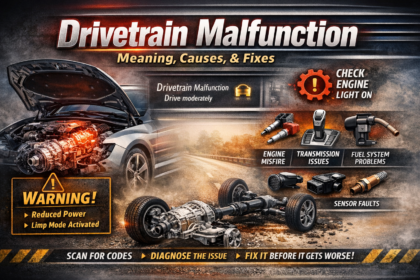
### 3. 🚨 Transmission Warning Light / Limp Mode
Modern vehicles monitor the transmission closely. If something is wrong, the car may:
– Illuminate a **Check Engine** or **Transmission** warning light
– Enter **“limp mode”**, limiting available gears or speed
**Typical Causes:**
– Faulty sensors (e.g., speed sensor, temperature sensor)
– TCU/ECU communication errors
– Serious hydraulic or mechanical issues detected
**Action:**
Scan the vehicle with diagnostic equipment to identify stored error codes and pinpoint the issue.
—
### 4. 🧊 Overheating Transmission
**Symptoms:**
– Warning messages about transmission temperature
– Loss of performance under heavy load
– Burnt smell from ATF
**Common Causes:**
– Insufficient cooling (blocked cooler, low ATF level)
– Towing heavy loads without proper cooling
– Aggressive driving in hot conditions
– Degraded ATF losing its cooling and lubricating properties
**Consequence:**
Overheating accelerates wear of clutches and seals and can shorten the gearbox’s lifespan drastically.
—
### 5. 🔊 Unusual Noises
**Symptoms:**
– Whining, humming, or buzzing
– Clunking when changing gear or selecting D/R
– Grinding or metallic noises
**Potential Causes:**
– Worn bearings
– Damaged planetary gears
– Low ATF level drawing air into the system
– Torque converter faults
Any persistent new noise from the transmission area should be **checked immediately**.
—
### 6. 🧪 ATF Leaks
**Where You Might See It:**
– Under the car, near the middle
– Around the transmission pan
– At cooler line connections
– At axle seals
**Causes:**
– Worn or hardened seals
– Damaged pan gasket
– Corroded or loose cooler lines
Low ATF due to leaks can quickly lead to shifting problems and internal damage.
—
### 7. 🔧 Software & Calibration Issues
Because 8-speed automatics are electronically controlled, **software plays a big role**.
**Signs of software-related issues:**
– Odd shift timing
– Delay between gear changes
– Inconsistent behavior after battery disconnection or part replacement
In many cases, a **software update or reprogramming** by the dealer or specialist can significantly improve shift quality.
—
## 🧰 Preventive Maintenance Tips for 8‑Speed Gearboxes
Regular care can dramatically extend the life of your 8-speed transmission and help you avoid expensive repairs.
### 1. 💧 Change ATF at Recommended Intervals
Even if the manufacturer calls it “lifetime fluid”, in real-world conditions it’s wise to:
– **Replace ATF and filter** every 60,000–80,000 km (40,000–50,000 miles), or earlier under severe use
– Use **only the specified ATF type** for your gearbox model
Fresh ATF ensures:
– Correct hydraulic pressure
– Clean operation of solenoids and valves
– Better cooling and lubrication
—
### 2. 🔍 Check for Leaks Regularly
– Look under the car for **red/pink/brown fluid spots**
– Inspect around the transmission pan and cooler lines
– Address even small leaks promptly
—
### 3. 🚗 Warm Up Gently
Especially in cold climates:
– Avoid full throttle and hard acceleration immediately after start
– Allow a few minutes of gentle driving for ATF to warm up
Cold fluid is thicker and may not circulate as efficiently, increasing wear.
—
### 4. 🧭 Avoid Overloading and Incorrect Towing
If you:
– Tow trailers
– Carry heavy loads regularly
Make sure to:
– Respect manufacturer towing limits
– Ensure your vehicle has a suitable **transmission cooler**
– Use the recommended driving mode for towing
—
### 5. 🖥️ Keep Software Updated
Ask your dealer or trusted specialist to:
– Check for **TCU software updates**
– Recalibrate transmission adaptations if necessary
This can solve or improve shifting irregularities, especially in widely used 8-speed units like the ZF 8HP.
—
## 🩺 When to Seek Professional Help
Contact a qualified transmission specialist or workshop if you notice:
– Persistent **jerky or delayed shifts**
– **Warning lights** or limp mode
– **Slipping** or sudden loss of drive
– Strong **burnt smell** from the transmission area
– Loud **clunking or whining** noises
Early diagnosis often means:
– Lower repair costs
– Less risk of complete gearbox failure
– Higher chance of solving issues with service, fluid, or software alone
—
## 🧾 Summary: Is an 8‑Speed Automatic Gearbox Reliable?
When properly designed, maintained, and driven, **8-speed automatic gearboxes are highly efficient and reliable**. They offer:
– ✅ Excellent fuel economy
– ✅ Smooth, refined driving
– ✅ Strong performance and flexibility
However, their complexity means:
– ❗ They are sensitive to poor maintenance and incorrect fluid
– ❗ Repairs can be expensive if problems are ignored
**Key takeaways:**
– Change ATF and filter at sensible intervals, not just “lifetime”.
– Watch for early symptoms like harsh shifts, slipping, or warning lights.
– Use certified technicians familiar with your specific 8-speed model (ZF, Aisin, etc.).
By understanding how your 8-speed automatic gearbox works and staying ahead on maintenance, you can enjoy years of smooth, efficient, and reliable driving.