

Table of Contents
⚙️ Introduction
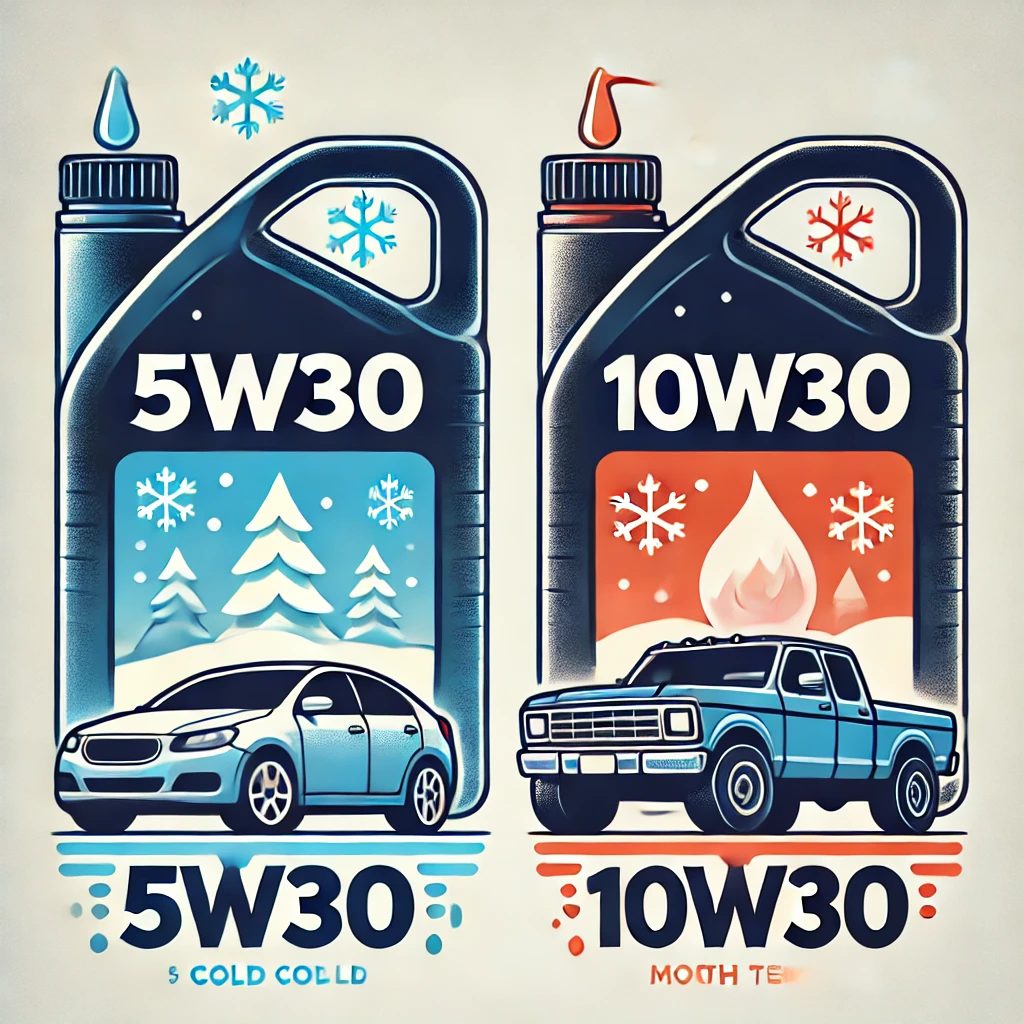
Choosing the right engine oil is essential for maintaining your vehicle’s performance and longevity. Two of the most common oil types are 5W30 and 10W30, but many drivers are unsure which one to choose.
At first glance, they might seem similar — both are multigrade oils designed for a range of temperatures — but key differences affect how each performs in cold starts, fuel efficiency, and engine protection.
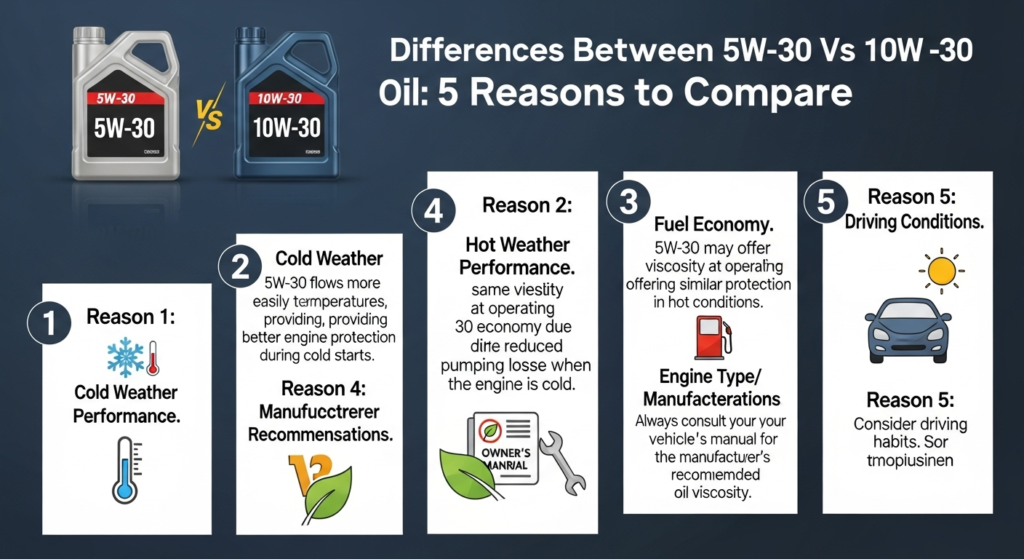
In this guide, OnlyMechanic.com breaks down the differences between 5W30 and 10W30, explaining when and why to choose each — with 5 key reasons every driver should compare them.
🧩 1. Understanding the Oil Grades (What Do 5W30 and 10W30 Mean?)
Both 5W30 and 10W30 are SAE multigrade motor oils, where the numbers indicate the oil’s viscosity, or thickness, under different temperature conditions.
🧠 Breakdown:
- “5W” or “10W” = Oil viscosity in cold weather (Winter).
- The lower the number before “W”, the better the oil flows at low temperatures.
- 5W flows more easily in cold starts than 10W.
- “30” = Oil viscosity at operating temperature (100°C).
- Both oils behave the same when the engine is warm.
✅ Conclusion:
5W30 performs better during cold starts, while 10W30 offers similar protection once the engine reaches normal operating temperature.
🌡️ 2. Cold Weather Performance
The biggest practical difference between 5W30 and 10W30 is how they behave in cold conditions.
- 5W30: Flows quickly in freezing temperatures, reducing engine wear at startup.
- 10W30: Thicker in cold weather; takes slightly longer to circulate on startup.
🧊 Ideal Usage:
- 5W30: Recommended for cold or moderate climates (below 0°C / 32°F).
- 10W30: Better for warmer climates, where cold flow is less critical.
✅ Verdict:
If you live in a cold region, 5W30 is the smarter choice for smoother startups and better protection.
🚗 3. Engine Protection and Viscosity Stability
When the engine warms up, both oils reach a viscosity grade of 30, meaning they offer similar protection at high operating temperatures.
However, 5W30 tends to have a slightly wider temperature range, making it more stable under varied driving conditions — especially for engines that experience frequent cold starts or stop-and-go city driving.
🔧 Key Benefits of 5W30:
- Faster oil circulation after startup
- Reduced engine friction and wear
- Better overall efficiency
🔧 Key Benefits of 10W30:
- Slightly thicker film at high temperatures
- Ideal for engines that operate under heavy loads or high heat
✅ Verdict:
Choose 5W30 for modern daily drivers; 10W30 suits older or high-performance engines that need thicker lubrication.
⛽ 4. Fuel Efficiency
Because 5W30 flows more easily, it reduces internal engine friction, which can slightly improve fuel economy.
In contrast, 10W30’s thicker cold viscosity means the engine must work a bit harder during startup — leading to marginally lower fuel efficiency.
⚡ Real-World Impact:
- 5W30 can improve efficiency by 1–2%, especially in colder climates.
- Over time, this small difference can save fuel and reduce emissions.
✅ Verdict:
For most everyday vehicles, 5W30 helps optimize fuel economy while maintaining excellent protection.
🔍 5. Manufacturer Recommendations
Your owner’s manual should always be the first reference when choosing engine oil.
Manufacturers design engines to work with specific oil viscosities based on tolerances, fuel system design, and regional climate.
🧾 General Guidelines:
- 5W30: Preferred for modern engines, especially smaller displacement and turbocharged models.
- 10W30: Often used in older engines or those designed for warmer regions.
Using the wrong oil viscosity can lead to:
- Poor lubrication on startup
- Reduced fuel economy
- Increased engine wear over time
✅ Verdict:
Always follow manufacturer specs — but if both grades are approved, base your choice on climate and driving habits.
⚖️ Quick Comparison Table
| Feature | 5W30 | 10W30 |
|---|---|---|
| Cold Flow | Excellent | Moderate |
| Hot Performance | Excellent | Excellent |
| Fuel Efficiency | Slightly higher | Slightly lower |
| Ideal Climate | Cold to moderate | Warm |
| Recommended For | Modern engines | Older or heavy-duty engines |
🏁 Conclusion
Both 5W30 and 10W30 offer reliable protection — but they excel under different conditions.
If you live in a cold or variable climate, 5W30 is the superior choice thanks to its smoother cold starts and better efficiency.
If you drive in hot conditions or have an older engine, 10W30 provides the extra thickness and protection needed.
👉 In short:
- Choose 5W30 for flexibility and fuel savings.
- Choose 10W30 for durability in high temperatures or older engines.
At OnlyMechanic.com, we recommend always checking your vehicle manual and climate conditions before switching oil grades — your engine will thank you later.
❓ FAQ – 5W30 vs 10W30
Q1: Can I use 10W30 instead of 5W30?
Yes, if your manufacturer allows it and the climate is warm. However, it’s not ideal for cold weather.
Q2: Which oil lasts longer?
Both have similar lifespans, but 5W30 may maintain consistency better in varying temperatures.
Q3: Is 5W30 thinner than 10W30?
Yes, at cold temperatures 5W30 is thinner, allowing better cold starts.
Q4: Can I mix 5W30 and 10W30?
It’s not recommended — always stick to one grade for consistent performance.

Great beat ! I would like to apprentice while you amend your web site, http://www.kayswell.com how could i subscribe for a blog site? The account helped me a acceptable deal. I had been a little bit acquainted of this your broadcast provided bright clear concept
Hi there, its fastidious article concerning media print, we all be aware of media is a great source of data. http://www.kayswell.com
I do agree with all of the concepts you’ve introducedon your post. They’re really convincing and will definitely work.Nonetheless, the posts are very brief for newbies.May just you please extend them a bit from subsequent time?Thanks for the post. http://www.kayswell.com
It’s genuinely very difficult in this busy life to listen news on Television, so I just use world wide web for that reason, and take the most up-to-date news. http://www.kayswell.com
Hey there! Would you mind if I share your blog with my myspace group? There’s a lot of people that I think would really enjoy your content. Please let me know. Thanks http://www.kayswell.com
Oh my goodness! Amazing article dude! Many thanks, However I am encountering problems with your RSS. I don’t understand the reason why I can’t join it. Is there anybody else having similar RSS issues? Anyone who knows the answer can you kindly respond? http://www.kayswell.com
Hey there! Would you mind if I share your blog with my myspace group? There’s a lot of people that I think would really enjoy your content. Please let me know. Thanks http://www.kayswell.com