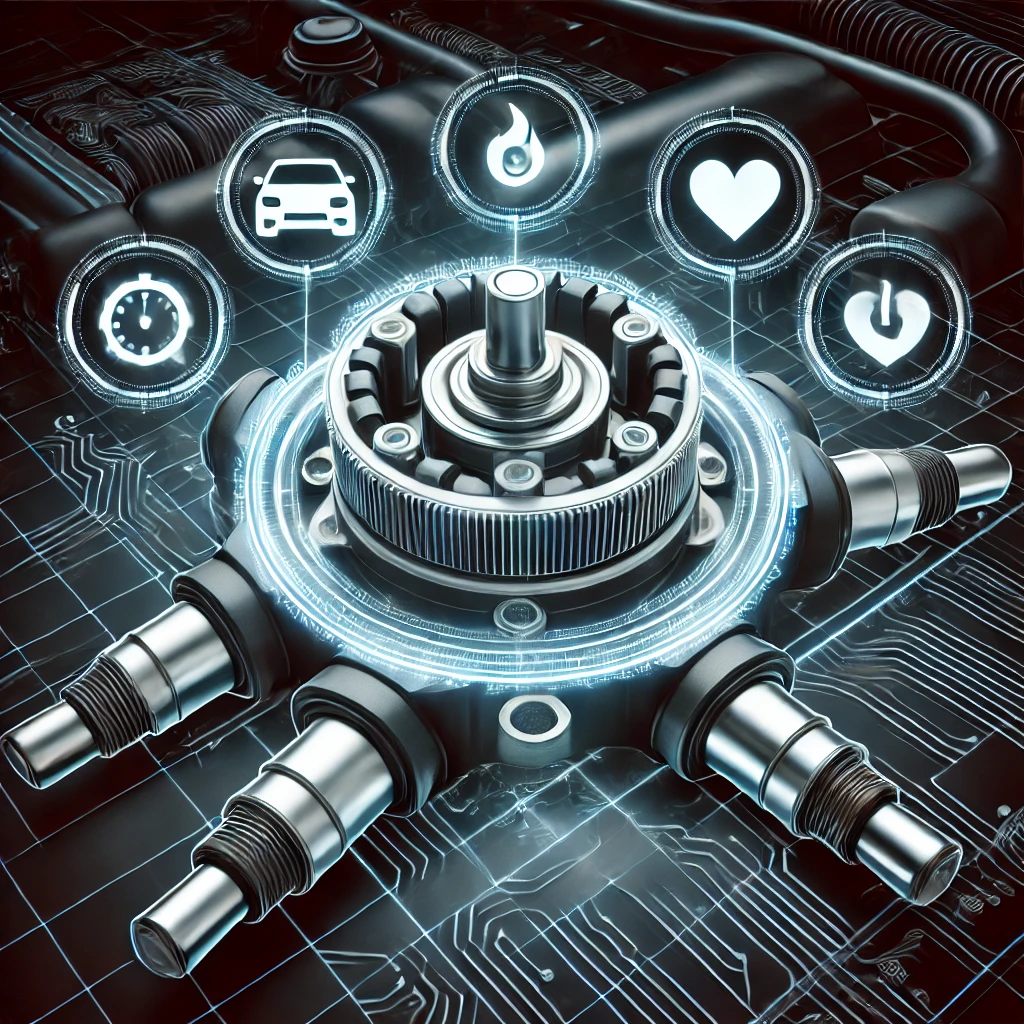




# ATC Drivetrain Explained: Components and Common Issues
Keeping your vehicle running smoothly depends heavily on one critical system: the **drivetrain**. If you’ve seen the term **ATC Drivetrain** mentioned in service manuals, diagnostic reports, or parts catalogs and wondered what it really means, this guide breaks it all down—clearly and in detail.
In this post, you’ll learn:
– 🔧 What ATC Drivetrain is and what it does
– 🧩 Main components of an ATC Drivetrain system
– ⚠️ Common problems, symptoms, and warning signs
– 🛠️ How issues are diagnosed and repaired
– ✅ How to prevent drivetrain failures and extend component life
—
## 🚗 What Is ATC Drivetrain?
**ATC** typically refers to **Active Transfer Case** or **Automatic Torque Control**, depending on the vehicle manufacturer. In everyday terms, it’s the **drivetrain control system** that manages how power is distributed from the engine to the wheels—especially in **all‑wheel drive (AWD)** or **4‑wheel drive (4WD)** vehicles.
### Role of the Drivetrain
The drivetrain’s job is to:
– Transfer engine power to the drive wheels
– Control **torque distribution** between front and rear axles
– Adapt to road conditions (wet, dry, off‑road, snow, etc.)
– Improve **traction**, **stability**, and **fuel efficiency**
In vehicles with ATC, the system automatically adjusts power delivery based on data from sensors, making driving smoother, safer, and more efficient.
—
## 🧩 Key Components of an ATC Drivetrain System
To understand how an ATC drivetrain works, let’s break down its main components and how they interact.
### 1. Engine & Transmission
Although not unique to ATC, these are the **starting point** of all drivetrain systems.
– **Engine**: Generates power.
– **Transmission** (automatic, CVT, or manual): Adjusts gear ratios to match speed and load.
From here, power flows into the **transfer case** or **torque management unit**.
—
### 2. Transfer Case (Active Transfer Case – ATC)
The **transfer case** is the core of most ATC drivetrains in AWD and 4WD vehicles.
**Function:**
– Distributes power between **front and rear axles**
– May allow switching between **2WD, 4WD High, 4WD Low**, or fully automatic modes
– Works with electronic control systems to engage or disengage drive to certain wheels
**Key internal parts:**
– ⚙️ **Input shaft** – Receives power from the transmission
– ⚙️ **Output shafts** – Send power to front and rear driveshafts
– ⚙️ **Chain or gear sets** – Transmit rotation
– 🧴 **Transfer case fluid** – Lubrication and cooling
– 🔩 **Clutch packs or multi‑plate clutches** – Enable controlled torque transfer
– 📟 **Actuators and motors** – Electronically command 2WD/AWD/4WD engagement
—
### 3. Driveshafts
**Driveshafts** are long rotating shafts that transmit power from the transfer case to the **front and/or rear differentials**.
– **Front driveshaft** – Sends power to the front axle
– **Rear driveshaft** – Sends power to the rear axle
They operate at high speeds and must stay properly **balanced**, **aligned**, and **lubricated**.
—
### 4. Differentials (Front, Center, and Rear)
Differentials allow wheels on the same axle to rotate at different speeds, which is essential for smooth turning.
– ⚙️ **Front differential** – Manages left/right wheel speed on the front axle
– ⚙️ **Rear differential** – Same function for the rear axle
– ⚙️ **Center differential** (in some AWD systems) – Balances torque between front and rear axles
Some ATC systems use an **electronically controlled center differential** or a **clutch‑based coupling** instead of a traditional mechanical diff.
—
### 5. Wheel Hubs and Axles
From the differential, power moves through:
– **Axle shafts** – Connect differential to wheel hubs
– **Wheel hubs & bearings** – Support the wheel and allow smooth rotation
In AWD systems, front hubs are especially important because of the steering and power demands combined.
—
### 6. Electronic Control Module (ECU/TCM/ATC Module)
Modern ATC drivetrains are **electronically controlled**.
The control module(s) monitor data from:
– 🚦 Wheel speed sensors
– ⚙️ Transmission and engine sensors
– 🧭 Steering angle sensor
– 🚗 Yaw and acceleration sensors
– 🧊 Traction control/ABS systems
Based on this data, the module makes **real‑time decisions** about where and how much torque to send, engaging clutches or actuators in the transfer case and differentials.
—
### 7. Sensors & Actuators
These are the “eyes” and “hands” of the ATC system.
**Sensors:**
– Wheel speed sensors
– Transfer case position sensors
– Temperature sensors (fluid and components)
– Driveshaft speed sensors
**Actuators/Motors:**
– Range selector motor (2WD/4WD High/4WD Low)
– Clutch actuators (for active torque transfer)
– Locking differential actuators (in off‑road models)
Without accurate sensors and reliable actuators, the ATC system cannot function correctly.
—
## ⚠️ Common ATC Drivetrain Issues and Symptoms
Like any complex mechanical system, ATC drivetrains are prone to wear, damage, and electronic faults. Knowing the **early warning signs** can prevent expensive repairs.
Below are the most common problems and how they usually show up.
—
### 1. Transfer Case Problems
**Common issues:**
– Worn internal **gears or chain**
– Failed or slipping **clutch packs**
– Low or contaminated **transfer case fluid**
– Faulty **shift motor or actuator**
– Cracked or leaking **housing**
**Typical symptoms:**
– 🚨 4WD or AWD warning light on the dash
– ❌ Inability to shift into 4WD, AWD, or low range
– 🔊 Grinding, whining, or clunking noises from under the vehicle
– 🛞 Jerking or binding when turning in 4WD or AWD modes
– 🛢️ Visible fluid leaks around the transfer case
**Risks if ignored:**
– Loss of 4WD/AWD capability
– Internal gear or chain failure
– Damage to driveshafts, differentials, and transmission
—
### 2. Driveshaft and U‑Joint Failures
**Common causes:**
– Worn or dry **universal joints (U‑joints)**
– Bent or out‑of‑balance driveshaft
– Damaged center support bearings (in multi‑section shafts)
**Symptoms:**
– 🔊 Vibration at certain speeds or during acceleration
– 💥 Clunking noise when shifting from Park to Drive or Reverse
– 🚗 Shuddering on take‑off
– Whining or humming noises at highway speed
Severe driveshaft failure can lead to loss of power and even physical damage to the underbody of the vehicle.
—
### 3. Differential Issues
**Common failures:**
– Worn **ring and pinion gears**
– Failed **bearings**
– Low or wrong **differential fluid**
– Broken or worn **limited‑slip clutch packs**
**Symptoms:**
– 🔊 Whining, howling, or rumbling that changes with speed
– 🛞 Clicking or clunking in tight turns
– 🛢️ Gear oil leaks at the differential housing or axle seals
– Uneven tire wear from improper power delivery
Neglected differential problems often turn into **expensive gear and bearing replacements**.
—
### 4. ATC Control Module & Sensor Failures
ATC systems depend on accurate electronic control.
**Common issues:**
– Failed **control module** (ATC/4WD control unit)
– Corroded or broken wiring and connectors
– Faulty **wheel speed sensors**
– Malfunctioning **range or position sensors** in the transfer case
**Symptoms:**
– 🚨 4WD/AWD or “Service 4WD” warning on the dashboard
– ❌ Intermittent or total loss of AWD/4WD engagement
– ⚠️ Traction control or ABS lights triggered
– Inconsistent behavior—sometimes works, sometimes doesn’t
Often these problems will store **diagnostic trouble codes (DTCs)** that can be read with a scan tool.
—
### 5. Fluid Neglect (Transfer Case & Differentials)
Drivetrain components rely on **clean, correct‑spec fluid**.
**Problems from poor maintenance:**
– Overheating of gears and bearings
– Premature wear of chain and clutches in the transfer case
– Corrosion and sludge buildup
– Seals drying out and leaking
**Symptoms:**
– 🔊 Increased noise (whine, growl, or grind)
– 🛢️ Dark, burnt‑smelling fluid during inspection
– Fluid leaks at seals and gaskets
– Gradual decline in AWD/4WD performance
Regular fluid changes are one of the **simplest and cheapest** ways to prevent ATC drivetrain failure.
—
## 🛠️ How ATC Drivetrain Issues Are Diagnosed
Professional diagnosis combines **electronic testing** with **mechanical inspection**.
### 1. Visual & Road Inspection
– Check for leaks, damaged housings, loose mounts
– Listen for unusual noises on a road test
– Verify when and how symptoms appear (cold, hot, turning, accelerating)
### 2. Computer Diagnostics
– 🔌 Connect a professional scan tool to read **DTCs**
– Check live data from:
– Wheel speed sensors
– Transfer case position sensors
– ATC module commands
– Perform actuator tests (e.g., command 4WD on/off and watch response)
### 3. Mechanical Checks
– Lift vehicle and inspect:
– Driveshaft play and U‑joint condition
– Differential backlash and bearing noise
– Transfer case mounting and fluid leaks
– Check fluid level and quality in:
– Transfer case
– Front differential
– Rear differential
Proper diagnosis avoids replacing expensive parts unnecessarily and helps identify **root causes**, such as low fluid or electrical faults.
—
## 🧰 Common ATC Drivetrain Repairs
Depending on the diagnosis, repairs may include:
### 1. Transfer Case Service or Rebuild
– Fluid drain and refill with correct spec
– Replacement of:
– Seals and gaskets
– Chains, gears, or clutch packs
– Range selector motor/actuator
In some cases, a **remanufactured transfer case** is the most cost‑effective solution.
—
### 2. Driveshaft & U‑Joint Replacement
– Replace worn **U‑joints**
– Balance or replace bent driveshafts
– Install new center support bearing if needed
This restores smooth power delivery and eliminates vibration.
—
### 3. Differential Repair or Replacement
– Replace bearings, seals, and possibly ring & pinion gears
– Service limited‑slip clutches (where applicable)
– Adjust backlash and preload to factory specifications
Proper setup is critical; incorrect setup can lead to early failure and noise.
—
### 4. Electrical & Control System Repairs
– Replace faulty sensors (wheel speed, range, temperature)
– Repair damaged wiring, corroded connectors, or broken harnesses
– Reprogram or replace the ATC control module if required
Often, a software update or reflash can resolve some modern AWD/4WD control issues.
—
## ✅ Preventive Maintenance for ATC Drivetrain Systems
Preventing drivetrain problems is always cheaper than fixing them. Follow these best practices:
### 1. Follow Manufacturer Service Intervals
– 🧴 Change **transfer case fluid** at recommended intervals
– 🧴 Change **front and rear differential fluids** on schedule
– Use only **approved fluid types**—incorrect fluids can damage clutches and seals
### 2. Inspect Regularly
– Check under the vehicle for **leaks** or damaged components
– Listen for new or unusual noises while driving
– Pay attention to **warning lights** (4WD, AWD, ABS, traction control)
Early detection often limits damage.
—
### 3. Use 4WD/AWD Properly
– Do not use **4WD Low** on dry pavement
– Avoid sharp turns on high‑traction surfaces in locked 4WD modes
– Engage AWD/4WD as recommended in your owner’s manual
Improper use puts excessive stress on transfer cases and differentials.
—
### 4. Drive Smoothly
– Avoid aggressive acceleration and heavy towing beyond rated limits
– Slow down over bumps, potholes, and off‑road obstacles
– Keep tires properly inflated and matched in size and wear
Uneven tire sizes or pressures can confuse ATC systems and strain differentials.
—
## 🧠 When to Seek Professional Help
You should have your ATC drivetrain inspected by a qualified technician if you notice:
– Persistent or intermittent **4WD/AWD warning lights**
– Difficulty engaging or disengaging 4WD, AWD, or low range
– New vibrations, clunks, or whining noises from under the vehicle
– Leaks of red, brown, or honey‑colored fluid beneath the drivetrain area
Acting quickly can be the difference between a minor fluid service and a **major transfer case or differential replacement**.
—
## Summary: Understanding and Protecting Your ATC Drivetrain
An **ATC drivetrain** is a sophisticated system that intelligently manages how engine power reaches your wheels. It relies on:
– A strong **transfer case**
– Healthy **driveshafts and differentials**
– Accurate **sensors and control modules**
– Clean, correct **fluids**
Common problems often start with **small warning signs**—noise, warning lights, or slight performance changes. With proper maintenance and timely repairs, your ATC drivetrain can deliver years of reliable, efficient traction in all conditions.
If you suspect an issue with your ATC system or want a preventive inspection, scheduling a professional drivetrain check is the best next step to keep your vehicle safe, smooth, and ready for any road.