



# 🔍 Do Diesel Engines Have Spark Plugs?
## Common Myths Explained (With Clear Examples)
When it comes to engines, one question pops up again and again:
> **“Do diesel engines have spark plugs?”**
The simple answer: **No, traditional diesel engines do not use spark plugs.**
But the *reason why* is where things get interesting—and where a lot of myths are born.
In this detailed guide, we’ll explain:
– ✅ How diesel engines actually ignite fuel
– ✅ What components they use instead of spark plugs
– ✅ The main differences between diesel and gasoline engines
– ✅ Common myths and misunderstandings
– ✅ Special cases (like modern “diesel-style” gasoline engines)
Whether you’re a driver, a DIY mechanic, or just curious, this post will give you a clear, practical understanding—without the confusion.
—
## 🔥 1. How Do Diesel Engines Work?
To understand why diesel engines don’t use spark plugs, you first need to know how they operate.
### 🧠 Basic Principle: Compression Ignition
Diesel engines use **compression ignition**, not **spark ignition**.
Here’s how a typical diesel engine cycle works:
1. **Intake Stroke**
– The engine draws **air only** (no fuel yet) into the cylinder.
2. **Compression Stroke**
– The piston compresses the air to an extremely high pressure.
– This compression causes the **air temperature to rise dramatically**—often above 500°C (932°F).
3. **Fuel Injection**
– At just the right moment, **diesel fuel is injected** directly into this super-hot compressed air.
– The fuel **ignites automatically** due to the heat from compression—no spark needed.
4. **Power Stroke**
– The burning fuel-air mixture expands and pushes the piston down, creating power.
5. **Exhaust Stroke**
– The engine expels the exhaust gases from the cylinder.
This is the heart of **why diesel engines don’t need spark plugs**:
➡️ The heat from compression is enough to ignite the fuel.
—
## ⚡ 2. How Gasoline Engines Are Different
Gasoline engines (like most cars and small vehicles) use a **spark ignition** system.
### 🧩 Spark Ignition in Gasoline Engines
Here’s what happens inside a typical gasoline engine:
1. **Air + Fuel Mixture Intake**
– Air and fuel are mixed (either in a carburetor or via fuel injection) *before* entering the cylinder.
2. **Compression Stroke**
– The piston compresses the air-fuel mixture, but **not as much as in a diesel engine**.
– Compression ratios are lower to avoid pre-ignition or “knocking.”
3. **Spark Plug Ignition**
– A **spark plug** creates a timed electric spark.
– This spark ignites the fuel-air mixture.
4. **Power & Exhaust Strokes**
– Similar to diesel: the explosion pushes the piston, then exhaust is expelled.
### 🔑 Key Difference
– **Gasoline engine:** Needs a **spark plug** to ignite the mixture.
– **Diesel engine:** Relies on **high compression and heat** to ignite fuel.
This fundamental difference is why **spark plugs are essential in gasoline engines—but unnecessary in traditional diesel engines.**
—
## 🧯 3. If Diesel Engines Don’t Use Spark Plugs, What Do They Use?
Here’s where things often get misunderstood.
Most diesel engines use a different component that people sometimes confuse with spark plugs:
### 🔥 Glow Plugs (Common in Diesel Engines)
**Glow plugs** are not the same as spark plugs, but they do help with **starting** a diesel engine—especially in cold weather.
#### What Do Glow Plugs Do?
– They are **small heating elements** installed in each cylinder (or the pre-chamber, depending on design).
– When you turn the key (or press start) in a diesel vehicle, the glow plugs **heat up** for a few seconds.
– This warms the air in the combustion chamber, making it easier for the diesel fuel to ignite during cold starts.
#### Key Points About Glow Plugs:
– ❌ They **do not** produce a spark.
– ❌ They **do not** fire continuously like spark plugs in a gasoline engine.
– ✅ They are used **temporarily**, mainly during engine startup.
– ✅ Once the engine is warm, most diesels run just fine **without active glow plug heating**.
### 🧪 Summary: Glow Plugs vs. Spark Plugs
| Feature | Spark Plug | Glow Plug |
|————————|————————————-|——————————————–|
| Engine Type | Gasoline (petrol) | Diesel |
| Purpose | Ignite air-fuel mixture | Help start engine in cold conditions |
| How It Works | Produces electric **spark** | Produces **heat** (glows red-hot) |
| Active When? | Every power stroke while running | Mainly during **start-up** |
| Part of Ignition? | ✅ Essential ignition source | ❌ Not the main ignition source |
—
## 🧱 4. Why Diesel Engines Don’t Need Spark Plugs
It comes down to **engine design and physics**.
### 💨 4.1 High Compression Ratios
Diesel engines are built with **very high compression ratios**, often in the range of **14:1 to 22:1**, compared to **8:1 to 12:1** in most gasoline engines.
– Higher compression = higher temperature.
– At these temperatures, when diesel fuel is injected, it **self-ignites**.
Because of this:
– No external spark is required.
– Timing is controlled by **when the fuel is injected**, not when a spark is fired.
### 🛠️ 4.2 Direct Injection & Fuel Properties
Diesel fuel has different properties from gasoline:
– It is **less volatile** and has a **higher auto-ignition temperature**.
– It burns efficiently under **high pressure and temperature**, exactly what a diesel engine delivers.
By carefully timing the **fuel injection**, engineers control:
– Power output
– Emissions
– Noise
– Fuel efficiency
All **without** needing spark plugs.
—
## 🧵 5. Common Myths About Diesel Engines and Spark Plugs
Let’s clear up some of the most common misconceptions.
### ❌ Myth 1: “All engines that run on fuel must have spark plugs.”
**Reality:**
Only **spark-ignition engines** (like most gasoline engines) need spark plugs.
**Compression-ignition engines** (like traditional diesels) do not.
—
### ❌ Myth 2: “Diesel engines use spark plugs, but they’re just called glow plugs.”
**Reality:**
Glow plugs and spark plugs are **completely different parts**:
– Spark plugs create a **spark** to ignite fuel.
– Glow plugs create **heat** to help ignition during startup.
They serve different roles and are not interchangeable.
—
### ❌ Myth 3: “If my diesel is hard to start, I need new spark plugs.”
**Reality:**
Diesel engines **don’t have spark plugs.**
If your diesel is hard to start, possible causes include:
– Worn or failing **glow plugs**
– Weak **battery** (slower cranking = less compression heat)
– Fuel system issues (air in the lines, clogged filter, bad injectors)
– Low compression due to engine wear
In a diesel, **glow plugs** or **fuel system** are often the first suspects—not spark plugs.
—
### ❌ Myth 4: “Some diesel engines do have spark plugs.”
**Reality (with nuance):**
– Traditional, standard diesel engines do **not** have spark plugs.
– However, **modern experimental or specialized engines** can blur the line between diesel and gasoline technology, which has led to some confusion (explained below).
—
## 🧬 6. Special Cases: Engines That Blur the Lines
Modern engine technology is evolving, and some systems mimic diesel-like combustion in gasoline engines.
### 🚗 6.1 Gasoline Engines Using “Diesel-Style” Combustion
Some manufacturers (like Mazda with their Skyactiv-X technology) use **compression ignition** with gasoline. However:
– These engines **still use spark plugs**, often to **control or assist** the combustion event.
– They are *not* diesel engines but **gasoline engines with advanced combustion strategies**.
So you might see:
– Gasoline engine
– High compression
– Some diesel-like behavior
– **Still uses spark plugs**
This can confuse people into thinking diesels use spark plugs, but in reality, these are **gasoline engines with hybrid technologies**, not pure diesels.
—
## 🧰 7. What You’ll Find in a Typical Diesel Engine
To clarify what’s actually under the hood of a diesel engine, here’s an overview of key components related to ignition and combustion:
### 🔑 Key Diesel Components (Related to Ignition)
– **Fuel Injectors**
– Spray precise amounts of diesel fuel into the hot compressed air.
– Their timing and pattern are crucial to performance and emissions.
– **Glow Plugs**
– Aid starting by warming up the combustion chamber or pre-chamber.
– Usually controlled by a **glow plug relay** and **timer**.
– **High-Pressure Fuel Pump / Common Rail System**
– Builds and regulates the high fuel pressure needed for atomization.
– Common rail systems can exceed 20,000+ psi of pressure.
– **ECU (Engine Control Unit)**
– Manages fuel injection timing, duration, and often glow plug operation.
### 🧾 What You Will *Not* Find in a Traditional Diesel:
– ❌ Spark plugs
– ❌ Ignition coils
– ❌ Distributor (in modern diesel systems)
Those are typical of **spark-ignition gasoline engines**, not diesels.
—
## 🧩 8. Why the Confusion Exists
If diesel engines don’t use spark plugs, why do so many people think they do?
### 📌 Reason 1: Visual Similarity
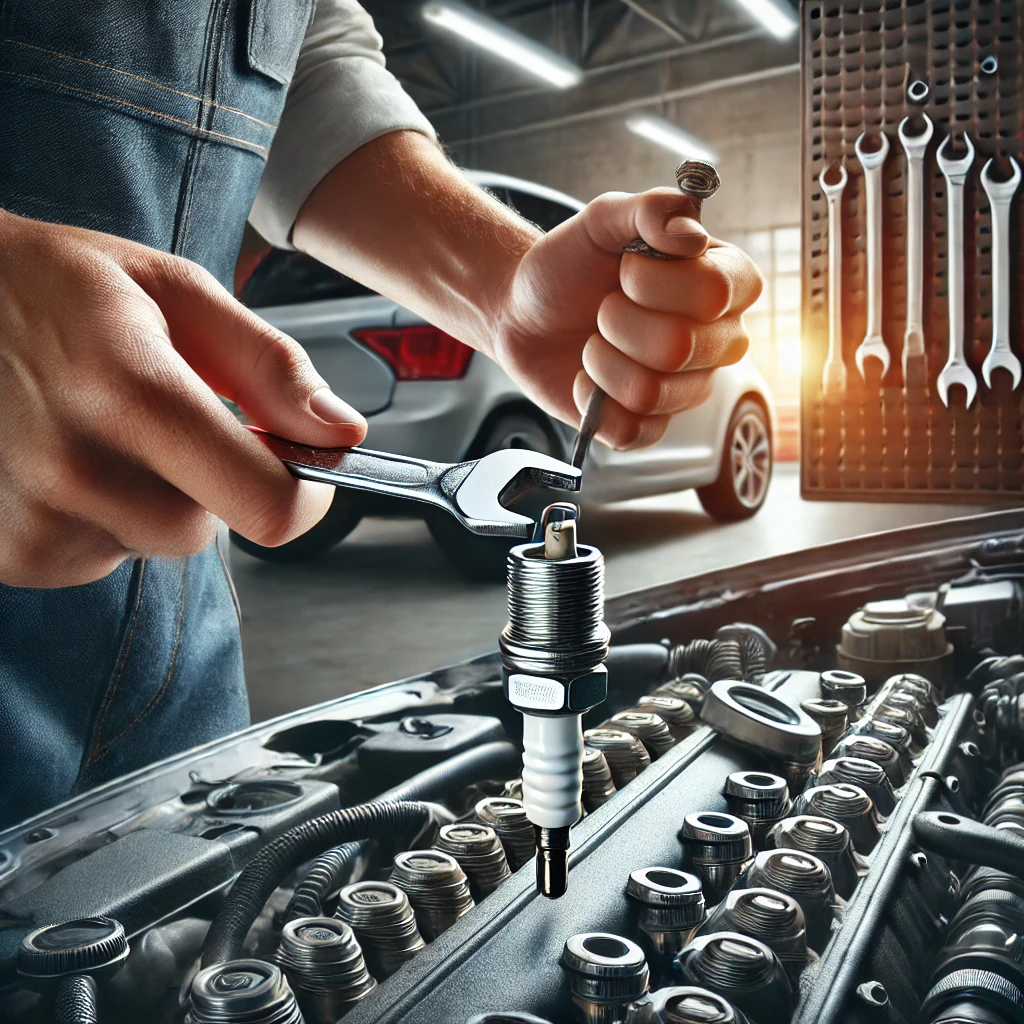
Glow plugs and spark plugs can look **visually similar**—small threaded components that screw into the cylinder head.
– Many times, someone sees a glow plug and calls it a “spark plug” out of habit.
– This gets repeated, and the myth spreads.
### 📌 Reason 2: Mixed Experience with Gas & Diesel
Drivers who’ve had both gasoline and diesel vehicles may:
– Have replaced spark plugs in gasoline cars.
– Later replace glow plugs in diesels.
– Naturally assume the parts serve the same purpose.
### 📌 Reason 3: Lack of Clear Explanation
Not all manuals or salespeople explain the difference clearly.
Without a simple breakdown of **compression ignition vs. spark ignition**, confusion is almost guaranteed.
—
## ✅ 9. Quick FAQ: Diesel Engines & Spark Plugs
### Q1: Do diesel engines have spark plugs?
**Answer:** No. Traditional diesel engines do **not** use spark plugs.
—
### Q2: What do diesel engines use instead of spark plugs?
**Answer:** They use:
– **High compression** to heat air
– **Fuel injectors** to introduce diesel fuel at the right moment
– **Glow plugs** (optional) to help with cold starts, not continuous ignition
—
### Q3: Can you install spark plugs in a diesel engine?
**Answer:** No. Diesel engines are not designed for spark plugs:
– The combustion process is completely different.
– There’s nowhere to integrate spark ignition in a standard diesel design.
– Attempting to modify it would be impractical and unsafe.
—
### Q4: Why does my diesel dashboard show a coil-shaped light before starting?
**Answer:** That symbol is your **glow plug indicator**:
– It lights up while the glow plugs are warming up.
– When it turns off, it usually means the engine is ready to start.
—
### Q5: Do older diesels work differently from modern ones?
**Answer:** The **core principle (compression ignition)** is the same:
– Older diesels might use **indirect injection** and different glow plug designs.
– Newer diesels often use **common rail injection** and more advanced electronic control.
– But none of them rely on spark plugs for ignition.
—
## 🏁 10. Final Summary: The Truth About Diesel Engines and Spark Plugs
To wrap it all up clearly:
– ✅ **Diesel engines do not have spark plugs.**
– ✅ They use **compression ignition**, where heated air ignites injected fuel.
– ✅ **Glow plugs** are used to **assist cold starts**, not to spark ignition.
– ✅ Spark plugs are a feature of **gasoline (spark-ignition) engines**, not diesels.
– ✅ Modern hybrid technologies may blur the lines, but traditional diesel remains **sparkless**.
Understanding this difference helps you:
– Diagnose engine issues more accurately
– Maintain your diesel vehicle correctly
– Avoid confusion when someone says, “My diesel needs new spark plugs”
If you drive or work with diesel engines, remembering this one phrase will keep you on the right track:
> **Diesel = compression ignition (no spark plugs)**
> **Gasoline = spark ignition (needs spark plugs)**
—
Want more in-depth guides on diesel maintenance, performance, and troubleshooting?
Explore our latest articles or contact us for expert advice tailored to your vehicle.