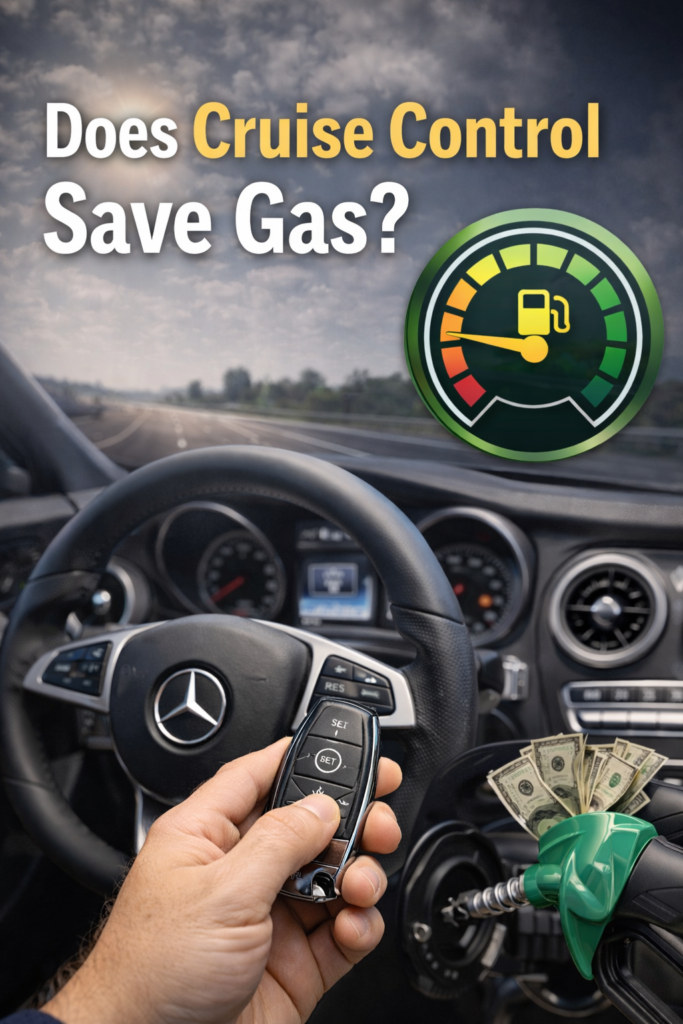




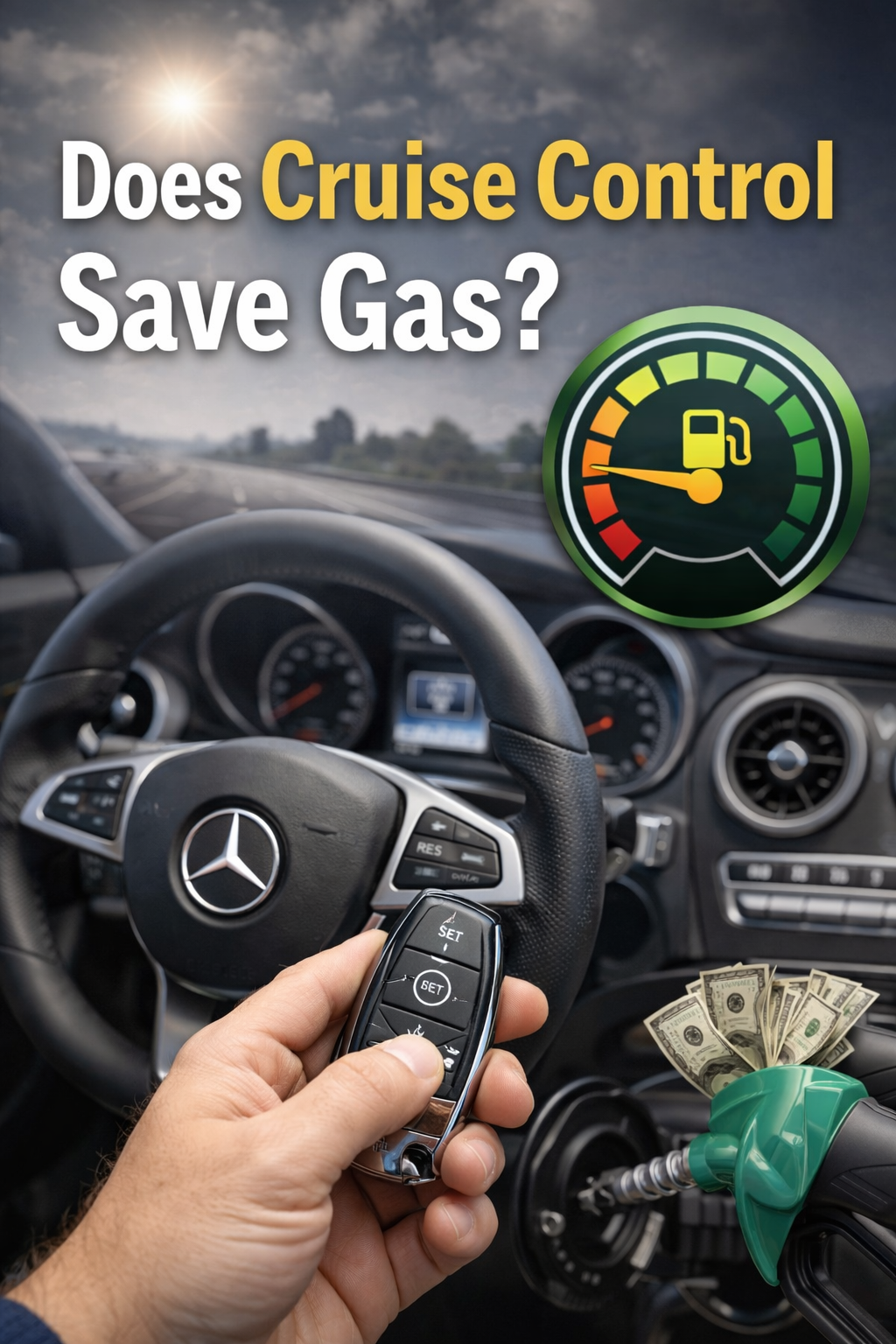
If you have ever driven on the highway and wondered “does cruise control save gas?”, you are not alone. Millions of drivers in the USA, Canada, and the UK use cruise control every day—but many don’t know whether it actually reduces fuel consumption or not.
In this complete guide, you will learn:
-
How cruise control really works
-
When it saves fuel
-
When it wastes fuel
-
How modern adaptive cruise control affects MPG
-
How much gas you can actually save
This article is written using automotive engineering data and real-world driving physics.
Table of Contents
-
What Is Cruise Control?
-
How Cruise Control Works
-
Why Cruise Control Can Save Gas
-
When Cruise Control Wastes Fuel
-
Highway vs City Driving
-
Flat Roads vs Hills
-
Manual vs Automatic Cars
-
Adaptive Cruise Control
-
Cruise Control and Hybrid Vehicles
-
Cruise Control and Electric Vehicles
-
Real MPG Numbers
-
Common Myths
-
How to Use Cruise Control for Best Fuel Economy
-
Is Cruise Control Bad for Your Engine?
-
Final Verdict
1. What Is Cruise Control?
Cruise control is a system that automatically maintains your car’s speed without you pressing the accelerator pedal. Once set, the vehicle uses its throttle to keep you traveling at a constant speed.
In modern vehicles, cruise control is controlled by:
-
Electronic throttle bodies
-
Speed sensors
-
Engine control units (ECUs)
This makes cruise control much more precise than a human foot.
2. How Cruise Control Works
When cruise control is activated, the ECU constantly monitors:
-
Vehicle speed
-
Engine load
-
Throttle position
-
Road resistance
The system adjusts the throttle hundreds of times per second to maintain speed. This is far more consistent than a human driver, who naturally speeds up and slows down without realizing it.
That consistency is the key to fuel savings.
3. Why Cruise Control Can Save Gas
Cruise control saves fuel because it:
-
Prevents unnecessary acceleration
-
Keeps RPM stable
-
Reduces throttle fluctuations
-
Maintains optimal engine load
When a driver controls the gas pedal manually, small speed changes constantly occur. These changes require more fuel because engines burn the most fuel when accelerating.
Cruise control eliminates these micro-accelerations.
4. When Cruise Control Wastes Fuel
Cruise control is not always more efficient.
It wastes fuel when:
-
Driving on hills
-
In traffic
-
On winding roads
-
In stop-and-go conditions
Why? Because cruise control tries to maintain speed no matter what. When going uphill, it opens the throttle aggressively, burning more fuel than a human driver would.
A human driver naturally eases off on hills, allowing speed to drop slightly to save fuel. Cruise control does not.
5. Highway vs City Driving
Cruise control is most efficient on:
-
Highways
-
Long, flat roads
-
Steady traffic
It is least efficient in:
-
City traffic
-
Urban areas
-
Stop-and-go driving
In city driving, cruise control is rarely used because speed constantly changes. Fuel savings only occur when speed is stable.
6. Flat Roads vs Hills
This is where many people get confused.
On flat terrain, cruise control can reduce fuel consumption by 5–10%.
On hilly roads, it can increase fuel consumption by 2–5%.
If you drive in places like:
-
Texas
-
Florida
-
The Canadian prairies
-
England’s flat motorways
Cruise control works very well.
If you drive in:
-
Colorado
-
British Columbia
-
Wales
-
Scotland
Manual throttle control may be more fuel-efficient.
7. Manual vs Automatic Cars
In automatic cars, cruise control is very efficient because:
-
The ECU can control throttle
-
The transmission shifts optimally
In manual transmission cars, cruise control still works but may cause unnecessary downshifts on hills, which increases fuel use.
8. Adaptive Cruise Control
Modern cars use Adaptive Cruise Control (ACC), which adjusts speed based on traffic.
This system can:
-
Brake
-
Accelerate
-
Maintain distance
However, adaptive cruise control is less fuel-efficient than standard cruise control because:
-
It reacts to other drivers
-
It constantly changes speed
-
It uses brakes instead of coasting
ACC improves safety, but not fuel economy.
9. Cruise Control in Hybrid Vehicles
Hybrid cars use regenerative braking and electric motors.
Cruise control in hybrids:
-
Helps keep engine in efficient range
-
Can increase electric driving time
-
Can improve MPG by 3–7%
However, aggressive adaptive cruise control may reduce these gains.
10. Cruise Control in Electric Vehicles
In EVs:
-
Cruise control helps maximize range
-
It reduces throttle spikes
-
It improves regenerative braking efficiency
Using cruise control in an EV can increase range by 5–10%.
11. Real-World MPG Numbers
Based on EPA and real driving data:
| Driving Type | MPG with Cruise Control | MPG without |
|---|---|---|
| Flat highway | +5–10% | Lower |
| Hilly highway | –2–5% | Better |
| City | No benefit | Same |
12. Common Myths
❌ Cruise control always saves gas
❌ Cruise control is bad for engines
❌ It damages transmissions
❌ It increases engine wear
All false.
Cruise control does not harm modern vehicles.
13. How to Use Cruise Control for Maximum Fuel Savings
Do this:
-
Use it on flat highways
-
Set speed between 55–70 mph
-
Turn it off on hills
-
Avoid heavy traffic
This gives the best MPG.
14. Is Cruise Control Bad for Your Engine?
No.
Modern engines are designed to run at steady RPM for long periods. In fact, cruise control reduces stress because:
-
RPM is stable
-
Throttle is smooth
-
Temperature remains constant
This can actually extend engine life.
15. Final Verdict – Does Cruise Control Save Gas?
Yes — cruise control does save gas, but only under the right conditions.
It works best on:
-
Flat highways
-
Long trips
-
Light traffic
It does NOT save fuel on:
-
Hills
-
Stop-and-go driving
-
Mountain roads
When used correctly, cruise control can improve fuel economy by up to 10%.