




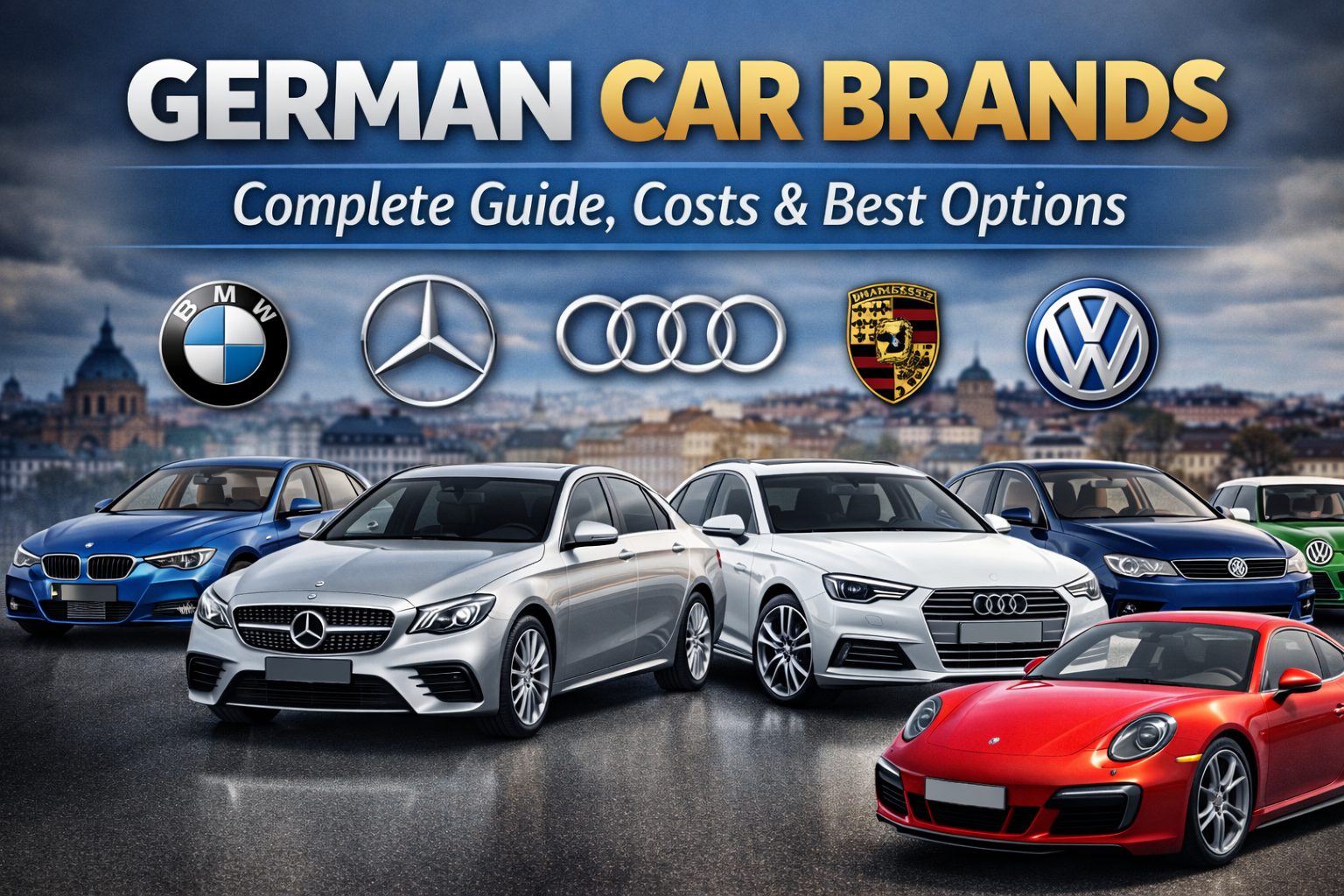
German car brands are globally recognized for their engineering excellence, performance, luxury, and cutting-edge technology. From affordable compact cars to high-performance sports vehicles and ultra-luxury sedans, Germany has shaped the automotive industry for more than a century.
- Why German Car Brands Are So Popular
- Major German Car Brands Overview
- Cost of Owning German Car Brands
- Reliability of German Car Brands
- Best German Car Brands by Category
- German Car Brands vs Other Countries
- Are German Cars Worth the Money?
- Tips for Buying a German Car
- Frequently Asked Questions
- Are German cars expensive to maintain?
- Which German brand is most reliable?
- Do German cars hold their value?
- Final Verdict: Best German Car Brands in 2026
In this complete guide, we’ll explore the most popular German car brands, their costs, strengths, weaknesses, and the best options depending on your budget and driving needs.
Why German Car Brands Are So Popular
German car brands have earned a reputation for quality and innovation thanks to:
- Precision engineering
- Advanced safety systems
- Powerful and efficient engines
- High-quality materials and craftsmanship
- Strong resale value for premium models
Germany’s automotive culture emphasizes performance, durability, and driver experience, making these brands highly desirable worldwide.
Major German Car Brands Overview
Germany is home to some of the most iconic automotive manufacturers in the world.
BMW
BMW is known for its sporty driving dynamics and luxury appeal.
Popular models:
- BMW 3 Series
- BMW 5 Series
- BMW X3 / X5
- BMW M Series
Strengths:
- Excellent handling
- Strong engines
- Premium interiors
Weaknesses:
- Higher maintenance costs
- Repairs can be expensive
Mercedes-Benz
Mercedes-Benz represents luxury, comfort, and advanced technology.
Popular models:
- C-Class
- E-Class
- S-Class
- GLE / G-Class
Strengths:
- Exceptional comfort
- Cutting-edge safety features
- Prestigious brand image
Weaknesses:
- Higher upfront cost
- Complex electronics
Audi
Audi blends modern design, technology, and performance.
Popular models:
- Audi A4
- Audi A6
- Audi Q5
- Audi Q7
Strengths:
- Quattro all-wheel drive
- Clean, modern interiors
- Advanced infotainment systems
Weaknesses:
- Maintenance costs
- Less sporty feel than BMW (in base models)
Volkswagen (VW)
Volkswagen is Germany’s most mass-market brand, offering reliability and value.
Popular models:
- Volkswagen Golf
- Passat
- Tiguan
- Jetta
Strengths:
- Affordable compared to luxury brands
- Good fuel efficiency
- Strong reliability record
Weaknesses:
- Less luxurious interiors
- Performance-focused trims cost more
Porsche
Porsche focuses on high-performance sports cars and luxury SUVs.
Popular models:
- Porsche 911
- Cayenne
- Macan
- Panamera
Strengths:
- Exceptional performance
- Strong resale value
- Motorsport heritage
Weaknesses:
- Very high prices
- Expensive insurance and maintenance
MINI (BMW Group)
Although British in origin, MINI is owned by BMW and engineered in Germany.
Popular models:
- MINI Cooper
- MINI Countryman
Strengths:
- Fun driving experience
- Compact and stylish
- Premium feel in a small package
Weaknesses:
- Limited rear space
- Higher repair costs than economy cars
Cost of Owning German Car Brands
Purchase Price
German cars range from affordable to ultra-luxury:
- Volkswagen: Budget-friendly
- BMW / Audi / Mercedes-Benz: Mid-to-premium
- Porsche: High-end luxury and performance
Maintenance & Repairs
German vehicles typically have:
- Higher labor costs
- More complex parts
- Advanced electronics
Regular maintenance is crucial to avoid costly repairs.
Insurance Costs
Insurance premiums tend to be:
- Moderate for VW and MINI
- High for BMW, Mercedes, Audi
- Very high for Porsche models
Reliability of German Car Brands
German cars are reliable when properly maintained, but they are less forgiving of neglected servicing.
Best for reliability:
- Volkswagen
- Audi (newer models)
Higher maintenance risk:
- Older BMW and Mercedes models
- High-performance Porsche vehicles
Following manufacturer service schedules is essential.
Best German Car Brands by Category
Best Budget Option
Volkswagen
Reliable, affordable, and efficient for daily driving.
Best Luxury Sedan
Mercedes-Benz S-Class
Unmatched comfort and advanced technology.
Best Sporty Daily Driver
BMW 3 Series
Excellent balance of performance and practicality.
Best Performance Car
Porsche 911
Iconic sports car with outstanding engineering.
Best SUV
Audi Q5 / BMW X5
Luxury, technology, and versatility combined.
German Car Brands vs Other Countries
| Country | Strength | Comparison |
|---|---|---|
| Germany | Engineering & performance | Best driving experience |
| Japan | Reliability & low cost | Cheaper maintenance |
| USA | Power & size | Less refined interiors |
| Italy | Design & passion | Less reliable overall |
German car brands excel in driver-focused engineering but often cost more to own.
Are German Cars Worth the Money?
German car brands are worth it if you:
- Value performance and comfort
- Appreciate premium interiors
- Follow maintenance schedules
- Plan for higher ownership costs
They may not be ideal if:
- You want ultra-low maintenance costs
- You prefer simple mechanical systems
- You drive infrequently and skip servicing
Tips for Buying a German Car
- Always check service history
- Consider certified pre-owned models
- Budget for maintenance
- Avoid neglected high-mileage vehicles
- Use specialized German car mechanics
A well-maintained German car can last 200,000+ miles.
Frequently Asked Questions
Are German cars expensive to maintain?
Yes, generally more expensive than Japanese or Korean cars.
Which German brand is most reliable?
Volkswagen and newer Audi models rank well for reliability.
Do German cars hold their value?
Luxury models depreciate faster, while Porsche holds value very well.
Final Verdict: Best German Car Brands in 2026
German car brands continue to dominate the automotive world with innovation, luxury, and performance. Whether you choose Volkswagen for value, BMW for sportiness, Mercedes-Benz for comfort, Audi for technology, or Porsche for performance, there’s a German car for every type of driver.
If you’re willing to invest in proper maintenance, German vehicles deliver an unmatched driving experience that few other brands can offer.