



# Honda CVT Gearbox: Reliability, Problems, and Maintenance Guide
The Honda CVT (Continuously Variable Transmission) gearbox has become a key feature in many modern Honda models, from compact city cars to SUVs. It’s designed to deliver smooth acceleration, better fuel economy, and a more refined driving experience. But like any advanced system, it has its own set of strengths, weaknesses, and maintenance requirements.
In this detailed guide, you’ll learn:
– ✅ How reliable Honda CVT gearboxes really are
– ⚠️ The most common Honda CVT problems and symptoms
– 🔧 Essential maintenance tips to extend CVT life
– 💡 Driving habits that protect your CVT
– 💰 Typical repair and replacement costs
—
## 🧩 What Is a Honda CVT Gearbox?
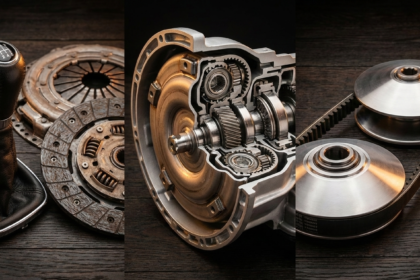
A CVT (Continuously Variable Transmission) is different from traditional automatic or manual transmissions. Instead of using fixed gears (1st, 2nd, 3rd, etc.), it uses:
– **A pair of variable pulleys**
– **A steel belt or chain**
– **Hydraulic and electronic controls**
By constantly adjusting the pulley ratios, a CVT keeps the engine in its most efficient power band, providing:
– Smoother, gearless acceleration
– Better fuel economy
– More consistent power delivery in city and highway driving
### Common Honda Models with CVT
Honda uses CVT gearboxes in many recent models, including:
– Honda Civic (select trims and years)
– Honda Accord (1.5T and 2.0T CVT variants in some markets)
– Honda City
– Honda Jazz / Fit
– Honda HR-V / Vezel
– Honda CR-V (certain engines and regions)
– Honda Insight & some hybrid models
Always check your owner’s manual or VIN to confirm if your Honda is equipped with a CVT.
—
## ✅ Honda CVT Reliability: How Good Is It?
Overall, Honda CVT transmissions are considered **reliable** when:
– Properly maintained
– Driven with reasonable habits
– Filled with the correct Honda CVT fluid
Honda has a strong engineering reputation, and their CVTs are generally:
– 🟢 Reliable for **150,000–200,000+ km** (90,000–125,000+ miles) with good care
– 🟢 Efficient in fuel consumption
– 🟢 Smooth in everyday driving
However, like any mechanical system, problems may appear due to:
– Lack of maintenance
– Incorrect fluid use
– Aggressive driving
– Heavy loads or frequent stop‑and‑go in hot climates
– Manufacturing defects in certain model years or batches
### Factors That Affect Honda CVT Lifespan
1. **Maintenance History**
– Regular fluid changes are critical. Old or contaminated CVT fluid is the most common cause of premature wear.
2. **Driving Style**
– Aggressive acceleration, towing, and constant high loads stress the CVT.
3. **Climate & Environment**
– Hot, humid, or mountainous regions increase heat and strain on the transmission.
4. **Model & Generation**
– Early-generation CVTs (in older Civic, Jazz/Fit, etc.) had more reported issues. Later designs are typically more robust.
—
## ⚠️ Common Honda CVT Gearbox Problems
While many Honda CVTs run trouble-free, some drivers experience issues. Knowing the common symptoms helps you react early and avoid major damage.
### 1. Shuddering or Jerking at Low Speeds
**Symptoms:**
– Vibration or judder when accelerating from a stop
– Jerky movement around 20–40 km/h (12–25 mph)
– Feels like the car is “slipping” or struggling to move smoothly
**Possible Causes:**
– Degraded or old CVT fluid
– Contaminated fluid (metal particles, overheating)
– Worn start clutch or belt/pulley surfaces
**What to Do:**
– Perform a **CVT fluid change** (with genuine Honda CVT fluid)
– In severe cases, a **CVT service or overhaul** may be required
—
### 2. CVT Overheating
**Symptoms:**
– Transmission warning light on dashboard
– Reduced power / vehicle enters “limp” mode
– Engine revs high, but acceleration is weak
– Overheating warning after extended uphill driving or heavy loads
**Possible Causes:**
– Low or degraded CVT fluid
– Blocked or inefficient transmission cooler
– Prolonged heavy load driving (towing, steep hills, hot climate)
**What to Do:**
– Stop and let the car cool down
– Check fluid level and condition (if accessible)
– Have the cooling system and CVT inspected by a professional
—
### 3. Delayed Engagement (D, R) or Slipping
**Symptoms:**
– Delay when shifting from P to D or R
– Engine revs increase but car barely moves
– Feels like “slip” when accelerating
**Possible Causes:**
– Low fluid level or incorrect fluid type
– Worn internal components (belt, pulleys, valves)
– Faulty solenoids or pressure control issues
**What to Do:**
– Immediate inspection at a transmission specialist or Honda dealer
– Continuing to drive in this condition can cause catastrophic failure
—
### 4. Whining, Humming, or Grinding Noises
**Symptoms:**
– High‑pitched whining that changes with speed
– Humming or droning from the transmission area
– Grinding or metallic noises under load
**Possible Causes:**
– Worn bearings
– Damaged belt or pulleys
– Lack of lubrication or old fluid
**What to Do:**
– Have the noise professionally diagnosed
– Early intervention may save the transmission from full replacement
—
### 5. Check Engine Light or Transmission Warning Light
**Symptoms:**
– Dashboard warnings related to transmission
– Sluggish response or limp mode
– Error codes when scanned (P07xx, etc.)
**Possible Causes:**
– Sensor failures (speed sensor, pressure sensor, temperature sensor)
– Faulty solenoids
– Internal hydraulic or mechanical problem
**What to Do:**
– Get a **diagnostic scan** with an OBD-II scanner
– Address specific codes – do not ignore warning lights
—
## 🛠️ Essential Honda CVT Maintenance
Proper maintenance is the key to Honda CVT reliability. Unlike manual gearboxes, CVTs are sensitive to fluid quality and temperature.
### 1. Use Only Genuine Honda CVT Fluid
Honda’s CVT units are designed to work **only** with their specific CVT fluid (e.g., Honda HCF-2, depending on model/year).
– ❌ Do NOT use generic ATF or universal CVT fluid
– ✅ Always use Honda-approved CVT fluid specified in your owner’s manual
Using the wrong fluid type can cause:
– Premature wear
– Shuddering
– Overheating
– Total transmission failure
—
### 2. CVT Fluid Change Interval
Typical recommended intervals (check your manual for your exact model):
– **Every 40,000–60,000 km** (25,000–40,000 miles) under normal conditions
– **Every 30,000–40,000 km** (18,000–25,000 miles) under severe conditions:
– Frequent stop‑and‑go city driving
– Towing or heavy loads
– Hot climate or mountainous terrain
Even if your manual suggests longer intervals, **more frequent fluid changes** are a cheap way to protect an expensive component.
—
### 3. CVT Fluid Change vs. Flush
– **Drain & Fill** (Recommended):
– Drains a portion of the old fluid
– Refill with fresh Honda CVT fluid
– May be repeated 2–3 times over several days for maximum refresh
– **Power Flush** (Not recommended without need):
– Uses machines to push fluid through the system
– Can dislodge debris and cause blockages in sensitive CVT passages
For Honda CVTs, a **regular drain & fill with the correct fluid** is usually safest.
—
### 4. CVT Filter & Cooling System
Some Honda CVT systems include:
– Internal or external filters
– Dedicated transmission coolers or integrated radiators
Maintenance tips:
– 📌 Have the **cooling system** checked regularly (radiator, fans, coolant)
– 📌 Replace CVT filters if serviceable and recommended by Honda
– 📌 Ensure no mud, debris, or dirt is blocking the front grille or cooler
Keeping the CVT cool is crucial for preventing fluid breakdown and internal damage.
—
## 🚗 Driving Habits to Protect Your Honda CVT
Your driving style has a big impact on CVT lifespan. Small changes can add years of life.
### 1. Avoid Hard Launches and Sudden Acceleration
Repeated full‑throttle starts from a standstill put massive load on the belt and pulleys.
– Accelerate **smoothly and progressively**
– Avoid racing starts or unnecessary kick‑downs
—
### 2. Don’t Tow Beyond Rated Capacity
CVTs are not designed for heavy towing in most compact and midsize Honda models.
– Check the **owner’s manual towing capacity**
– If towing is allowed, drive gently and monitor for overheating
– Consider an auxiliary transmission cooler where appropriate and available (consult a professional)
—
### 3. Use the Correct Driving Modes
Many Honda CVTs offer:
– **D** – Normal driving
– **S** or **L** – Sport or Low gear for hills and engine braking
– **Econ** – Eco mode to optimize fuel consumption
Use modes as intended:
– Use **D** for daily driving
– Use **L** or **S** for steep hills or engine braking, not for constant aggressive driving
—
### 4. Avoid “Neutral Drops” and Bad Habits
Harmful practices include:
– Revving the engine in **N** then quickly shifting into **D** or **R**
– Constantly shifting between **D** and **N** at traffic lights
– Rolling backwards on hills using only the transmission instead of the brake
These all stress internal components unnecessarily.
—
### 5. Warm Up Gently
In cold weather:
– Avoid hard acceleration immediately after starting the engine
– Drive gently for the first few minutes to allow engine and CVT fluid to warm up
—
## 🧪 How to Spot Early CVT Trouble
Catching problems early can save thousands in repair costs. Watch for:
– 🔸 New or unusual noises (whining, grinding, humming)
– 🔸 Delay when shifting into Drive or Reverse
– 🔸 RPM rising without matching speed
– 🔸 Shuddering during light acceleration
– 🔸 Check engine or transmission warning lights
– 🔸 Reduced fuel economy without obvious reason
If you notice any of these symptoms:
1. Stop aggressive driving immediately.
2. Book a professional inspection as soon as possible.
3. Request a **CVT fluid check** and diagnostic scan.
—
## 💰 Honda CVT Repair and Replacement Costs
Costs vary by region, model, and damage level, but approximate ranges are:
### 1. CVT Fluid Change
– **Dealer / Specialist:**
– $120–$300 (including genuine Honda fluid & labor)
– **Independent Shop:**
– Often slightly cheaper, but ensure they use **Honda CVT fluid only**
—
### 2. Minor Repairs / Servicing
– Sensor replacement, solenoids, seals, or software updates:
– $200–$800 depending on parts and labor
—
### 3. Major Internal Repairs
– Rebuilding internal components (belt, pulleys, valve body, etc.):
– $1,000–$2,500+ depending on damage and availability of parts
—
### 4. Full CVT Replacement
– Brand new OEM Honda CVT unit:
– $3,000–$6,000+ including labor (highly variable by country/model)
– Used or reconditioned CVT:
– Cheaper, but carries higher risk if history is unknown
Because CVT replacement is expensive, **preventive maintenance** (especially fluid changes) is the best investment.
—
## 📋 Buying a Used Honda with CVT: Checklist
If you’re considering a used Honda equipped with a CVT, follow this checklist:
### 1. Service History
– Ask for **service records**, especially proof of **regular CVT fluid changes**
– Check if the previous owner followed Honda’s recommended intervals
### 2. Test Drive
During the test drive, pay attention to:
– Smoothness when accelerating from a stop
– Any shudder, jerk, or vibration
– Noises from the transmission area
– RPM behavior – no slipping or sudden flares
—
### 3. Dashboard Lights
– Ensure there are **no warning lights** (Check Engine, transmission, or traction control)
– If lights are on, request a diagnostic scan before purchase
—
### 4. Pre-Purchase Inspection
– Have a trusted mechanic or Honda specialist inspect:
– CVT fluid condition
– Any stored fault codes
– Signs of leakage or previous repairs
A small inspection fee can save you from very large transmission bills later.
—
## 🧭 Honda CVT vs. Traditional Automatic: Pros & Cons
To understand whether a Honda CVT suits your needs, compare it with a conventional automatic.
### Honda CVT – Pros
– ✅ Excellent fuel economy
– ✅ Smooth, gearless acceleration
– ✅ Maintains optimal engine RPM for efficiency
– ✅ Fewer harsh shifts in city traffic
### Honda CVT – Cons
– ⚠️ More sensitive to fluid quality and heat
– ⚠️ Can feel less “sporty” for enthusiasts
– ⚠️ Potentially higher repair/replacement cost
– ⚠️ Some owners dislike the “rubber band” acceleration feel
If you prioritize **comfort, efficiency, and city driving**, a Honda CVT is usually a strong choice—provided you maintain it correctly.
—
## 🧷 Key Takeaways: Keeping Your Honda CVT Healthy
To maximize the life and reliability of your Honda CVT gearbox:
– 🔧 **Change CVT fluid regularly** with genuine Honda fluid
– 🚗 **Drive smoothly** – avoid aggressive launches and heavy towing
– 🌡️ **Protect against overheating** – maintain cooling systems and avoid abuse in extreme conditions
– 👂 **Listen and feel** for early warning signs (noise, shudder, slipping)
– 🧾 **Keep records** of every service and repair
With proper care, Honda CVT transmissions can deliver **many years and thousands of kilometers of smooth, efficient driving**.
—
### Need Professional CVT Help?
If you’re experiencing any of the symptoms mentioned above or want to schedule preventive CVT maintenance:
– ✅ Book a diagnostic inspection
– ✅ Request a CVT fluid service with genuine Honda fluid
– ✅ Get a transparent quote for any necessary repairs
Taking action early is the most effective way to protect both your **Honda CVT gearbox** and your wallet.