



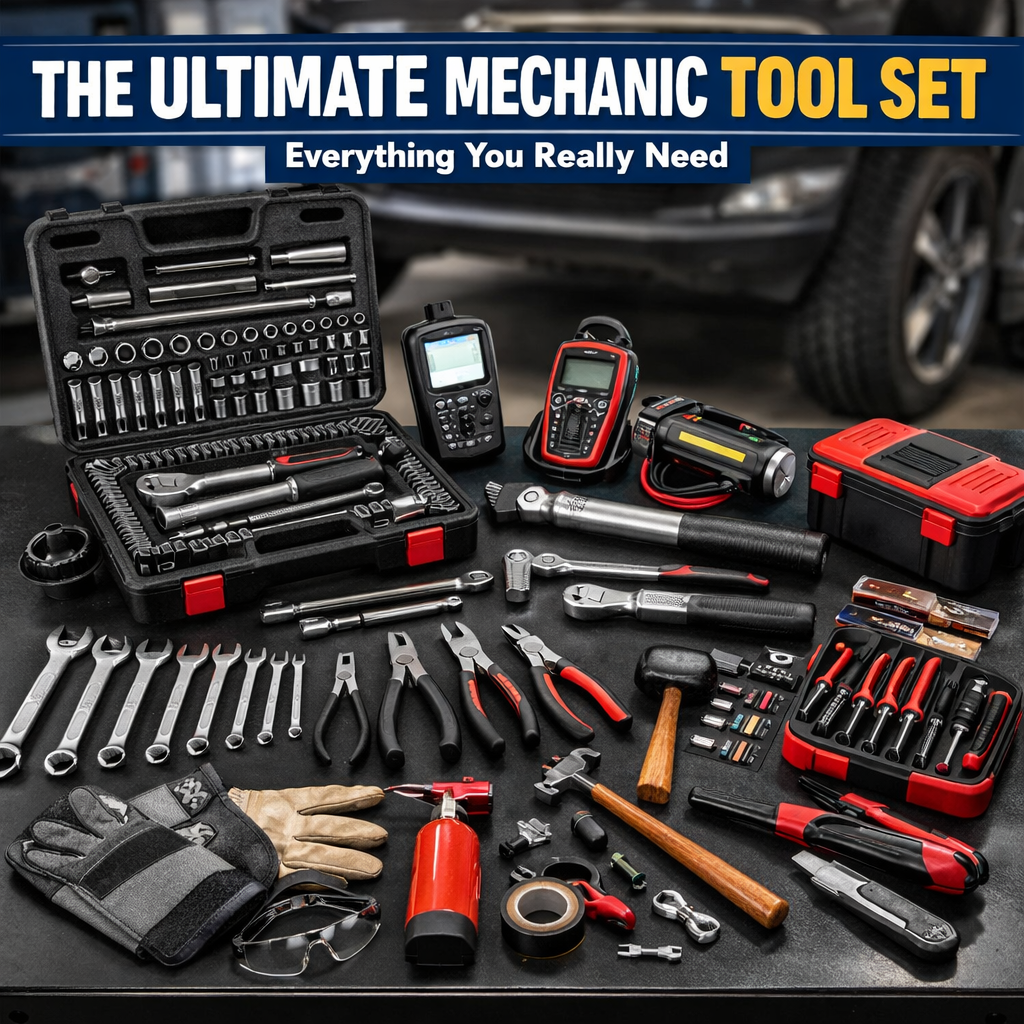
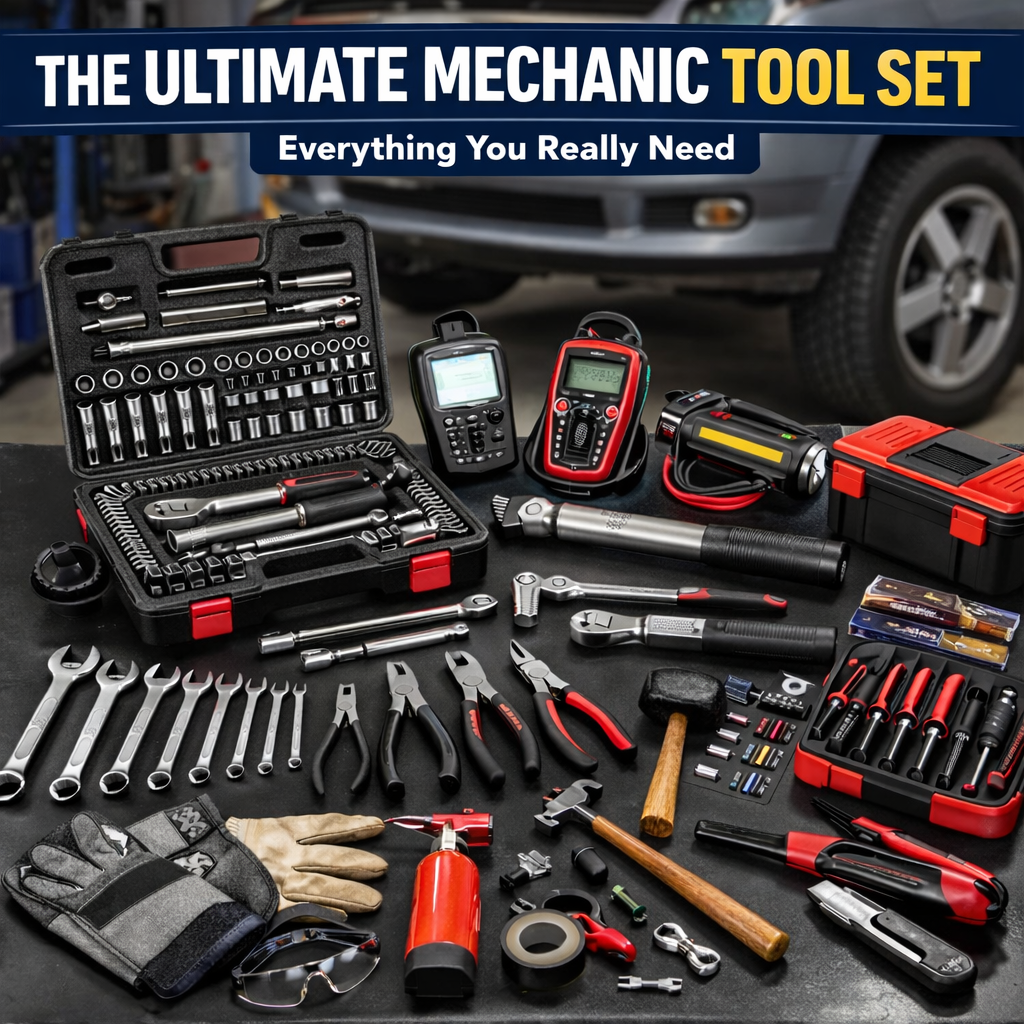
Whether you’re a DIY car owner, a home garage enthusiast, or an aspiring professional mechanic, having the right mechanic tool set is essential. The right tools save time, prevent damage, and make car repairs safer and more efficient.
- Why a Proper Mechanic Tool Set Matters
- Core Components of the Ultimate Mechanic Tool Set
- 1. Socket Set (The Foundation)
- 2. Ratchets & Extensions
- 3. Wrenches (Combination & Specialty)
- 4. Torque Wrench (Often Overlooked, Always Critical)
- 5. Screwdrivers & Bit Sets
- 6. Pliers & Cutting Tools
- 7. Hammers & Pry Tools
- Diagnostic & Modern Tools (Highly Recommended)
- Safety Equipment (Non-Negotiable)
- Tool Storage & Organization
- What You Don’t Need (At First)
- DIY vs Professional Mechanic Tool Sets
- Best Brands for Mechanic Tool Sets in the USA
- Final Thoughts
In this complete guide, we’ll break down everything you really need in a mechanic tool set, what tools are essential, which ones are optional, and how to choose the best set for your needs in the USA automotive market.
Why a Proper Mechanic Tool Set Matters
A complete mechanic tool set allows you to:
- Perform regular car maintenance confidently
- Diagnose problems accurately
- Avoid unnecessary repair shop costs
- Work safely and efficiently
- Be prepared for emergency roadside repairs
Many beginners waste money on tools they never use. This guide focuses only on practical, essential tools.
Core Components of the Ultimate Mechanic Tool Set
1. Socket Set (The Foundation)
A quality socket set is the backbone of any mechanic tool kit.
What you really need:
- Drive sizes: 1/4″, 3/8″, and 1/2″
- Socket types:
- Shallow & deep sockets
- Metric (essential in the US)
- SAE (still needed for older American cars)
- Common sizes: 8mm–19mm (metric), 1/4″–3/4″ (SAE)
👉 Pro tip: Prioritize 6-point sockets for better grip and fewer rounded bolts.
2. Ratchets & Extensions
Ratchets allow fast tightening and loosening, while extensions give access to tight spaces.
Must-haves:
- Fine-tooth ratchets (72-tooth or higher)
- Short and long extensions
- Universal joint (swivel)
These tools are crucial for engine bays, brake systems, and suspension work.
3. Wrenches (Combination & Specialty)
No mechanic tool set is complete without proper wrenches.
Essential types:
- Combination wrenches (open-end + box-end)
- Metric sizes from 8mm to 19mm
- Adjustable wrench (backup only, not primary)
Optional but useful:
- Ratcheting wrenches
- Torque wrenches (very important for accuracy)
4. Torque Wrench (Often Overlooked, Always Critical)
A torque wrench ensures bolts are tightened to manufacturer specifications.
Why it matters:
- Prevents stripped threads
- Avoids over-tightening
- Essential for wheels, engine components, and suspension
Recommended range:
- 20–150 ft-lb for general car repairs
5. Screwdrivers & Bit Sets
You’ll encounter screws everywhere: interior panels, sensors, clamps, and trim.
Include:
- Flathead (multiple sizes)
- Phillips (#1, #2, #3)
- Torx (T20–T50 – very common in modern cars)
- Allen/Hex bits
6. Pliers & Cutting Tools
Pliers are critical for gripping, cutting, and removing stubborn components.
Essential pliers:
- Needle-nose pliers
- Slip-joint pliers
- Locking pliers (Vise-Grip)
- Diagonal cutters
- Hose clamp pliers (very useful)
7. Hammers & Pry Tools
Sometimes, parts just won’t move without persuasion.
Recommended tools:
- Rubber mallet
- Ball-peen hammer
- Pry bar set (small to large)
These are especially helpful for suspension and exhaust work.
Diagnostic & Modern Tools (Highly Recommended)
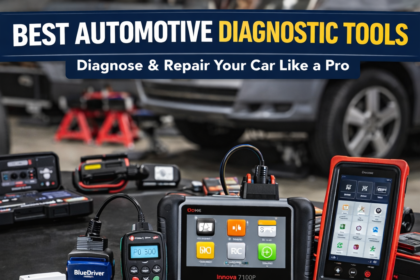
8. OBD-II Scanner
Every US vehicle sold after 1996 supports OBD-II diagnostics.
Benefits:
- Read check engine light codes
- Diagnose emissions issues
- Reset warning lights
Even a basic scanner can save hundreds of dollars in diagnostic fees.
9. Electrical Tools
Modern cars rely heavily on electronics.
Must-have electrical tools:
- Multimeter
- Test light
- Wire strippers & crimpers
- Assorted electrical connectors
Safety Equipment (Non-Negotiable)
10. Safety Tools
Never compromise on safety.
Essential safety gear:
- Jack & jack stands (never rely on a jack alone)
- Wheel chocks
- Safety gloves
- Eye protection
- Fire extinguisher (garage-rated)
Tool Storage & Organization
A great tool set is useless if it’s disorganized.
Best options:
- Rolling tool chest
- Portable mechanic toolbox
- Foam organizers or labeled trays
Organization saves time and prevents tool loss.
What You Don’t Need (At First)
Avoid buying expensive tools you’ll rarely use:
- Specialty dealer-only tools
- Large pneumatic equipment
- Advanced engine rebuild tools
Start with essentials, then expand as needed.
DIY vs Professional Mechanic Tool Sets
| Feature | DIY Set | Professional Set |
|---|---|---|
| Cost | $200–$800 | $1,500+ |
| Usage | Maintenance & repairs | Daily heavy-duty |
| Durability | Medium | High |
| Brands | Craftsman, GearWrench | Snap-On, Matco |
Best Brands for Mechanic Tool Sets in the USA
- Budget: Craftsman, Pittsburgh
- Mid-range: GearWrench, Tekton
- Professional: Snap-On, Matco, Mac Tools
Final Thoughts
The ultimate mechanic tool set isn’t about owning every tool — it’s about owning the right tools. A well-balanced kit lets you handle 80–90% of common car repairs confidently.
Start smart, buy quality, and build your tool set over time.