
Table of Contents
A vehicle’s radiator hose plays a crucial role in regulating engine temperature by circulating coolant between the radiator and the engine. Over time, these hoses can wear out, crack, or leak, leading to overheating and potential engine damage. If you’re wondering about radiator hose replacement and its cost, this guide will provide everything you need to know, from identifying a faulty hose to understanding the repair expenses.
- Table of Contents
- What is a Radiator Hose & Its Function?
- Signs You Need a Radiator Hose Replacement
- 1. Coolant Leaks
- 2. Engine Overheating
- 3. Swollen or Soft Hoses
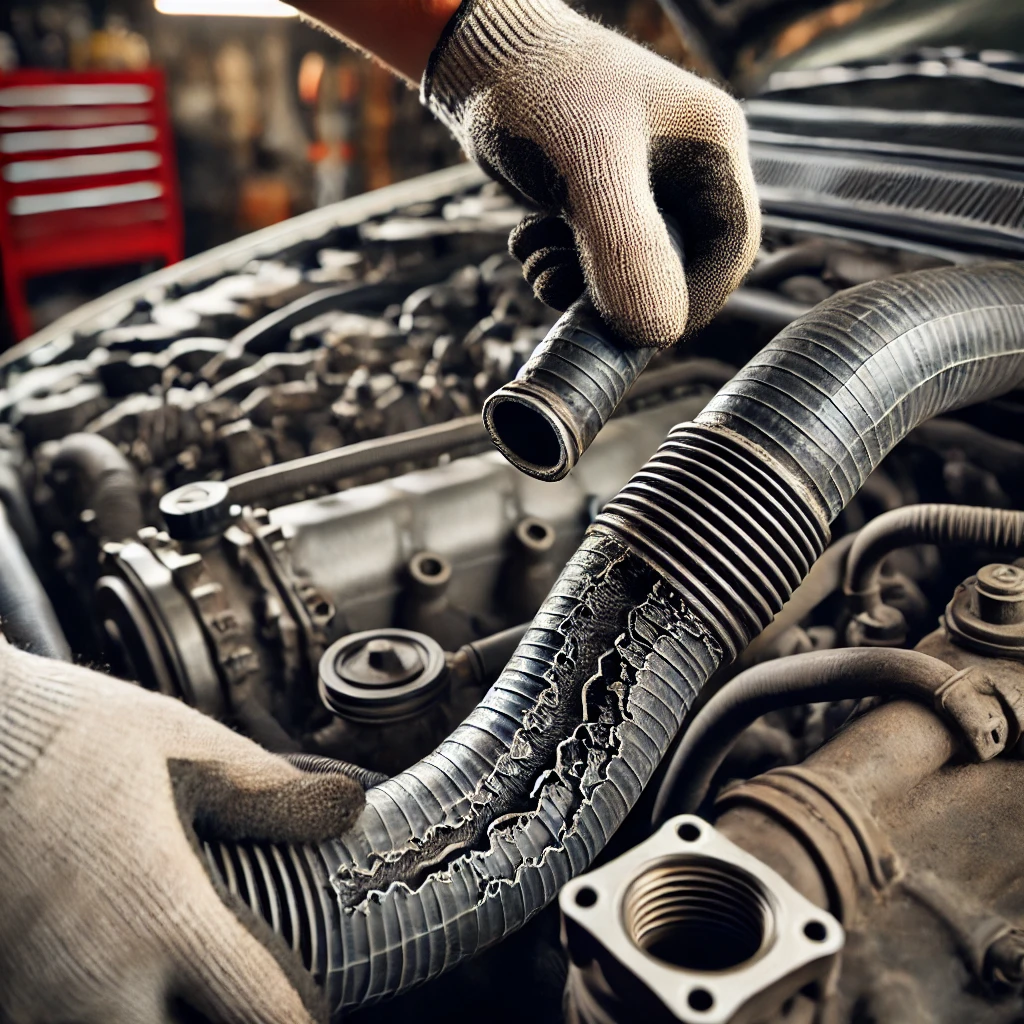
- 4. Visible Cracks or Wear
- 5. Low Coolant Levels
- Radiator Hose Replacement Cost
- How to Replace a Radiator Hose: Step-by-Step Guide
- Tips to Extend Radiator Hose Life
- 1. Regular Inspections
- 2. Flush Coolant System
- 3. Use High-Quality Coolant
- 4. Ensure Proper Clamp Tightness
- Conclusion
What is a Radiator Hose & Its Function?
A radiator hose is a flexible rubber component that transports coolant between the radiator and engine, helping maintain optimal temperature. There are two main types of radiator hoses:
- Upper Radiator Hose: Connects the engine to the radiator’s top, allowing hot coolant to flow into the radiator for cooling.
- Lower Radiator Hose: Transfers cooled coolant from the radiator back to the engine.
Without a properly functioning radiator hose, your engine could overheat, leading to severe mechanical issues.
Signs You Need a Radiator Hose Replacement
Knowing when to replace a radiator hose can prevent costly engine repairs. Here are common signs of a failing hose:
1. Coolant Leaks
If you notice puddles of coolant under your vehicle, a cracked or damaged hose might be the cause.
2. Engine Overheating
A malfunctioning radiator hose can restrict coolant flow, leading to overheating and potential engine failure.
3. Swollen or Soft Hoses
A healthy hose should feel firm. If your hose appears swollen or feels excessively soft, it’s a sign of internal degradation.
4. Visible Cracks or Wear
Inspect your radiator hoses for cracks, bulges, or splits. Any visible damage indicates it’s time for a replacement.
5. Low Coolant Levels
Frequent coolant loss without an apparent leak may suggest an issue with your radiator hoses.
Radiator Hose Replacement Cost
The cost of replacing a radiator hose depends on several factors, including vehicle make and model, labor costs, and the quality of parts. Here’s a breakdown of estimated expenses:
1. Cost of Parts
- Standard Rubber Hoses: $10 – $50
- High-Performance Silicone Hoses: $50 – $150
2. Labor Costs
- DIY Replacement: Free if you have the necessary tools and experience.
- Professional Mechanic: $50 – $150 for labor, depending on complexity.
3. Total Replacement Cost
- DIY Replacement: $20 – $100
- Professional Service: $80 – $300
Luxury or high-performance vehicles may have higher costs due to specialized parts and labor.
How to Replace a Radiator Hose: Step-by-Step Guide
If you’re comfortable with basic car maintenance, replacing a radiator hose is a task you can handle. Follow these steps:
Tools & Materials Needed
- New radiator hose
- Coolant (matching your vehicle’s specifications)
- Hose clamps
- Screwdriver or pliers
- Drain pan
- Gloves & safety goggles
Step-by-Step Instructions
1. Allow Engine to Cool
Never work on a hot engine. Let it cool completely to avoid burns from hot coolant.
2. Drain the Coolant
Place a drain pan under the radiator and open the drain valve to remove coolant.
3. Remove Old Hose
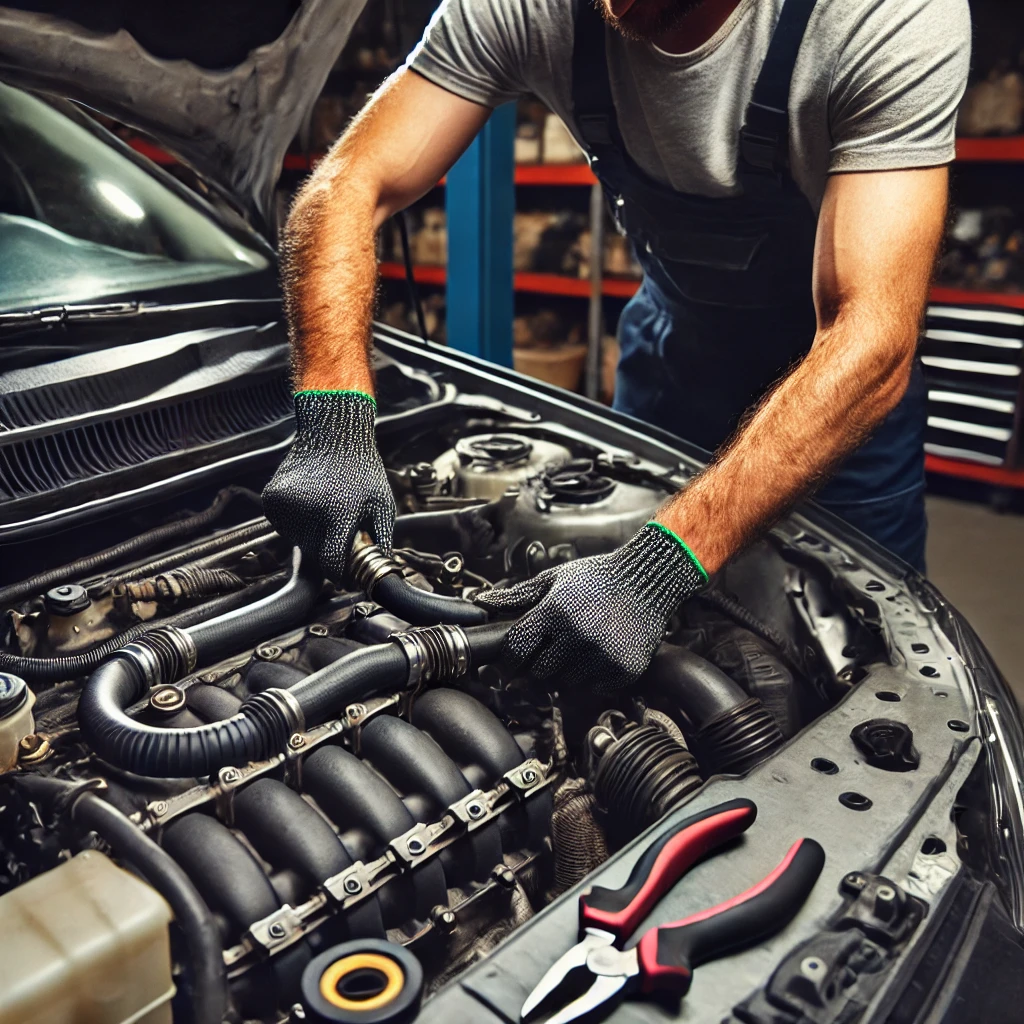
Loosen the hose clamps with a screwdriver or pliers. Carefully detach the hose from the radiator and engine.
4. Install New Hose
Position the new hose securely and attach it using new or existing clamps. Ensure a tight, leak-proof fit.
5. Refill Coolant
Pour fresh coolant into the radiator and reservoir, following your vehicle’s recommended coolant type.
6. Check for Leaks
Start the engine and let it run for a few minutes. Inspect for leaks and ensure proper coolant circulation.
Tips to Extend Radiator Hose Life
To avoid premature radiator hose failure, follow these maintenance tips:
1. Regular Inspections
Check hoses every few months for cracks, bulges, or wear.
2. Flush Coolant System
Perform a coolant flush every 30,000 – 50,000 miles to prevent debris buildup that can damage hoses.
3. Use High-Quality Coolant
Always use the manufacturer-recommended coolant to prevent hose deterioration.
4. Ensure Proper Clamp Tightness
Loose clamps can cause leaks. Check and tighten them periodically.
Conclusion
A damaged radiator hose can lead to overheating and costly engine repairs. By understanding the signs of failure and knowing the replacement process, you can save time and money while ensuring your car runs smoothly. Whether you choose to replace the hose yourself or visit a professional, regular maintenance will extend the life of your cooling system and prevent breakdowns.