


Table of Contents
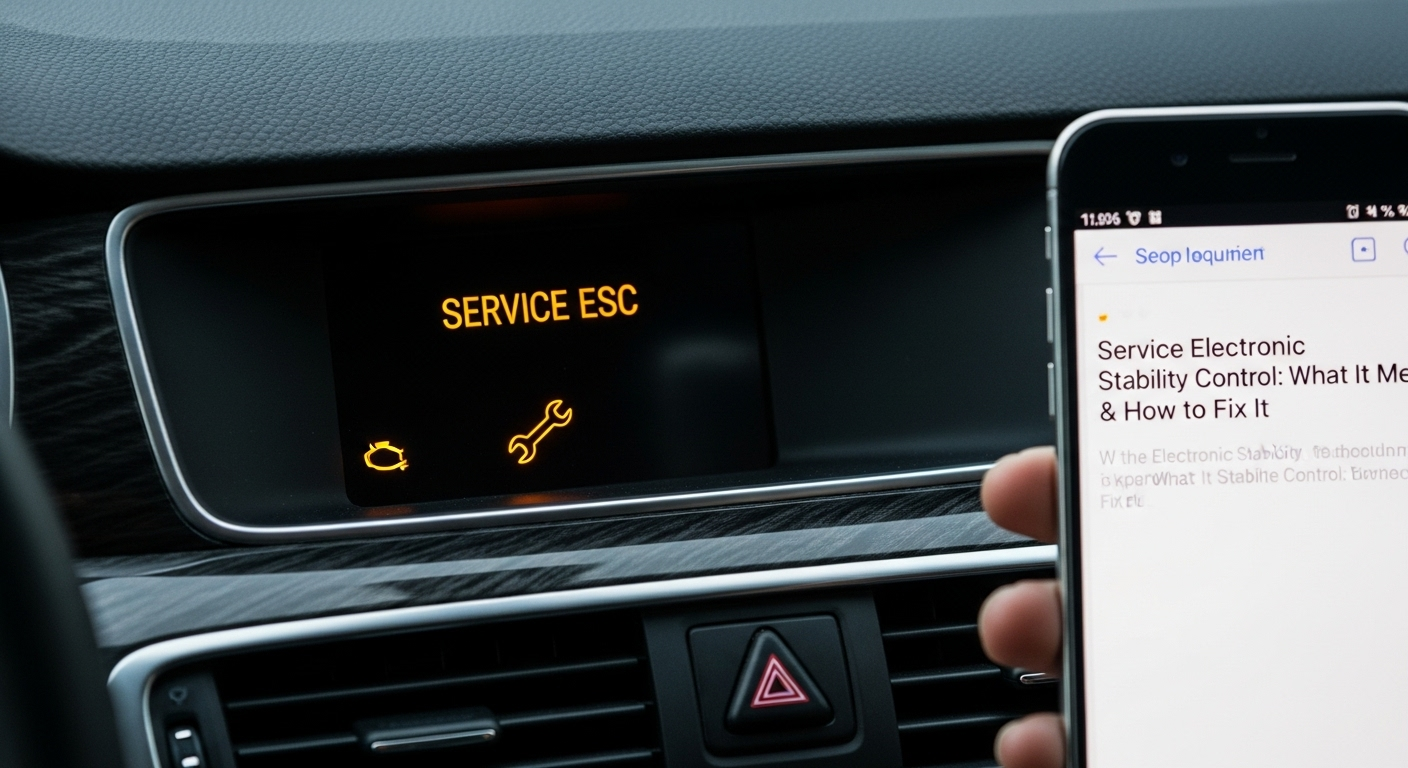
Stability Control (ESC) is a crucial safety feature in modern vehicles, designed to help maintain control during sudden maneuvers or slippery road conditions. When the “Service Electronic Stability Control” warning light comes on, it indicates a potential issue with the system. Ignoring this warning can lead to decreased vehicle stability and an increased risk of accidents. In this guide, we’ll explain what ESC is, common causes of malfunctions, and how to fix the issue effectively.
- Table of Contents
- What is Electronic Stability Control (ESC)?
- What Does “Service Electronic Stability Control” Mean?
- Common Causes of Electronic Stability Control Issues
- 1. Faulty Wheel Speed Sensors
- 2. Steering Angle Sensor Issues
- 3. ABS System Malfunction
- 4. Low or Contaminated Brake Fluid
- 5. Faulty Yaw Sensor
- 6. Electrical or Wiring Issues
- How to Fix the “Service Electronic Stability Control” Issue
- 1. Restart Your Vehicle
- 2. Check Wheel Speed Sensors
- 3. Inspect Steering Angle Sensor
- 4. Scan for Error Codes
- 5. Check Brake Fluid Levels
- 6. Inspect the ABS System
- 7. Reset the ESC System
- 8. Visit a Mechanic
- How to Prevent ESC Issues
- 1. Regular Maintenance
- 2. Keep Sensors Clean
- 3. Avoid Harsh Driving Conditions
- 4. Address ABS and Brake Issues Promptly
- Final Thoughts
What is Electronic Stability Control (ESC)?
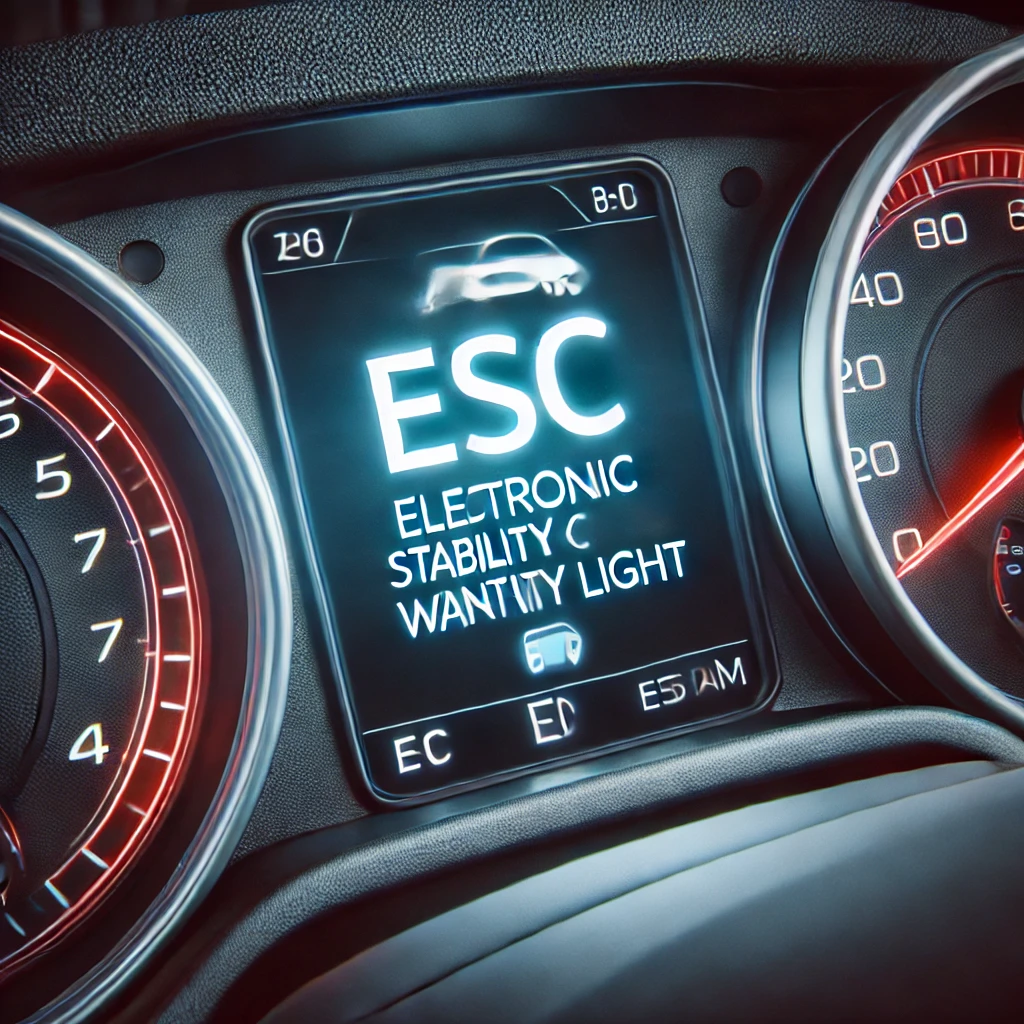
Electronic Stability Control (ESC) is an advanced safety system that works alongside your vehicle’s anti-lock braking system (ABS) and traction control system (TCS). ESC helps prevent skidding or losing control by automatically applying brakes to individual wheels when it detects a loss of traction or instability.
How ESC Works
- Wheel Speed Sensors: Monitor the speed of each wheel.
- Steering Angle Sensor: Detects the driver’s intended direction.
- Yaw Sensor: Measures the vehicle’s rotational movement.
- Brake Control Module: Applies brakes to specific wheels to correct instability.
By continuously monitoring driving conditions, ESC enhances safety, especially on wet, icy, or curvy roads.
What Does “Service Electronic Stability Control” Mean?
When your dashboard displays a “Service Electronic Stability Control” warning, it indicates a problem with the ESC system. This can result from sensor malfunctions, electrical issues, or mechanical failures.
Common Symptoms of ESC Problems
- ESC warning light remains on
- Loss of traction control
- Unresponsive or erratic braking
- Slipping or skidding on turns
- ABS warning light activation
Ignoring these warning signs can compromise vehicle safety and handling.
Common Causes of Electronic Stability Control Issues
Several factors can trigger the ESC warning light. Here are some of the most common causes:
1. Faulty Wheel Speed Sensors
Wheel speed sensors detect rotational speed. If they malfunction, ESC cannot correctly determine wheel movement, triggering the warning light.
2. Steering Angle Sensor Issues
The steering angle sensor communicates the driver’s intended direction. A misaligned or damaged sensor can cause ESC system failure.
3. ABS System Malfunction
Since ESC and ABS share components, a failure in the anti-lock braking system can trigger an ESC warning.
4. Low or Contaminated Brake Fluid
Brake fluid plays a role in ESC function. Low levels or contamination can lead to braking inconsistencies and ESC malfunctions.
5. Faulty Yaw Sensor
The yaw sensor measures vehicle rotation. If it sends incorrect data, ESC may activate unnecessarily or fail to engage.
6. Electrical or Wiring Issues
Loose or damaged wiring can disrupt communication between sensors and the ESC control module.
How to Fix the “Service Electronic Stability Control” Issue
1. Restart Your Vehicle
Sometimes, restarting your car can reset the ESC system and turn off the warning light. However, if the light returns, further diagnosis is required.
2. Check Wheel Speed Sensors
Inspect the wheel speed sensors for dirt, debris, or damage. Clean them carefully or replace faulty sensors.
3. Inspect Steering Angle Sensor
If the steering angle sensor is misaligned, recalibrate it using a diagnostic tool or visit a professional mechanic.
4. Scan for Error Codes
Use an OBD-II scanner to retrieve error codes related to the ESC system. Common codes include:
- C1233: Left Front Wheel Speed Sensor Input Signal Missing
- C1240: Yaw Rate Sensor Circuit Malfunction
- C0561: System Disabled Information Stored
Deciphering these codes can help identify the root cause of the problem.
5. Check Brake Fluid Levels
Ensure brake fluid is at the recommended level and free of contaminants. If necessary, flush and replace old brake fluid.
6. Inspect the ABS System
Since ESC and ABS are interconnected, inspect the ABS module for issues and replace damaged components.
7. Reset the ESC System
After repairs, reset the ESC system using a diagnostic scanner or by disconnecting the battery for 10–15 minutes.
8. Visit a Mechanic
If the warning light persists, seek professional help to perform a thorough inspection and repair.
How to Prevent ESC Issues
To keep your ESC system functioning properly, follow these preventive measures:
1. Regular Maintenance
Schedule routine maintenance to check the braking system, sensors, and fluid levels.
2. Keep Sensors Clean
Dirt and debris can affect sensor accuracy. Clean wheel speed sensors and other ESC components regularly.
3. Avoid Harsh Driving Conditions
While ESC helps in slippery conditions, avoid aggressive driving, especially in wet or icy weather.
4. Address ABS and Brake Issues Promptly
Fix brake-related problems immediately to prevent them from affecting the ESC system.
Final Thoughts
The “Service Electronic Stability Control” warning is not something to ignore. ESC is a critical safety feature that enhances vehicle stability and prevents accidents. Understanding the causes and solutions can help you diagnose and fix the problem before it affects your driving experience.
If your ESC light is on, take action by checking sensors, fluid levels, and error codes. If the issue persists, consult a professional mechanic to ensure your car remains safe on the road.


OkxUHk jhFi yDqMEB LIx
Hey there! I could have sworn I’ve been to thks blog before but after checking through some of
the post I realized it’s new to me. Anyways, I’m definitely happy I found it
and I’ll be bookmarking andd checking back frequently!
he blog was how do i say it… relevant, finally something that helped me. Thanks
What’s Happening i’m new to this, I stumbled upon this I’ve found It positively useful and it has aided me out loads. I’m hoping to contribute & help other users like its helped me. Good job.
I will right away take hold of your rss as I can not in finding your email subscription link or e-newsletter service. Do you’ve any? Kindly let me know in order that I may subscribe. Thanks.
What i do not understood is actually how you’re not actually much more well-liked than you might be now. You’re very intelligent. You realize thus significantly relating to this subject, made me personally consider it from numerous varied angles. Its like women and men aren’t fascinated unless it’s one thing to do with Lady gaga! Your own stuffs excellent. Always maintain it up!
Hiya very cool web site!! Man .. Beautiful .. Superb .. I’ll bookmark your blog and take the feeds also…I’m glad to search out numerous useful information here within the post, we need develop more techniques on this regard, thanks for sharing.
Neat blog! Is your theme custom made or did you download it from somewhere? A design like yours with a few simple adjustements would really make my blog stand out. Please let me know where you got your design. Appreciate it