




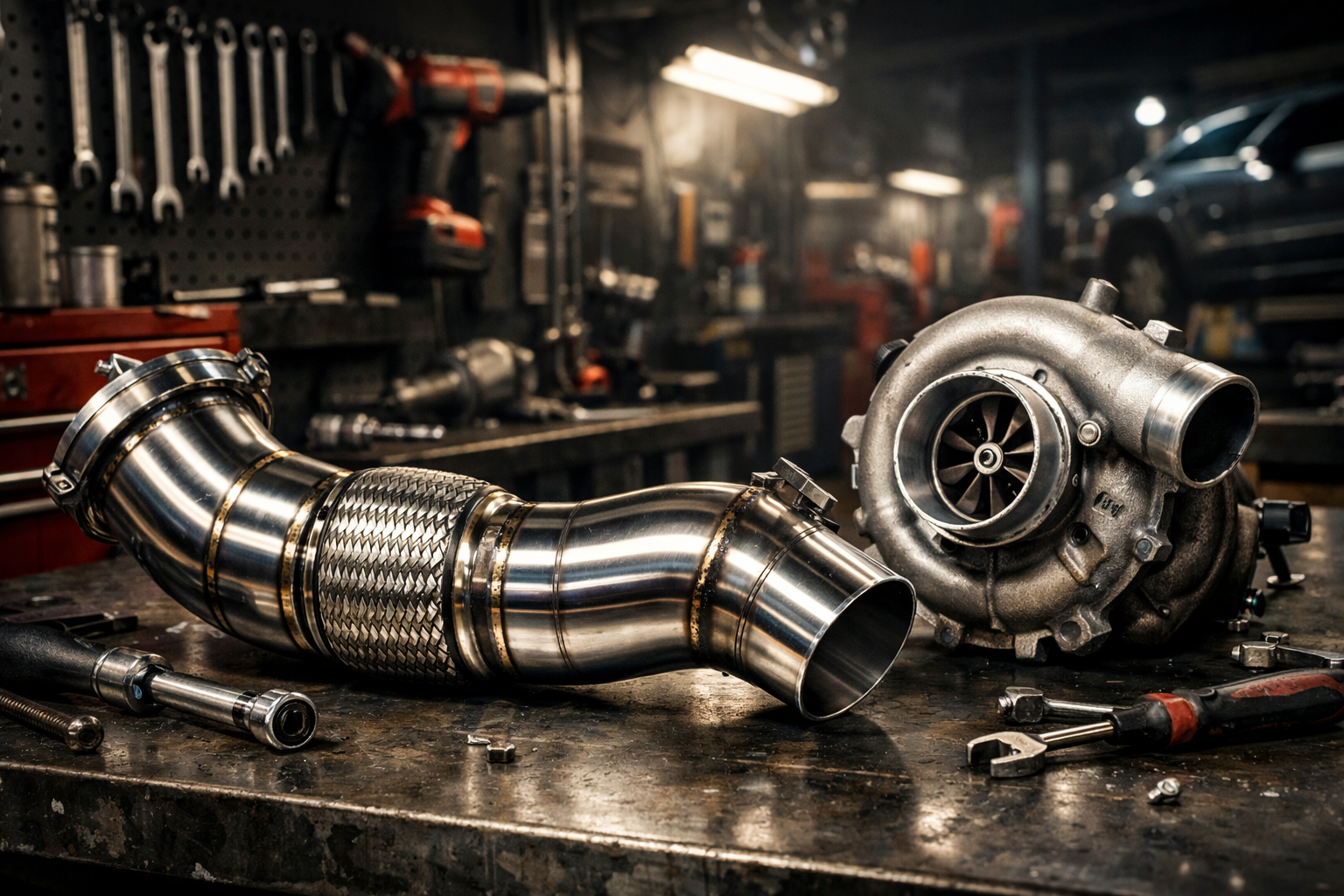
If you’ve been researching performance upgrades for a turbocharged car, you’ve probably seen one part mentioned again and again: the downpipe. It’s one of the most popular modifications for boosting horsepower, improving turbo response, and unlocking the true potential of a turbo engine.
- Table of Contents
- In simple terms
- Typical layout (turbocharged car)
- A restrictive downpipe can cause:
- A performance downpipe helps:
- Downpipe
- Cat-back exhaust
- Comparative Table: Downpipe vs Cat-Back Exhaust
- Top Benefits
- ✅ 1. More Horsepower and Torque
- ✅ 2. Faster Turbo Spool (Less Lag)
- ✅ 3. Better Throttle Response
- ✅ 4. More Aggressive Exhaust Sound
- ✅ 5. Better Support for Future Mods
- Typical downpipe power gains (realistic ranges)
- Comparative Table: Power Gains With vs Without Tune
- Catted Downpipe (High-Flow Catalytic Converter)
- Catless Downpipe
- Comparative Table: Catted vs Catless Downpipe
- Comparative Table: Stainless Steel vs Titanium Downpipes
- Common diameters
- Bigger isn’t always better
- Key design features that matter
- Pro tip:
- The short answer:
- Why tuning matters
- What tune is commonly used?
- Tools You’ll Usually Need
- Step-by-Step Downpipe Installation
- Step 1: Let the Car Cool Down
- Step 2: Disconnect the Battery (Recommended)
- Step 3: Lift the Vehicle Safely
- Step 4: Remove the Engine Cover and Heat Shields
- Step 5: Unplug and Remove O2 Sensors
- Step 6: Loosen Downpipe Bolts
- Step 7: Remove the Old Downpipe
- Step 8: Install the New Downpipe
- Step 9: Torque Everything to Spec
- Step 10: Reinstall O2 Sensors
- Step 11: Check for Exhaust Leaks
- Step 12: Clear Codes and Flash Tune (If Needed)
- Problem 1: Check Engine Light (CEL)
- Problem 2: Exhaust Leaks
- Problem 3: Boost Creep / Overboost
- Problem 4: Rattling or Vibrations
- Comparative Table: Downpipe Cost Estimates
- Table: Best Downpipe Choice by Goal
- Table: What Changes After a Downpipe Upgrade?
- Is a downpipe bad for your engine?
- Will a downpipe void my warranty?
- Do downpipes increase fuel consumption?
- Does a downpipe make the car louder?
- Can I install a downpipe without a tune?
But What Is a Downpipe, exactly? And is it really worth upgrading?
In this in-depth guide, we’ll cover everything you need to know—from how a downpipe works, the performance benefits, catalytic converter options, sound changes, legality concerns, and a step-by-step installation guide. Whether you’re a beginner or a seasoned enthusiast, this article will help you make the right decision.
Table of Contents
- What Is a Downpipe?
- Where Is the Downpipe Located?
- How a Downpipe Works (Simple Explanation)
- Why Downpipes Matter in Turbocharged Cars
- Downpipe vs Exhaust System: What’s the Difference?
- Benefits of a Downpipe Upgrade
- Performance Gains: How Much HP Can You Get?
- Sound Differences After Installing a Downpipe
- Types of Downpipes (Catted vs Catless)
- Material Differences (Stainless Steel vs Titanium)
- Downpipe Diameter and Design: Does It Matter?
- Downpipe Compatibility and Fitment Tips
- Do You Need a Tune After a Downpipe?
- Installation Guide: How to Install a Downpipe (Step-by-Step)
- Common Problems After Installing a Downpipe (and Fixes)
- Downpipe Cost Breakdown (Parts + Labor)
- Comparative Tables (Performance, Sound, Legality, Cost)
- FAQs
- Final Verdict: Is a Downpipe Worth It?
1. What Is a Downpipe? (Focus Keyword Explained)
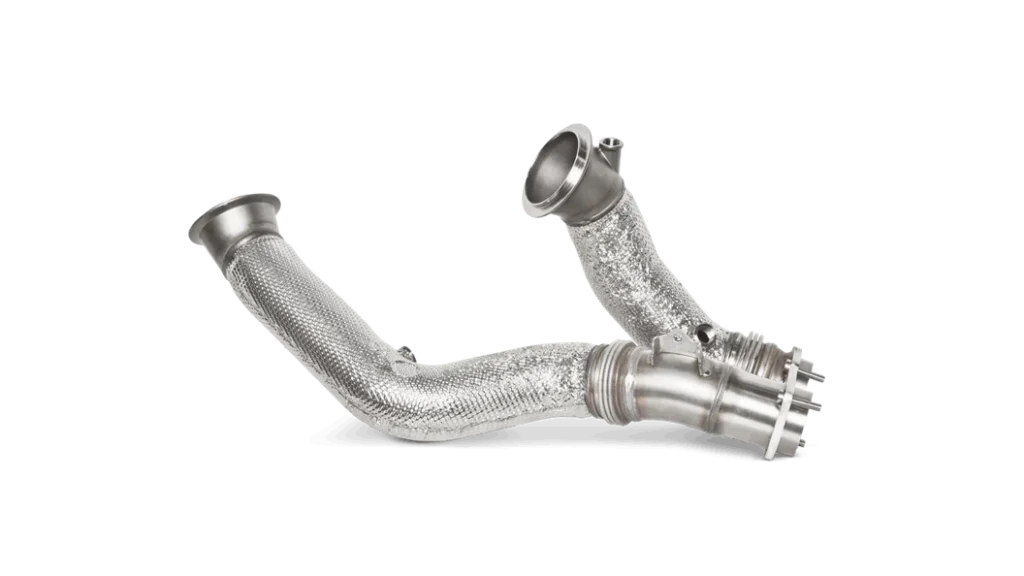
What Is a Downpipe? A downpipe is a section of the exhaust system that connects the turbocharger outlet (or exhaust manifold outlet in some setups) to the rest of the exhaust system—typically leading into the mid-pipe, catalytic converter section, or cat-back exhaust.
In turbocharged vehicles, the downpipe plays a major role because it handles hot, high-pressure exhaust gases immediately after they exit the turbo.
In simple terms
A downpipe is the exhaust pipe that comes right after the turbo, and upgrading it helps exhaust flow more freely—allowing the turbo to spool faster and the engine to breathe better.
2. Where Is the Downpipe Located?
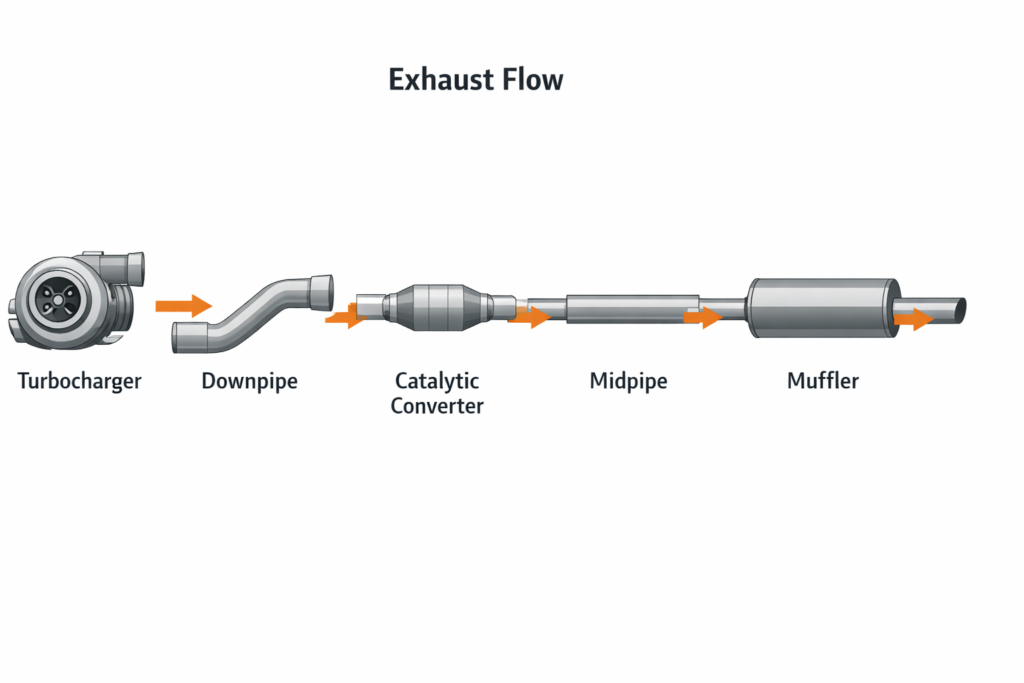
The downpipe is located:
- Behind the engine
- Connected directly to the turbocharger
- Between the turbo outlet and the rest of the exhaust system
In most modern turbo cars, the downpipe is one of the first exhaust parts after the turbo, making it extremely important for performance.
Typical layout (turbocharged car)
Engine → Turbocharger → Downpipe → Catalytic Converter → Midpipe → Muffler/Resonator → Tailpipe
3. How a Downpipe Works (Simple Explanation)
Turbochargers work by using exhaust gases to spin a turbine wheel. After spinning the turbine, exhaust gases need to exit quickly and smoothly.
Here’s the key point:
✅ The faster exhaust exits after the turbo, the easier it is for the turbo to keep spinning efficiently.
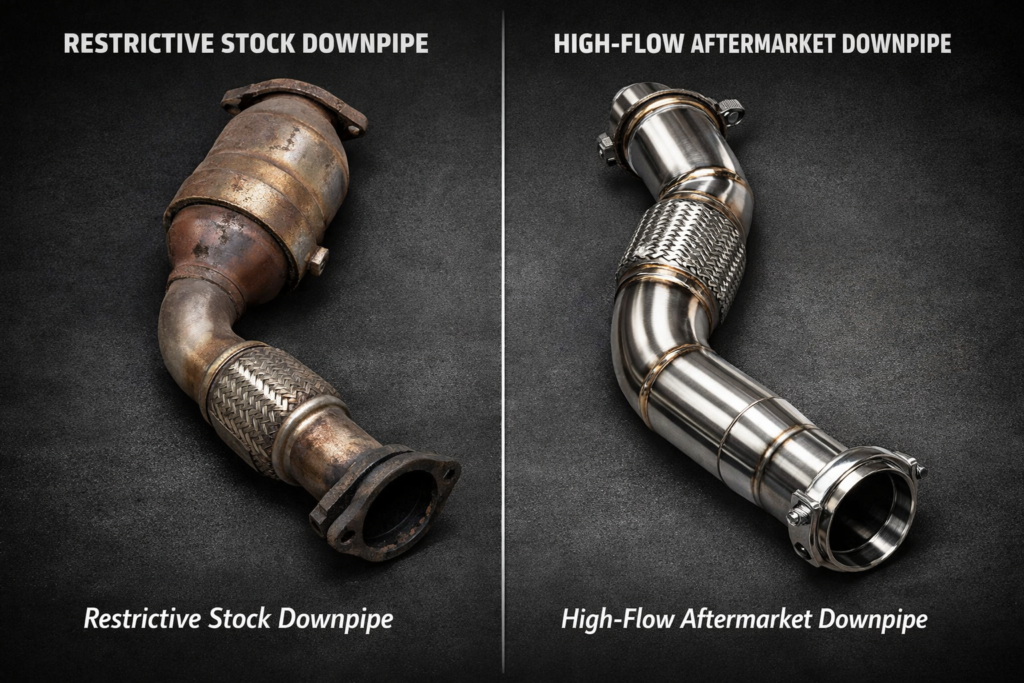
A restrictive factory downpipe creates backpressure, which can:
- slow turbo spool
- increase exhaust gas temperatures (EGTs)
- limit horsepower
- reduce throttle response
A performance downpipe improves exhaust flow by:
- using smoother bends
- increasing pipe diameter
- reducing restriction in the catalytic converter area
- improving overall exhaust velocity
4. Why Downpipes Matter in Turbocharged Cars
Downpipes matter most in turbo vehicles because turbo engines are highly sensitive to exhaust restriction.
A restrictive downpipe can cause:
- slower turbo spool (more lag)
- lower boost efficiency
- reduced power gains from other mods
- higher heat buildup near the turbo
A performance downpipe helps:
- boost builds sooner
- power comes on harder
- engine runs more efficiently at higher RPM
- turbo operates under less stress
This is why a downpipe is often considered the best “first mod” for turbocharged cars—especially when paired with a tune.
5. Downpipe vs Exhaust System: What’s the Difference?
A lot of people confuse a downpipe with the entire exhaust system. They’re related—but not the same.
Downpipe
- Starts at the turbo outlet
- One of the most restrictive factory exhaust parts
- Big performance impact on turbo cars
Cat-back exhaust
- Starts after the catalytic converter/downpipe area
- Mostly affects sound and aesthetics
- Smaller power gains compared to a downpipe
Comparative Table: Downpipe vs Cat-Back Exhaust
| Upgrade | Location | Main Benefit | Typical HP Gain | Sound Increase | Needs Tune? |
|---|---|---|---|---|---|
| Downpipe | Turbo outlet → midpipe | Power + spool | High | Medium–High | Often yes |
| Cat-back exhaust | After catalytic converter | Sound + style | Low–Medium | Medium–High | Not required |
6. Benefits of a Downpipe Upgrade
Upgrading your downpipe is popular for a reason. It delivers real gains, especially in turbo cars.
Top Benefits
✅ 1. More Horsepower and Torque
A freer-flowing downpipe reduces backpressure and lets the engine push out exhaust more efficiently.
✅ 2. Faster Turbo Spool (Less Lag)
Turbo response improves because exhaust gases flow out faster after spinning the turbine.
✅ 3. Better Throttle Response
The engine feels more immediate—especially in the midrange.
✅ 4. More Aggressive Exhaust Sound
Most downpipes noticeably increase exhaust volume and deepen the tone.
✅ 5. Better Support for Future Mods
If you plan on adding:
- intake
- intercooler
- upgraded turbo
- high-flow exhaust
…a downpipe helps everything work better.
7. Performance Gains: How Much HP Can You Get?
One of the most searched questions is: How much power does a downpipe add?
The answer depends on:
- your vehicle platform
- turbo size
- tuning
- whether it’s catted or catless
- stock exhaust restrictions
Typical downpipe power gains (realistic ranges)
- Without tune: 5–20 HP (sometimes more, but inconsistent)
- With tune: 20–60+ HP (depending on car)
Some vehicles respond dramatically—especially small turbo engines with restrictive factory emissions components.
Comparative Table: Power Gains With vs Without Tune
| Setup | Expected HP Gain | Expected Torque Gain | Turbo Spool Improvement | Risk Level |
|---|---|---|---|---|
| Downpipe only (no tune) | +5 to +20 HP | +10 to +25 lb-ft | Moderate | Medium |
| Downpipe + Stage 2 tune | +20 to +60+ HP | +30 to +80+ lb-ft | High | Low–Medium |
| Downpipe + upgraded turbo tune | +50 to +150+ HP | +60 to +200+ lb-ft | Depends on turbo | Medium |
8. Sound Differences After Installing a Downpipe
A downpipe doesn’t just affect performance—it changes the personality of the car.
Common sound changes
- louder overall volume
- deeper exhaust tone
- more turbo whistle/spool sound
- more pops and crackles (especially with tuning)
- possible rasp depending on setup
With a stock cat-back exhaust
Even with the stock exhaust, a downpipe can noticeably increase volume.
With an aftermarket cat-back
Expect a much louder and more aggressive sound, especially if catless.
9. Types of Downpipes (Catted vs Catless)
Downpipes come in two main types:
Catted Downpipe (High-Flow Catalytic Converter)
A catted downpipe uses a high-flow catalytic converter to reduce emissions while still improving exhaust flow.
Pros:
- better for emissions compliance
- less exhaust smell
- usually fewer check engine lights
- smoother sound (less harsh)
Cons:
- slightly less power than catless
- costs more than catless
Catless Downpipe
A catless downpipe removes the catalytic converter completely for maximum flow.
Pros:
- maximum horsepower potential
- fastest turbo spool
- often cheaper
Cons:
- strong exhaust smell
- usually triggers check engine light (CEL)
- not legal for street use in many areas
- may fail inspection/emissions testing
Comparative Table: Catted vs Catless Downpipe
| Feature | Catted Downpipe | Catless Downpipe |
|---|---|---|
| Horsepower gain | High | Very High |
| Turbo spool | Faster | Fastest |
| Exhaust smell | Mild | Strong |
| Sound | Aggressive but cleaner | Loudest and raw |
| Check engine light risk | Medium | High |
| Emissions legality | Better | Often illegal |
| Price | Higher | Lower |
10. Material Differences (Stainless Steel vs Titanium)
Downpipes are commonly made from:
Stainless Steel (Most Common)
- strong
- durable
- cost-effective
- handles heat well
Titanium (Premium Option)
- lightweight
- excellent heat resistance
- very expensive
- more common in high-end builds
Comparative Table: Stainless Steel vs Titanium Downpipes
| Material | Weight | Durability | Heat Resistance | Cost | Best For |
|---|---|---|---|---|---|
| Stainless Steel | Medium | High | High | $$ | Most builds |
| Titanium | Low | High | Very High | $$$$ | Track/high-end builds |
11. Downpipe Diameter and Design: Does It Matter?
Yes—pipe diameter and design can affect performance.
Common diameters
- 2.5 inches (some smaller turbo platforms)
- 3.0 inches (very common)
- 3.5 inches (high-power builds)
Bigger isn’t always better
Too large of a pipe can reduce exhaust velocity in some setups. However, for most turbo builds, a properly designed 3-inch downpipe is a sweet spot.
Key design features that matter
- smooth mandrel bends
- high-flow catalytic converter quality (if catted)
- flex section (helps prevent cracks)
- proper flange design
- oxygen sensor bungs placement
12. Downpipe Compatibility and Fitment Tips
Before buying, confirm:
- your exact engine code (example: EA888, N54, EJ25, etc.)
- drivetrain type (FWD/AWD/RWD)
- model year differences
- stock turbo vs aftermarket turbo compatibility
- emissions sensor locations
Pro tip:
Even within the same car model, different years may have different sensor layouts or mounting brackets. Always verify fitment with your exact trim and year.
13. Do You Need a Tune After a Downpipe?
This is one of the most important questions in this guide.
The short answer:
Yes—most turbo cars benefit greatly from a tune after installing a downpipe, and some require it.
Why tuning matters
A downpipe changes exhaust flow, which affects:
- boost levels
- air-fuel ratios
- exhaust gas temperatures
- turbo efficiency
Without tuning, you may experience:
- check engine light (P0420 common)
- boost spikes
- inconsistent performance
- poor drivability
What tune is commonly used?
- Stage 2 tune (typical for downpipe + intake)
- Custom tune (recommended for bigger turbos)
14. Installation Guide: How to Install a Downpipe (Step-by-Step)
Now that you understand What Is a Downpipe, let’s get into installation.
⚠️ Important: Every vehicle is different. Always consult a service manual or a platform-specific guide.
Tools You’ll Usually Need
- jack + jack stands or lift
- socket set (metric commonly)
- extensions + universal joint
- penetrating oil (very helpful)
- O2 sensor socket
- torque wrench
- gloves + safety glasses
- replacement gaskets and hardware
Step-by-Step Downpipe Installation
Step 1: Let the Car Cool Down
Exhaust parts get extremely hot. Wait at least 1–2 hours after driving.
Step 2: Disconnect the Battery (Recommended)
Especially important if you’re working near sensors and wiring.
Step 3: Lift the Vehicle Safely
Use jack stands on a level surface. Never rely on the jack alone.
Step 4: Remove the Engine Cover and Heat Shields
Many downpipes are hidden behind heat shielding near the turbo.
Step 5: Unplug and Remove O2 Sensors
You’ll typically have:
- upstream O2 sensor
- downstream O2 sensor
Use an O2 sensor socket to avoid damage.
Step 6: Loosen Downpipe Bolts
Spray penetrating oil and wait 10–15 minutes.
Common connection points:
- turbo outlet flange
- midpipe connection clamp/bolts
- support brackets
Step 7: Remove the Old Downpipe
This can be the hardest part due to tight spaces.
You may need to rotate and carefully maneuver it out.
Step 8: Install the New Downpipe
- use new gaskets
- align mounting points
- hand-tighten bolts first
Step 9: Torque Everything to Spec
Don’t overtighten—especially turbo studs.
Step 10: Reinstall O2 Sensors
Make sure they’re in the correct locations.
Step 11: Check for Exhaust Leaks
Start the car and listen for:
- ticking sounds
- exhaust fumes near the engine bay
Step 12: Clear Codes and Flash Tune (If Needed)
Use an OBD2 scanner to clear codes or install your tune.
15. Common Problems After Installing a Downpipe (and Fixes)
Even a perfect install can come with a few common issues.
Problem 1: Check Engine Light (CEL)
Causes:
- catalyst efficiency code (P0420)
- O2 sensor reading mismatch
Fix:
- proper Stage 2 tune
- O2 sensor spacer (not always recommended)
- ensure sensors are installed correctly
Problem 2: Exhaust Leaks
Symptoms:
- ticking noise
- exhaust smell
- lower boost response
Fix:
- re-torque bolts
- replace gasket
- check flange alignment
Problem 3: Boost Creep / Overboost
Symptoms:
- sudden boost spikes
- limp mode
Fix:
- tune adjustment
- ensure wastegate control is functioning
Problem 4: Rattling or Vibrations
Causes:
- downpipe contacting heat shield
- poor hanger alignment
Fix:
- adjust brackets
- add clearance
- tighten mounts
16. Downpipe Cost Breakdown (Parts + Labor)
Downpipe costs vary widely depending on platform and quality.
Average pricing
- budget downpipe: $150–$300
- mid-range downpipe: $350–$700
- premium downpipe: $800–$1,500+
Labor cost
- 1–4 hours typical
- labor rates vary: $100–$200/hour in many areas
Comparative Table: Downpipe Cost Estimates
| Downpipe Type | Parts Cost | Install Labor | Total Estimate |
|---|---|---|---|
| Budget catless | $150–$300 | $200–$600 | $350–$900 |
| Mid-range catted | $350–$700 | $200–$600 | $550–$1,300 |
| Premium catted | $800–$1,500 | $200–$700 | $1,000–$2,200 |
17. Quick Comparison Tables (Best for Buyers)
Table: Best Downpipe Choice by Goal
| Your Goal | Best Choice | Why |
|---|---|---|
| Max power | Catless downpipe | Lowest restriction |
| Balanced street build | High-flow catted | Good power + cleaner |
| Keep sound moderate | Catted + resonated | Less rasp/loudness |
| Avoid emissions trouble | Catted + OEM-like | More compliant |
| Track-only build | Catless + tune | Highest output |
Table: What Changes After a Downpipe Upgrade?
| Category | Stock Downpipe | Aftermarket Downpipe |
|---|---|---|
| Power | Limited | Increased |
| Turbo spool | Slower | Faster |
| Sound | Quiet | Louder/deeper |
| Exhaust flow | Restricted | Freer-flowing |
| Emissions | Fully compliant | Depends on type |
| Check engine light risk | Low | Medium–High |
18. FAQs About Downpipes
Is a downpipe bad for your engine?
Not inherently. A properly installed downpipe with a proper tune can be safe. The risk comes from poor tuning, low-quality parts, or ignoring check engine warnings.
Will a downpipe void my warranty?
It can. Many manufacturers consider exhaust and emissions modifications a reason to deny related warranty claims.
Do downpipes increase fuel consumption?
It depends. Some drivers see slightly better efficiency due to improved flow, but most people drive harder after gaining power—so fuel economy often goes down.
Does a downpipe make the car louder?
Yes. Even with a stock exhaust, a downpipe usually increases volume.
Can I install a downpipe without a tune?
Sometimes, but it’s not recommended. Many cars run poorly or throw codes without tuning.
19. Final Verdict: Is a Downpipe Worth It?
So, What Is a Downpipe really worth in real-world terms?
If you drive a turbocharged vehicle and want one of the biggest performance upgrades per dollar, a downpipe is often the best starting point. It can deliver noticeable horsepower gains, faster turbo spool, and a more aggressive sound—especially when paired with a proper tune.
Best for:
✅ turbocharged cars
✅ enthusiasts wanting Stage 2 performance
✅ drivers who want better throttle response
✅ builds planning future upgrades
Not ideal for:
❌ strict emissions/inspection areas (especially catless)
❌ drivers who want a quiet OEM experience
❌ anyone unwilling to tune properly