

Title / H1:
What Is AdBlue and Why Do Modern Diesel Cars Need It?
Meta title (SEO):
What Is AdBlue? | Why Modern Diesel Cars Need AdBlue to Cut NOx Emissions
Meta description:
Learn what AdBlue is, how it works in Selective Catalytic Reduction (SCR) systems, why modern diesel cars need it to meet emissions rules, how to top up and store it safely, and practical maintenance tips.
Focus keyword:
adblue
Slug:
what-is-adblue-why-modern-diesel-cars-need-it
Introduction
AdBlue has become a routine part of owning many modern diesel cars — but for many drivers it still raises questions: what exactly is AdBlue, why does a modern diesel need it, how often do you top it up, and what happens if you run out? This guide explains the chemistry and engineering behind AdBlue, its role in cutting harmful NOx emissions, practical refilling and maintenance advice, and the safety and environmental aspects every driver should know.
What is AdBlue?
– AdBlue is a high-purity aqueous urea solution used in diesel vehicles equipped with Selective Catalytic Reduction (SCR) systems.
– Chemically, AdBlue is typically 32.5% synthetic urea and 67.5% deionized water. This composition is standardized (commonly referred to as AUS 32 or DEF in different regions).
– It’s not a fuel additive and is stored in a separate tank; the vehicle injects small amounts of AdBlue into the exhaust stream where it reacts with nitrogen oxides (NOx).
Why modern diesel cars need AdBlue
– Stricter emissions standards: Regulations (EU, US, and others) have progressively tightened limits on nitrogen oxides (NOx), which are major contributors to smog and respiratory problems. To meet these standards, manufacturers use technologies such as diesel particulate filters (DPFs) and Selective Catalytic Reduction (SCR).
– Targeted NOx reduction: SCR with AdBlue is one of the most effective ways to reduce NOx emissions from diesel engines, often cutting NOx by up to 90% under the right conditions.
– Fuel efficiency and performance: Compared with other NOx-control strategies, SCR allows the engine to operate more efficiently (often with lower exhaust gas recirculation rates), balancing performance and fuel economy while still meeting emissions limits.
How the SCR system and AdBlue work (plain explanation)
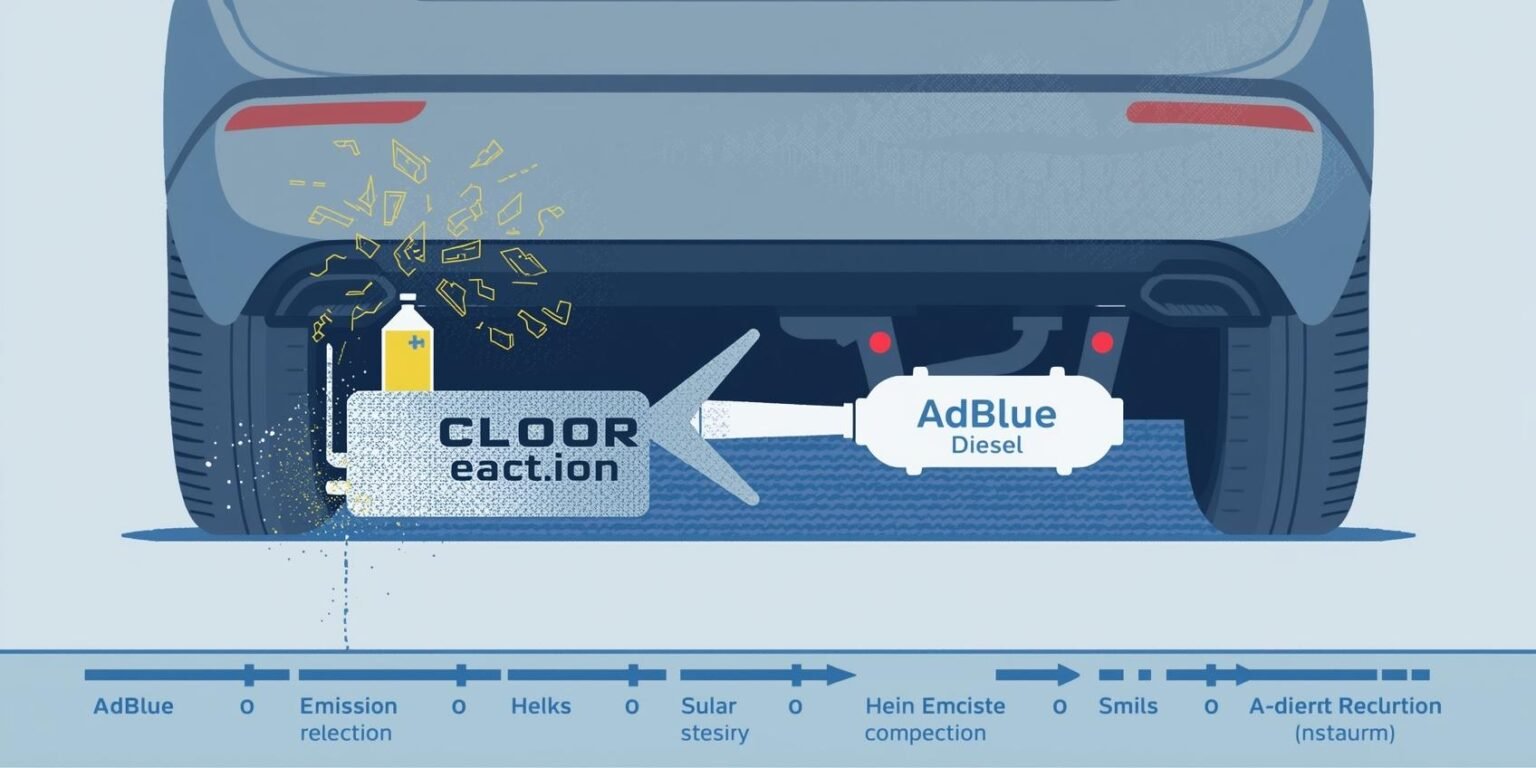
– Injection: AdBlue is stored in a dedicated tank and metered into the hot exhaust stream ahead of the SCR catalyst.
– Chemical reaction: When AdBlue meets the hot exhaust gases, it thermally decomposes to form ammonia (NH3) and carbon dioxide. The ammonia then reacts with nitrogen oxides (NO and NO2) inside the SCR catalyst.
– Conversion: The chemical reactions convert NOx into harmless nitrogen (N2) and water vapor (H2O), which are expelled through the vehicle’s tailpipe.
– Result: Significantly reduced NOx emissions and compliance with modern emissions standards.
Vehicle design and driver implications
– Dedicated tank and sensors: Most cars with SCR have a separate AdBlue filler cap (usually blue) and sensors that monitor tank level and fluid quality.
– Dashboard warnings: If AdBlue runs low, the vehicle will alert you — and most manufacturers program the car to limit performance or even prevent restarting the engine if the tank is empty to ensure compliance with emissions laws.
– Consumption rate: AdBlue consumption varies by vehicle, driving style, and conditions. Typical usage is a few liters per 1,000 miles (or per 1,000 km), but check your owner’s manual for the precise rate for your model.
Practical tips for refilling and maintenance
– Use the correct fluid: Only use AdBlue that meets the ISO 22241 standard (or the specification recommended by your vehicle maker). Do not substitute with water, diesel exhaust fluids of unknown composition, or homemade mixtures.
– Where to buy: AdBlue is widely available at filling stations, auto parts stores, dealerships, and in 1–10 liter containers online. Many service stations allow you to top up while fueling.
– Filling steps: Locate the AdBlue filler (often under the fuel cap flap or in the trunk), avoid spills, pour carefully using a funnel if needed, and replace the cap securely.
– Storage: Store unopened AdBlue in a cool, dry place away from direct sunlight. Avoid contamination — even small amounts of oil, dirt, or other chemicals can damage the SCR system.
– Freezing considerations: AdBlue freezes at low temperatures (roughly around -11°C). Vehicles are designed with heated tanks and lines or will thaw the fluid when the engine warms. Don’t attempt to heat AdBlue yourself.
– Service intervals: While AdBlue systems are generally low-maintenance, follow the manufacturer’s service schedule and have the tank, pump, and injector checked if you see warning lights.
Common concerns and myths
– “AdBlue is expensive.” While there’s an ongoing cost, AdBlue is relatively inexpensive per liter and consumption is modest compared with fuel costs. The system allows for better fuel economy too.
– “Running out will damage the engine.” Running out of AdBlue won’t mechanically damage the engine, but modern cars often restrict operation or won’t restart until topped up to ensure emissions compliance.
– “Any urea solution will do.” No — only certified AdBlue (ISO 22241) is suitable. Impure liquids can clog or poison the SCR catalyst and lead to costly repairs.
Environmental and regulatory benefits
– NOx reduction: By converting NOx to nitrogen and water, AdBlue-equipped SCR systems significantly reduce pollutants that contribute to smog and respiratory issues.
– Cleaner urban air: In cities with many diesel vehicles, widespread use of SCR + AdBlue helps improve air quality.
– Compliance: Manufacturers use AdBlue to meet national and international emissions regulations without sacrificing fuel economy or drivability.
Safety and disposal
– Non-toxic but handle with care: AdBlue is non-flammable and of low toxicity, but it can corrode certain metals and cause skin irritation in concentrated contact. Rinse spills with water.
– Proper disposal: Dispose of containers according to local regulations. Don’t pour large volumes into drains or the environment.
FAQ (short answers)
– How often do I fill AdBlue? It depends on your car and driving, but many drivers refill every 5,000–20,000 km. Check your owner’s manual and watch dashboard warnings.
– Can I mix AdBlue brands? Yes, as long as both meet ISO 22241 standards.
– What happens if my AdBlue freezes? The vehicle’s heating system will thaw it; don’t attempt to use other methods. Frozen AdBlue is safe and returns to normal once thawed.
– Is AdBlue the same as DEF? Yes — AdBlue is one brand name in Europe. DEF (Diesel Exhaust Fluid) is the common North American term; AUS 32 is used in some other markets.
SEO and copywriting tips for web publishing (brief)
– Use the focus keyword “adblue” naturally in the title, first paragraph, subheadings, and several times throughout the body.
– Include related keywords: SCR, diesel exhaust fluid, DEF, AUS 32, NOx reduction, emissions compliance.
– Add structured FAQ with schema markup on your site to increase chances of appearing in search snippets.
– Include images with alt text that includes the keyword, e.g., “adblue filler cap” or “AdBlue tank location”.
Conclusion and call to action
AdBlue isn’t a mysterious additive — it’s a purpose-made, regulated urea solution that plays a crucial role in modern diesel emissions systems by dramatically reducing NOx emissions. Proper use, storage, and topping-up of AdBlue keep your vehicle compliant, protect the SCR system, and contribute to cleaner air. If your diesel car uses AdBlue, check your owner’s manual for the recommended product and refill intervals, and keep a small spare container in the garage or trunk if you do a lot of long-distance driving.
Want a ready-to-print checklist for AdBlue maintenance or sample social posts for promoting a related service? I can prepare both — tell me which you need.