

In this complete guide, you’ll learn exactly what white smoke from exhaust means, what causes it, how to diagnose it at home, and when it’s time to stop driving and call a professional. Whether you drive a gasoline car, diesel truck, turbocharged vehicle, or hybrid with an internal combustion engine, this blog post will help you pinpoint the issue and fix it correctly.
- Table of Contents
- When white smoke is normal
- When white smoke is a warning sign
- Comparative Table: Exhaust Smoke Colors and What They Mean
- Cause #1: Condensation (Normal Water Vapor)
- Cause #2: Coolant Leak Into the Combustion Chamber
- Cause #3: Blown Head Gasket
- Cause #4: Cracked Cylinder Head
- Cause #5: Intake Manifold Gasket Leak (Some Engines)
- Cause #6: Fuel Injector Issues (More Common in Diesel)
- Cause #7: Bad Glow Plugs (Diesel Engines)
- Cause #8: Turbocharger Issues (Turbo Cars & Diesel Trucks)
- Cause #9: Automatic Transmission Fluid Burning (Rare)
- Normal cold-start white smoke
- Not normal cold-start white smoke
- Comparative Table: Cold Start White Smoke Diagnosis
- Possible causes:
- Key clue:
- If you smell sweetness + see white smoke:
- Other signs to check immediately:
- Why this happens:
- In diesel engines, white smoke often means:
- Common diesel-specific causes
- Comparative Table: White Smoke in Gas vs Diesel Engines
- 1) Coolant leak (engine-related)
- 2) Turbo seal issues
- 3) PCV system problems
- 4) Over-boost and heat stress
- Step 1: Observe the Smoke Carefully
- Step 2: Check Coolant Level
- Step 3: Inspect Oil Condition
- Step 4: Look for Bubbles in Coolant Reservoir
- Step 5: Smell the Exhaust
- Step 6: Scan for Trouble Codes
- Step 7: Perform a Cooling System Pressure Test
- Step 8: Do a Compression Test / Leak-Down Test
- Step 9: Use a Block Tester (Combustion Leak Test)
- ✅ Fix 1: Condensation (No Repair Needed)
- ✅ Fix 2: Replace a Leaking Intake Manifold Gasket
- ❌ Fix 3: Head Gasket Replacement (Major Repair)
- ❌ Fix 4: Repair or Replace a Cracked Cylinder Head
- ✅ Fix 5: Fix Diesel White Smoke (Glow Plugs / Injectors)
- ✅ Fix 6: Turbocharger Repair (If Turbo Is the Cause)
- Comparative Table: Fix Options and Difficulty
- Safe to drive (usually)
- Not safe to drive
- Comparative Table: White Smoke Repair Cost Breakdown
- Best prevention practices
- ✅ Keep your cooling system healthy
- ✅ Use the right coolant type
- ✅ Fix small leaks early
- ✅ Don’t drive while overheating
- ✅ For diesel owners
- Why do I see white smoke from exhaust only in the morning?
- Can low coolant cause white smoke from exhaust?
- Does white smoke always mean head gasket?
- Can bad spark plugs cause white smoke?
- What does thick white smoke mean?
Table of Contents
- What Does White Smoke From Exhaust Mean?
- Is White Smoke From Exhaust Always Bad?
- White Smoke vs Blue Smoke vs Black Smoke (Quick Comparison)
- Common Causes of White Smoke From Exhaust
- White Smoke From Exhaust on Cold Start (Normal vs Not Normal)
- White Smoke From Exhaust While Driving
- White Smoke From Exhaust + Sweet Smell (Coolant Burning)
- White Smoke From Exhaust + Rough Idle or Misfire
- White Smoke From Exhaust in Diesel Engines
- White Smoke From Exhaust in Turbocharged Cars
- How to Diagnose White Smoke From Exhaust (Step-by-Step)
- How to Fix White Smoke From Exhaust (Solutions by Cause)
- Can You Drive With White Smoke From Exhaust?
- Repair Cost Breakdown
- Prevention Tips to Avoid White Smoke
- FAQs
- Final Thoughts
1. What Does White Smoke From Exhaust Mean?
White smoke from exhaust usually indicates that something other than normal exhaust gases is coming out of the tailpipe. Depending on the situation, that “something” could be:
- Water vapor/condensation (often normal)
- Coolant/antifreeze (serious problem)
- Unburnt fuel (common in diesel engines)
- Oil vapor mixed with moisture (possible engine wear)
- Transmission fluid (rare, but possible)
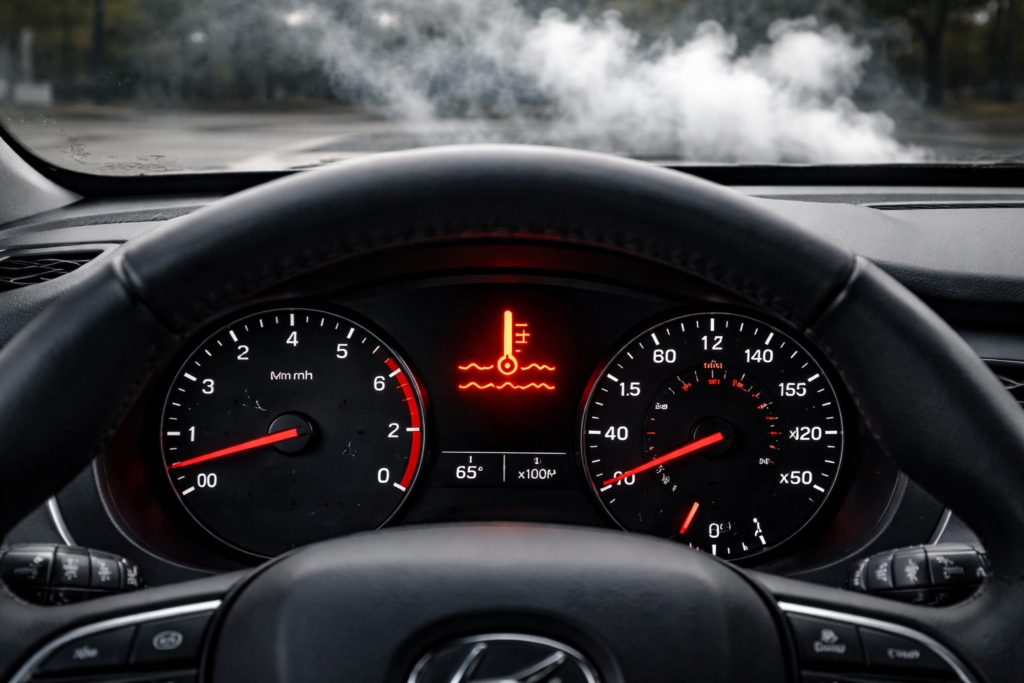
The key is this:
✅ White smoke that disappears quickly is often normal.
❌ White smoke that continues, smells sweet, or is thick can mean major engine trouble.
2. Is White Smoke From Exhaust Always Bad?
Not always. Many people see white smoke on a cold morning and panic—but in many cases, it’s harmless.
When white smoke is normal
- Happens only on cold start
- Disappears within 1–5 minutes
- Looks like light vapor (thin, wispy)
- No coolant loss
- No engine overheating
- No warning lights
When white smoke is a warning sign
- Thick clouds that don’t go away
- Sweet smell (coolant burning)
- Engine overheating
- Coolant level dropping
- Milky oil on dipstick or oil cap
- Misfires, rough idle, loss of power
3. White Smoke vs Blue Smoke vs Black Smoke (Quick Comparison)
Understanding exhaust smoke colors is one of the fastest ways to narrow down what’s happening.
Comparative Table: Exhaust Smoke Colors and What They Mean
| Smoke Color | Common Meaning | Typical Causes | Severity |
|---|---|---|---|
| White smoke | Water vapor or coolant/fuel burning | Condensation, head gasket leak, cracked head, injector issues | Medium to Critical |
| Blue smoke | Oil burning | Worn piston rings, valve seals, turbo seals | High |
| Black smoke | Too much fuel (rich mixture) | Dirty air filter, bad MAF, injectors, tuning issues | Medium |
Pro tip: White smoke is the most “misunderstood” because it can be totally normal or extremely serious.
4. Common Causes of White Smoke From Exhaust
Let’s break down the most common causes of white smoke from exhaust, from harmless to severe.
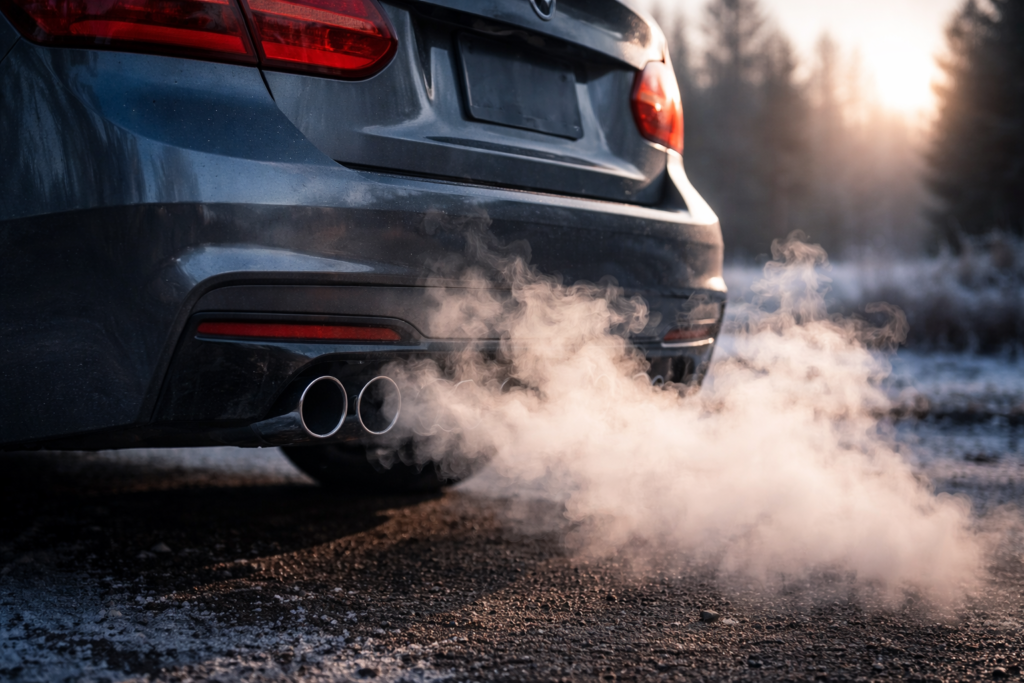
Cause #1: Condensation (Normal Water Vapor)
This is the most common cause of white smoke—especially in cold climates.
Why it happens:
When the engine is cold, moisture inside the exhaust system turns into steam as it warms up.
Signs it’s normal:
- Only appears during cold start
- Goes away quickly
- No strange smell
- No coolant loss
✅ Fix: No repair needed.
Cause #2: Coolant Leak Into the Combustion Chamber
If coolant enters the engine cylinders, it burns and produces thick white smoke.
Common reasons:
- Blown head gasket
- Cracked cylinder head
- Warped cylinder head
- Cracked engine block (rare but possible)
Signs:
- White smoke that lingers
- Sweet smell from exhaust
- Overheating
- Coolant level dropping
- Bubbling coolant in radiator/reservoir
❌ Fix: This is serious—requires repair ASAP.
Cause #3: Blown Head Gasket
The head gasket seals the engine block and cylinder head. If it fails, coolant can leak into the combustion chamber.
Symptoms:
- Thick white smoke
- Coolant loss with no visible leaks
- Overheating
- Engine misfire
- Milky oil (“chocolate milk” appearance)
This is one of the most expensive and common “worst-case” scenarios.
Cause #4: Cracked Cylinder Head
A cracked cylinder head can allow coolant into the cylinder, producing constant white smoke.
Often caused by:
- Severe overheating
- Low coolant driving
- Poor maintenance
- Manufacturing defects (less common)
Cracked heads may also cause:
- compression loss
- rough running
- repeated overheating
Cause #5: Intake Manifold Gasket Leak (Some Engines)
On certain engines, coolant passages run through the intake manifold. A gasket failure can cause coolant to enter the intake and burn.
Symptoms:
- White smoke
- Coolant loss
- Rough idle
- Misfire codes
This repair is often cheaper than a head gasket—so it’s worth diagnosing properly.
Cause #6: Fuel Injector Issues (More Common in Diesel)
In diesel engines, white smoke often means unburnt fuel leaving the exhaust because combustion isn’t happening correctly.
Causes:
- Faulty injector spray pattern
- Injector stuck open
- Low compression
- Glow plug failure (cold start)
- Poor fuel quality
Cause #7: Bad Glow Plugs (Diesel Engines)
Glow plugs help diesel engines start in cold temperatures. If they fail, fuel may not ignite properly, creating white smoke.
Signs:
- White smoke on startup
- Hard starting
- Rough idle until warm
Cause #8: Turbocharger Issues (Turbo Cars & Diesel Trucks)
A failing turbo can sometimes contribute to white smoke, especially if coolant or oil enters the exhaust stream.
Symptoms:
- Smoke under boost
- Loss of power
- Whining turbo noise
- Increased oil consumption
Cause #9: Automatic Transmission Fluid Burning (Rare)
If your vehicle has a vacuum modulator (older cars), transmission fluid can be sucked into the intake and burned.
This is rare in modern vehicles but still possible in older models.
5. White Smoke From Exhaust on Cold Start (Normal vs Not Normal)
Cold start behavior matters a lot.
Normal cold-start white smoke
- Thin vapor
- Disappears quickly
- No coolant loss
Not normal cold-start white smoke
- Thick, fog-like smoke
- Lasts more than 5–10 minutes
- Sweet smell
- Engine misfires
Comparative Table: Cold Start White Smoke Diagnosis
| Symptom | Likely Cause | Severity | Action |
|---|---|---|---|
| Thin vapor for 1–3 minutes | Condensation | Low | No fix needed |
| Thick smoke for 10+ minutes | Coolant burning | Critical | Stop driving, diagnose |
| White smoke + shaking engine | Misfire/coolant leak | High | Scan codes, compression test |
| White smoke + fuel smell (diesel) | Unburnt fuel | Medium–High | Check injectors/glow plugs |
6. White Smoke From Exhaust While Driving
If you notice white smoke from exhaust while driving, that’s usually more concerning than cold-start vapor.
Possible causes:
- coolant entering combustion under load
- turbo coolant leak (some setups)
- injector issues (diesel)
- engine overheating causing warping
Key clue:
If smoke increases during acceleration or uphill driving, the problem is often tied to pressure and load, which points toward gasket or turbo issues.
7. White Smoke From Exhaust + Sweet Smell (Coolant Burning)
This is one of the biggest red flags.
Coolant contains ethylene glycol or propylene glycol, which creates a sweet smell when burned.
If you smell sweetness + see white smoke:
- Your engine may be burning coolant
- Your head gasket may be failing
- You risk severe engine damage
Other signs to check immediately:
- coolant reservoir dropping
- overheating
- bubbles in coolant tank
- oil turning milky
8. White Smoke From Exhaust + Rough Idle or Misfire
When coolant or fuel issues disrupt combustion, you may feel:
- rough idle
- shaking engine
- hesitation
- misfire codes (P0300, P0301, etc.)
Why this happens:
If coolant leaks into a cylinder, it can:
- foul spark plugs
- reduce compression
- prevent proper combustion
9. White Smoke From Exhaust in Diesel Engines
Diesel engines behave differently than gasoline engines, so the meaning of white smoke changes slightly.
In diesel engines, white smoke often means:
- unburnt fuel leaving the exhaust
- poor ignition due to low temperature
- injector timing issues
- glow plug/heater failure
Common diesel-specific causes
- glow plug failure
- injector leak
- low compression
- weak fuel pressure
- water contamination in diesel fuel
Comparative Table: White Smoke in Gas vs Diesel Engines
| Engine Type | Most Common White Smoke Cause | Typical Smell | Most Likely Fix |
|---|---|---|---|
| Gasoline | Coolant leak or condensation | Sweet (coolant) or none | Head gasket test / cooling system repair |
| Diesel | Unburnt fuel on cold start | Diesel fuel smell | Glow plugs / injectors / compression test |
10. White Smoke From Exhaust in Turbocharged Cars
Turbocharged cars can produce white smoke for a few reasons:
1) Coolant leak (engine-related)
Same causes as non-turbo engines.
2) Turbo seal issues
Some turbos are oil-cooled and water-cooled. If seals fail, fluids can enter the exhaust.
3) PCV system problems
A faulty PCV system can push oil vapor and moisture into the intake.
4) Over-boost and heat stress
Excess heat can accelerate gasket wear.
11. How to Diagnose White Smoke From Exhaust (Step-by-Step)
If you want to fix white smoke from exhaust, diagnosis is everything. Don’t replace parts blindly.
Step 1: Observe the Smoke Carefully
Ask yourself:
- Is it thin or thick?
- Does it disappear quickly?
- Does it happen only at startup?
- Does it increase with acceleration?
- Does it smell sweet or like fuel?
Step 2: Check Coolant Level
- Look at coolant reservoir level
- Check for frequent top-ups
If coolant is dropping and there are no external leaks, it may be burning internally.
Step 3: Inspect Oil Condition
Check your dipstick and oil cap.
Signs of coolant contamination:
- milky oil
- creamy sludge under cap
- rising oil level (coolant mixing)
Step 4: Look for Bubbles in Coolant Reservoir
Start the engine (cold) and watch the coolant tank.
- small bubbles briefly = normal
- constant bubbling = possible head gasket leak
Step 5: Smell the Exhaust
- Sweet smell = coolant
- Raw fuel smell = injector or combustion issue
- Burning oil smell = oil consumption issue
Step 6: Scan for Trouble Codes
Use an OBD2 scanner.
Common codes include:
- P0300 (random misfire)
- P0301–P0308 (cylinder misfires)
- P0171/P0172 (fuel trim issues)
- cooling system temp codes
Step 7: Perform a Cooling System Pressure Test
This is one of the best tests.
If the system loses pressure and no leak is visible, coolant may be leaking internally.
Step 8: Do a Compression Test / Leak-Down Test
These tests confirm:
- head gasket failure
- cracked head
- cylinder sealing problems
Step 9: Use a Block Tester (Combustion Leak Test)
A block test checks for exhaust gases in coolant.
If positive → head gasket likely failing.
12. How to Fix White Smoke From Exhaust (Solutions by Cause)
Now let’s talk solutions. The correct fix depends on the root cause.
✅ Fix 1: Condensation (No Repair Needed)
If it’s only steam during cold start:
What to do:
- let engine warm up
- drive normally
- ensure exhaust system is intact (no major rust holes)
This is the best-case scenario.
✅ Fix 2: Replace a Leaking Intake Manifold Gasket
If coolant is entering intake passages, a gasket replacement can solve it.
Typical steps:
- drain coolant
- remove intake manifold
- replace gasket
- refill and bleed cooling system
Difficulty: Medium
Cost: Moderate
❌ Fix 3: Head Gasket Replacement (Major Repair)
If your head gasket is blown, it must be replaced.
What the repair involves:
- removing cylinder head
- inspecting for warping
- replacing gasket
- new head bolts (often required)
- coolant flush + oil change
Difficulty: High
Cost: High
Time: 1–3 days in a shop
❌ Fix 4: Repair or Replace a Cracked Cylinder Head
If the head is cracked, you may need:
- welding/machining (sometimes possible)
- replacement cylinder head (common)
Often paired with a new head gasket.
✅ Fix 5: Fix Diesel White Smoke (Glow Plugs / Injectors)
If you drive a diesel and see white smoke, start here:
Glow plug test:
- test resistance
- replace failed plugs
- check glow plug relay/module
Injector diagnosis:
- injector balance test
- check spray pattern
- replace or rebuild injectors
✅ Fix 6: Turbocharger Repair (If Turbo Is the Cause)
If the turbo is leaking oil/coolant into exhaust:
Fix options:
- rebuild turbo
- replace turbo
- check oil feed/return lines
- inspect intercooler piping for fluid
Comparative Table: Fix Options and Difficulty
| Cause | Fix | Difficulty | Estimated Cost Range |
|---|---|---|---|
| Condensation | No fix needed | Easy | $0 |
| Intake manifold gasket | Replace gasket | Medium | $150–$600 |
| Head gasket | Replace head gasket | Hard | $1,200–$3,500+ |
| Cracked cylinder head | Replace/repair head | Very Hard | $2,000–$5,000+ |
| Diesel glow plugs | Replace glow plugs | Medium | $150–$600 |
| Diesel injectors | Clean/replace injectors | Medium–Hard | $300–$2,500 |
| Turbo failure | Rebuild/replace turbo | Hard | $800–$3,000+ |
Prices vary by vehicle, region, labor rate, and engine design.
13. Can You Drive With White Smoke From Exhaust?
This depends on the cause.
Safe to drive (usually)
- thin vapor only on cold start
- disappears quickly
- no coolant loss
- no overheating
Not safe to drive
- thick white smoke constantly
- overheating
- coolant level dropping fast
- misfires and shaking
- engine warning lights
Why it’s dangerous:
Coolant burning can lead to:
- hydrolock (liquid coolant prevents piston movement)
- catalytic converter damage
- warped head from overheating
- total engine failure
If white smoke is heavy and constant, stop driving and diagnose immediately.
14. Repair Cost Breakdown
Here’s a realistic view of what repairs may cost.
Comparative Table: White Smoke Repair Cost Breakdown
| Repair | Parts Cost | Labor Cost | Total Typical Cost |
|---|---|---|---|
| Coolant flush | $30–$80 | $80–$150 | $110–$230 |
| Intake gasket | $30–$120 | $120–$500 | $150–$600 |
| Head gasket | $150–$400 | $1,000–$3,000 | $1,200–$3,500+ |
| Cylinder head replacement | $500–$2,000 | $1,000–$3,000 | $2,000–$5,000+ |
| Glow plugs (diesel) | $50–$250 | $100–$400 | $150–$650 |
| Injector replacement | $200–$1,500 | $100–$1,000 | $300–$2,500 |
| Turbo replacement | $500–$2,000 | $300–$1,200 | $800–$3,200 |
15. Prevention Tips to Avoid White Smoke From Exhaust
Prevention is cheaper than repair. Here’s how to reduce the chances of white smoke issues.
Best prevention practices
✅ Keep your cooling system healthy
- replace coolant on schedule
- check hoses and clamps
- never ignore overheating
✅ Use the right coolant type
Mixing coolant types can cause sludge, corrosion, and gasket damage.
✅ Fix small leaks early
A tiny coolant leak today can become a head gasket failure later.
✅ Don’t drive while overheating
Overheating is the #1 reason cylinder heads warp and gaskets fail.
✅ For diesel owners
- use quality fuel
- replace fuel filters
- test glow plugs before winter
16. FAQs About White Smoke From Exhaust
Why do I see white smoke from exhaust only in the morning?
Most likely condensation. Overnight moisture builds in the exhaust and turns to steam during warm-up.
Can low coolant cause white smoke from exhaust?
Yes. If coolant is leaking into the engine and burning, your coolant level will drop.
Does white smoke always mean head gasket?
No. It can be normal condensation or diesel fuel-related issues. But thick, sweet-smelling smoke often points to coolant burning.
Can bad spark plugs cause white smoke?
Bad plugs typically cause misfires and rough running. White smoke is more often coolant vapor or unburnt fuel than spark plugs alone.
What does thick white smoke mean?
Usually coolant burning, especially if it doesn’t go away and smells sweet.
17. Final Thoughts: What to Do Next
If you’ve noticed white smoke from exhaust, the most important thing is to identify whether it’s:
✅ harmless condensation
or
❌ a serious coolant or combustion issue
Quick decision guide:
- Thin smoke that disappears fast: usually normal
- Thick smoke + sweet smell + coolant loss: stop driving and diagnose immediately
White smoke can be a small issue—or a warning sign of major engine damage. The sooner you test coolant levels, scan for codes, and inspect oil condition, the better your chances of avoiding expensive repairs.