
AdBlue: The Complete Guide to Causes, Fixes and Prevention for Diesel Cars
Introduction
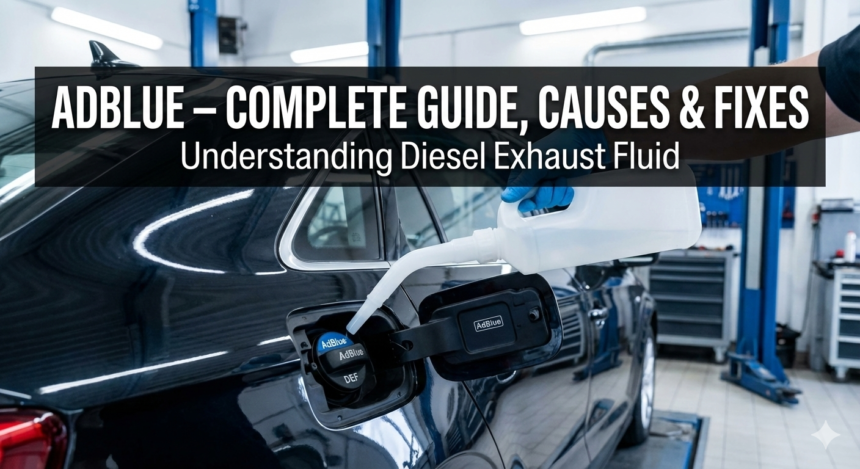
If you drive a modern diesel, you’ve probably seen an AdBlue warning on the dash or heard about DEF. adblue is the brand-name term for the diesel exhaust fluid used in SCR systems to cut NOx emissions. In plain English, it’s a clean urea solution that helps your engine burn cleaner and meet emissions standards. This guide explains what AdBlue is, why problems happen, how to diagnose common faults, and what you can do—whether you’re a DIY mechanic or you’d rather hand it to a shop. By the end, you’ll know when to fix it yourself and when to call in the pros, plus rough cost estimates so you’re not blindsided.
What AdBlue is and how it works
– What it is: AdBlue (a brand-name term) refers to a diesel exhaust fluid (DEF) that is typically a 32.5% urea solution in demineralized water. It’s stored in a separate tank on many diesel vehicles.
– Why it exists: Modern diesel engines use a selective catalytic reduction (SCR) system. The DEF is injected into the exhaust, where it converts harmful NOx into nitrogen and water before it reaches the atmosphere.
– How it’s managed: The vehicle’s engine management system (ECU) monitors DEF level, temperature, and flow. If the fluid is low, contaminated, or the system detects a fault, you’ll see warnings and the engine may enter a reduced-power mode.
– Key terms to know: SCR (Selective Catalytic Reduction), NOx (nitrogen oxides), ISO 22241 (DEF quality standard), DPF (Diesel Particulate Filter), and NOx sensor.
Common causes of AdBlue problems
– Low AdBlue level: The simplest and most common cause. Many cars will refuse to start or go into limp mode if the DEF tank is below the minimum level.
– Contaminated or poor-quality AdBlue/DEF: Water, dirt, or improper DEF (not ISO 22241-compliant) can clog sensors and injectors.
– Faulty DEF injector or dosing pump: If the system can’t meter the correct amount of DEF, NOx reduction won’t occur properly.
– SCR system leaks or damaged lines: Leaks around the DEF lines, pump, or tank can cause low pressure, smell, or visible fluid loss.
– DEF freezing or temperature-related faults: In cold weather, DEF can freeze. The system has a heater and recirculation logic, but prolonged freezing or temperature faults can trigger warnings.
– DEF quality sensor or NOx sensor faults: If sensors misread the DEF quality or NOx levels, the ECU can set fault codes and restrict operation.
– Fill cap or vent issues: A loose cap, blocked vent, or improper resealing can lead to contamination or pressure problems in the system.
– Aftertreatment system fault codes: Sometimes a fault in an adjacent component (DPF, oxygen sensors, or exhaust valves) can cascade into SCR alerts.
Symptoms and how to identify the problem
– Dash warning lights: Look for the AdBlue/DEF warning, check engine light, or a specific SCR warning message. In many cars, you’ll see a countdown or a “fill DEF” message.
– Reduced engine performance: The vehicle may enter a limp mode with limited power if the SCR system cannot operate correctly.
– Low DEF level indicator: A gauge or message showing “DEF level low” or similar.
– Leaks or strong odors: A wet patch under the car around the DEF tank or lines, or a distinct ammonia/urea odor is a red flag.
– Poor DEF quality symptoms: If you’ve recently bought suspicious DEF, you may get repeated faults after driving short distances.
– Fault codes: OBD-II codes related to SCR, DEF, NOx sensors, or DEF pump/valves (e.g., codes referencing NOx aftertreatment) indicate specific issues.
Step-by-step troubleshooting guide
If you’re a DIY-minded car owner, you can perform several checks safely. Always consult your service manual for model-specific guidance.
– Step 1: Check the DEF level and quality
– Ensure the DEF tank is within the recommended range (usually near the bottle’s mid-point). Top up with reputable, ISO 22241-compliant DEF if low.
– Inspect the DEF for contamination: look for cloudiness, sediment, or crystals. If contaminated, do not top off—flush or replace affected lines as directed by your manual.
– Use only clean, sealed containers. Do not mix with other fluids.
– Step 2: Inspect the DEF system for leaks
– Check around the DEF tank, hoses, injector lines, and the DEF pump for wet spots or white residue.
– Look at the fill cap and vent for proper seating and cleanliness. A loose cap or blocked vent can create problems.
– Step 3: Check the DEF fill point and nozzle
– Ensure the nozzle is clean and the fill port is free of debris.
– If you hear a whirr or pump noise after filling, the system might be trying to prime. If it doesn’t, the pump or valve could be faulty.
– Step 4: Read fault codes with an OBD-II scanner
– Scan for SCR, DEF, or NOx-related codes. Note any freeze-frame data and engine temperature at the time of fault.
– If the codes point to the DEF system, you can re-check DEF quality, level, and potential leaks as you proceed.
– Step 5: Temperature and freezing checks
– If you’re in cold weather, consider that DEF can freeze at low temperatures. The system may temporarily show a fault or hold off operation until warming.
– If your vehicle has a DEF heater, confirm it’s functioning; a non-working heater can cause continued faults in winter.
– Step 6: Fault isolation (basic)
– If level and quality are good, test for a clogged injector or faulty pump by listening for unusual noises or checking for abnormal spray during service (this may require a professional).
– Inspect NOx and temperature sensors for obvious damage or corrosion. Cleaning or replacing a sensor is sometimes sufficient.
– Step 7: Decide on DIY vs professional service
– If you have confirmed a simple low level, poor-quality DEF, or a cap/vent issue, you can often fix it yourself.
– If the fault codes indicate complex SCR component failure (pump, injector, sensor, or catalyst), or if you’re not comfortable working near the exhaust system, seek a mechanic.
When repair is possible vs when to visit a mechanic
– DIY-friendly scenarios:
– Low DEF level and you’re within the recommended refill range.
– Contamination detected in DEF—if you’re confident you can flush or replace affected lines per your manual.
– Loose cap, vent issues, or basic sensor cleaning (where the vehicle allows it).
– Professional repair scenarios:
– Fault codes pointing to DEF pump, injector, NOx sensors, or the SCR catalyst.
– Persistent warning lights after proper DEF refill and basic checks.
– Leaks in the DEF circuit, damaged wiring harness, or suspected internal pump failure that requires diagnostic equipment.
– Vehicles with multiple fault codes or software issues requiring ECU updates or reprogramming.
Repair/ replacement cost estimates (USD)
Note: Prices vary by make/model, region, and labor rates. The figures below are rough ranges to help you budget.
– DEF refill (per fill): 5–10 liters typically, depending on tank size; cost is about $5–$25 for quality DEF.
– Diagnostic fee: $75–$150 (in most independent shops; sometimes waived if you proceed with recommended repair).
– DEF pump replacement: $300–$1,000 (parts plus labor).
– DEF injector replacement or cleaning: $250–$1,200 (depending on design and accessibility).
– SCR catalyst replacement or repair: $1,000–$5,000 (varies widely by vehicle and whether the catalyst or whole exhaust module is replaced).
– DEF tank replacement: $800–$2,000 (plus labor; complex removal may be needed on some models).
– Minor leaks/line repair: $150–$600 (depends on location and whether wiring needs inspection).
Preventive tips to avoid AdBlue problems
– Use high-quality DEF that meets ISO 22241 standards and purchase from reputable brands. Avoid “cheap” DEF unless you’re certain of purity and contamination risks.
– Store DEF properly: keep containers sealed, protected from sunlight, and at moderate temperatures. DEF has a shelf life (often about 12 months in a sealed bottle; longer in cooler environments).
– Check levels regularly and keep the tank above the minimum level to prevent system faults.
– Inspect the DEF system for leaks at regular service intervals and after any collision or impact near the exhaust area.
– Avoid adding water or other fluids to the DEF tank. Contaminated DEF can clog injectors and sensors.
– Use proper fueling habits: only fill through the DEF port; never top off improperly or force extra fluid into the system.
– If you drive in winter or in crowded urban areas with short trips, ensure the vehicle performs regular SCR cycles to prevent crystallization or clogging in the system.
– If the dash shows a warning, don’t ignore it. Addressing a warning early can prevent more expensive repairs.
FAQs
Q1: Is AdBlue the same as DEF?
A1: AdBlue is a brand-name term for diesel exhaust fluid (DEF). DEF is the generic name for the ISO 22241-compliant urea solution used in SCR systems. They function the same way; AdBlue is just a brand.
Q2: Can I drive my car if the AdBlue level is low?
A2: Many vehicles will allow limited driving when the DEF level is very low, but the engine may restrict power or refuse to start if the level is critical. Running out of AdBlue can cause the vehicle to go into limp mode or fail to restart.
Q3: What happens if I add the wrong fluid to the AdBlue tank?
A3: Adding non-compliant fluid or contaminated DEF can damage the SCR system, clog injectors, and trigger multiple fault codes. If you suspect wrong fluid was added, don’t drive the car; consult a mechanic for a system flush and diagnostic check.
Q4: Does AdBlue freeze?
A4: Yes, AdBlue can freeze at about -11°C (12°F). Modern systems have heaters and anti-freeze logic to deal with this, but extreme cold can still trigger warnings or temporary shutdown of the SCR function.
Q5: How often should I refill AdBlue?
A5: It varies by vehicle and driving style, but many drivers refill every 3,000–8,000 miles (5,000–12,000 km) or when a low-level warning appears. Always follow the vehicle’s owner’s manual for the recommended interval.
Conclusion
AdBlue is an essential part of modern diesel technology, helping to keep NOx emissions in check. When the AdBlue/DEF system works correctly, you’ll enjoy clean running and compliance with emissions standards. When problems arise, a mix of simple checks (level, quality, leaks) and targeted diagnostics (codes and sensor checks) can guide you toward a repair that fits your budget and your skills. Remember to keep the DEF in good condition, follow the manufacturer’s guidelines, and don’t ignore warning lights. A little routine care now saves big headaches later.
Have car problems? Ask in the comments and I’ll help!