
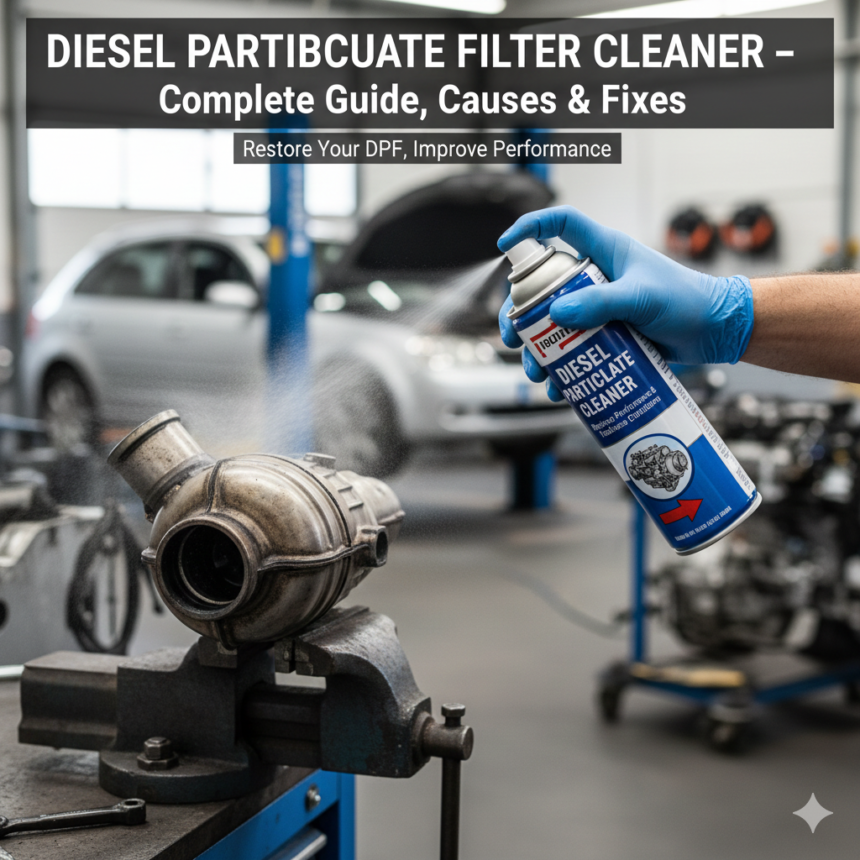
# Diesel Particulate Filter Cleaner – Complete Guide, Causes & Fixes
Diesel particulate filters (DPFs) are a crucial part of modern diesel exhaust systems, and keeping them clean is essential for performance, fuel economy, and emissions compliance. If your vehicle is showing DPF warnings or you want to keep your exhaust system in top shape, a diesel particulate filter cleaner can be a helpful part of your toolkit. This complete guide covers what a DPF cleaner does, common causes of DPF trouble, how to diagnose and fix issues, cost estimates, and practical tips for prevention. It’s written for car owners and DIY enthusiasts who want clear, actionable steps—and it’s tailored to common terms you’ll see in US and European markets.
Introduction
A diesel particulate filter cleaner is marketed as a way to loosen and reduce soot buildup inside the DPF. While a cleaner can aid the process, it’s not a miracle cure for a severely blocked filter. If you’re experiencing warning lights, limp mode, or heavy exhaust smoke, you’ll want a careful approach: confirm the problem, try safe, non-invasive fixes first, and know when professional help is the best option. In this guide, you’ll learn what a DPF is, the main causes of clogging, how to identify symptoms, a step-by-step troubleshooting guide, and practical cost estimates.
What it is / explanation
– What the DPF does: A diesel particulate filter traps soot particles produced by combustion, preventing them from entering the atmosphere. Over time, accumulated soot must be burned off during controlled regeneration, or it can clog the filter.
– What a diesel particulate filter cleaner does: A DPF cleaner is a chemical additive designed to improve combustion efficiency, lower soot production, and sometimes help dissolve or loosen trapped soot. In many cases, cleaners are used in combination with a proper driving cycle or professional cleaning methods to help facilitate a regeneration or reduce soot load. Important: cleaners are most effective on lightly clogged filters and do not replace mechanical cleaning or replacement when the DPF is heavily blocked.
– Real-world use: cleaners are commonly used as a preventive measure or light maintenance aid, not as a substitute for diagnosing engine issues or for a DPF that is already in limp mode or physically blocked.
Common causes
DPF problems are rarely caused by a single issue. In many cases, multiple factors contribute to excessive soot buildup or failed regen. Common causes include:
– Short trips and urban driving: Frequent short runs don’t reach the high exhaust temperatures needed for effective regeneration.
– Faulty EGR valve or system: A stuck or malfunctioning EGR can raise soot production and upset exhaust gas recirculation.
– Faulty or dirty fuel injectors: Poor atomization increases soot and unburned fuel in the exhaust.
– Dirty air filter or MAF sensor issues: Restricted air flow or incorrect air measurement leads to rich air-fuel mixtures that create more soot.
– Turbo problems: A failing turbo can reduce exhaust flow or boost pressure, hindering proper regen.
– Diesel fuel quality and additives: Low-quality fuel or incorrect use of fuel additives can affect combustion and soot production.
– Engine oil leaks into combustion chamber (oil burning): Excess oil increases ash and soot that accumulate in the DPF.
– Ash buildup in the DPF: Even with proper soot burning, ash from engine oil and additives can accumulate and reduce filter efficiency over time.
– Sensor or pressure-differential faults: Faulty differential pressure sensors can mask true DPF condition, leading to incomplete regenerations.
Symptoms / how to identify the problem
Look for a combination of symptoms rather than a single warning. Common signs include:
– DPF warning light on the dash or engine-management light (check engine).
– Reduced power or limp mode, especially after starting or during acceleration.
– Excessive exhaust smoke or strong diesel smell.
– Increased fuel consumption or poor performance.
– Frequent forced/regeneration cycles noted by the on-board diagnostics or maintenance history.
– High exhaust backpressure readings or a noticeable drop in exhaust flow.
– Sound changes in the exhaust or unusual vibrations when the engine is under load.
Step-by-step troubleshooting guide
Before you dive into steps, gather your tools: OBD-II scanner with DPF codes, a flashlight, basic hand tools, and if you’re planning a full cleaning, a reputable DPF cleaner product and the manufacturer’s instructions.
1) Verify DPF status and fault codes
– Use an OBD-II scanner to pull codes related to DPF, regen, backpressure, and related sensors.
– Note any ongoing fault codes (e.g., regeneration-frequency codes, differential pressure codes, sensor faults).
– Check live data if possible: DPF differential pressure, engine RPM, exhaust gas temperature, and fuel trim.
2) Inspect related engine systems
– Check air intake, air filter, and MAF sensor for cleanliness and proper operation.
– Inspect the EGR valve and passages for sticking or clogging.
– Examine injectors for proper spray pattern and leaks; check for misfires.
– Inspect turbo hoses for leaks or cracks and verify boost pressure with a gauge.
– Look for oil leaks or excessive oil consumption that could contribute to soot.
3) Attempt a controlled regeneration or driving cycle
– If the vehicle allows, perform a forced regeneration via the service interface or a trusted OBD tool.
– Drive to enable regeneration: highway driving at steady speeds (usually 60–75 mph / 100–120 km/h) with moderate engine load for 15–30 minutes, keeping engine RPM in a healthy range.
– If your vehicle requires a specific regen drive cycle, follow the manufacturer’s procedure. Do not force regen if the vehicle shows severe overheating or mechanical faults.
4) Consider a diesel particulate filter cleaner application
– Choose a reputable diesel particulate filter cleaner suitable for your engine type and fuel system. Follow the product’s dosing and timing instructions exactly.
– Typical approach: add the cleaner to the fuel system per label instructions, then drive under normal conditions or on a highway run to circulate the cleaner through the DPF.
– Important caveats: cleaners are not a substitute for a clogged DPF needing mechanical cleaning or replacement. Do not rely on a cleaner to repair a heavily blocked DPF or one that is already in limp mode.
5) Reassess DPF condition
– After the regen attempt and cleaner use, re-check codes and backpressure data.
– If backpressure remains high or the DPF light returns, the DPF may be too blocked or damaged, and professional cleaning or replacement may be required.
6) When to remove and clean or replace the DPF
– If the DPF shows ash loading beyond consumable soot (ash cannot burn off and accumulates), cleaning alone won’t help; replacement or advanced cleaning may be required.
– If there are physical damages (cracks, collapsed channels) or sensor failures, replacement is often the only viable option.
7) Document and monitor
– Save fault codes and service records. Monitoring after a fix helps determine if the issue is resolved or if it recurs due to an underlying problem.
When repair is possible vs when to visit a mechanic
– Do-it-yourself (DIY) repair/maintenance is reasonable for light soot buildup, regular maintenance, and simple DPF cleaner use on a vehicle with no persistent DPF warnings.
– Visit a mechanic or emissions specialty shop when:
– The DPF light remains on after cleaning and regen attempts.
– The vehicle goes into limp mode frequently.
– Differential pressure is consistently high (over your vehicle’s recommended spec) indicating a heavily clogged DPF.
– You suspect ash loading or physical damage to the DPF or exhaust system.
– There are concurrent engine issues (faulty injectors, EGR, turbo, or oil consumption) that require professional diagnosis.
Repair/Replacement Cost Estimates (USD)
– DPF cleaning service (shop): typically between $400 and $1,000, depending on vehicle and location; some brands or specialty shops may charge more for in-depth cleaning using advanced equipment.
– DPF replacement (new unit + labor): often $1,500 to $3,500 for common models, but can reach $4,000–$6,000 or more for high-tech or rare units. Labor can add a significant amount, especially if the exhaust system needs dismantling.
– DPF backpressure sensor or differential pressure sensor replacement: $200–$400 for parts plus labor.
– EGR valve replacement (if faulty and contributing to soot): $300–$900 for parts plus labor.
– Injector service or nozzle rebuild (if contributing to soot): $200–$1200 per injector, depending on make and model.
– OBD-II scan and diagnostic fees (if you go to a shop): $60–$150 for a basic check; more for comprehensive diagnostics.
Preventive tips
– Drive with purpose: aim for highway driving at speeds that allow the exhaust to reach high temperatures to perform a complete regeneration at least once every couple of weeks if you mostly do short trips.
– Plan regular long trips: a 20–30 minute highway run once or twice a week helps keep the DPF clean.
– Maintain engine efficiency: replace clogged air filters, keep MAF sensors clean, and ensure your fuel system is delivering the correct atomization.
– Use quality fuel and approved additives: choose diesel fuel from reputable suppliers and follow manufacturer guidance if you add any cleaner or combustion-enhancing products.
– Address engine faults promptly: fix misfires, injector problems, or turbo leaks quickly to keep soot emissions in check.
– Monitor the DPF indicator: many vehicles have a DPF service indicator; when it signals, perform the recommended service or drive cycle.
– Regular maintenance matters: follow service intervals for oil changes, oil type, and engine tune-ups; poor oil or fuel quality accelerates ash buildup in the DPF.
FAQs
1) Can I use a diesel particulate filter cleaner myself?
– Yes, for light soot buildup and preventive maintenance, but it’s not a guaranteed fix for a heavily clogged DPF. Always follow the product instructions and ensure it’s compatible with your vehicle.
2) How long does DPF cleaning take?
– A professional cleaning or replacement can range from 1 to 4 hours depending on the method and the vehicle. A DIY cleaner application may take 30–60 minutes to prepare and a longer drive to circulate.
3) Will a DPF cleaner fix a clogged DPF by itself?
– It might help with light soot and improve combustion, but heavy blockages or ash loading usually require physical cleaning or a full DPF replacement.
4) Is driving with a clogged DPF safe?
– Not really. Prolonged clogging can cause reduced power, overheating, fuel economy loss, and potential damage to the exhaust system or engine. If you notice warning lights, plan a repair as soon as possible.
5) How can I prevent DPF clogging in the future?
– Regular highway driving, timely engine maintenance, using high-quality diesel, fixing leaks and faults promptly, and keeping the air intake and exhaust system clean all reduce the risk of DPF clogging.
Conclusion + CTA
A diesel particulate filter cleaner can be a useful tool in your maintenance toolbox, especially for preventive care and light soot management. The key is to combine cleaner use with proper diagnosis, a good driving routine, and timely maintenance. If you suspect more than light buildup or if your DPF warning persists after a DIY approach, it’s wise to seek professional help for a thorough cleaning, sensor checks, or replacement options. With the right approach, you can keep your diesel running efficiently, meet emissions standards, and avoid costly downtime.
Have car problems? Ask in the comments and I’ll help!