
# Cost to fix exhaust leak – Complete Guide, Causes & Fixes
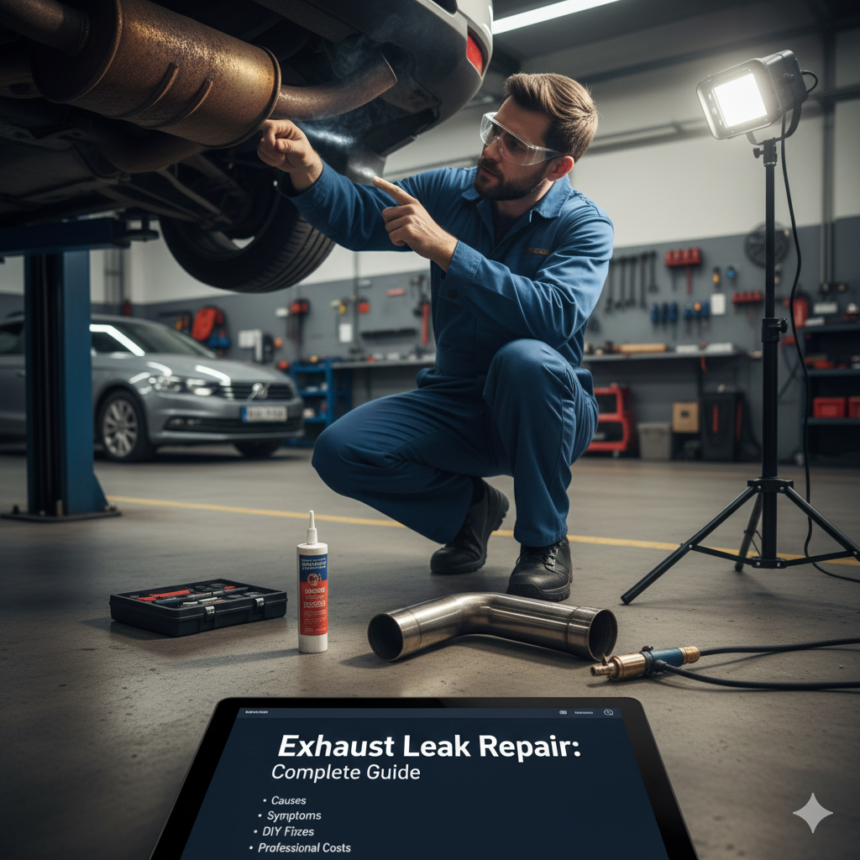
If you hear a loud roar, a ticking sound, or you smell exhaust fumes inside the cabin, you’re likely dealing with an exhaust leak. Understanding the cost to fix exhaust leak is essential before you reach for the wrench or head to a shop. This complete guide covers what an exhaust leak is, common causes, how to identify it, step-by-step troubleshooting, realistic price ranges in USD, and practical tips to prevent future leaks.
## What it is / explanation
An exhaust leak happens when there is a gap, crack, or failing seal in the exhaust system that allows exhaust gases to escape before they reach the tailpipe. The exhaust system includes the manifold, downpipe, catalytic converter, mid-pipes, resonator, muffler, and the exhaust hangers and clamps that hold everything in place. When a leak occurs, you may notice a louder engine tone, hissing or tapping noises, smell of exhaust, reduced performance, or even a drop in fuel efficiency.
Regionally, be aware that US emissions rules can make leaks more noticeable during inspections or emissions testing. In some states, a leak near sensors or the catalytic converter can cause a failure to pass an inspection. If you’re in California or other CARB-regulated areas, approved repairs may be required and verified during inspections.
## Common causes
– Worn or damaged gaskets at the exhaust manifold, exhaust flange connections, or catalytic converter flange.
– Rust, corrosion, or physical damage to pipes (mid-pipe, tailpipe, or the exhaust manifold).
– Loose or damaged exhaust clamps, hangers, or mounts allowing joints to separate.
– Cracked or warped exhaust manifolds due to heat stress or prior overheating.
– Leaks around the catalytic converter housing or its heat shield.
– O2 sensor bung leaks or loose sensors and wiring connections.
– Damaged or dented muffler or resonator causing cracks or seams to fail.
## Symptoms / how to identify the problem
– Louder-than-normal exhaust note, tapping, or hissing sounds, especially at cold start or acceleration.
– Reduced fuel economy and slight loss of engine power due to altered exhaust backpressure.
– Burning smell or sulfur-like odor (often indicating a leak near sensors).
– Visible signs of soot, blackened exhaust marks, or rust around joints.
– Check Engine light may illuminate if the leak affects O2 sensors or emissions systems.
– In some cases, you might feel air blowing around your feet inside the cabin when inside the vehicle.
## Step-by-step troubleshooting guide
– Safety first: Make sure the engine is cool, the car is on a flat surface, and you’re wearing gloves. Never place your hands near hot exhaust components.
– Visual inspection:
– Look for loose clamps, hanging brackets, or obvious rusted areas.
– Examine the exhaust manifold, flanges, and connections for cracks or gaps.
– Check the mid-pipe, resonator, and muffler seams for visible holes or rust.
– Listen and feel:
– Start the engine at a low idle and listen for the loudest area of noise.
– Place a piece of cardboard or a manometer (or use a simple spray test) near joints to locate leaks (if you spray soapy water on suspect joints, you’ll see bubbles where gas escapes).
– Smoke/soot test (advanced DIY approach):
– With the engine off and cold, introduce a small amount of smoke from a smoke machine or a specialized leak detector around joints. The escaping smoke will pinpoint leaks.
– Tighten and reseal:
– If you find a loose clamp or flange, tighten to manufacturer torque specs and replace any damaged gaskets.
– Replace any corroded clamps or damaged hangers to restore proper alignment and seal.
– Replace worn components:
– Gaskets, seals, and hoses should be replaced when damaged. Use OEM or high-quality aftermarket parts designed for your vehicle.
– Consider professional inspection:
– If the leak is at a hard-to-reach area (e.g., exhaust manifold cracks or welded seams) or if you notice rust-through at critical sections, seek a mechanic’s assessment.
– Do not use non-specific sealants as a long-term fix:
– Some commercial exhaust sealants claim to seal small leaks, but they’re often temporary and can contaminate oxygen sensors or catalytic converters. They are not recommended for leaks near sensors or the catalytic converter.
## When repair is possible vs when to visit a mechanic
– DIY-friendly leaks:
– Small leaks at clamps, flanges, or simple gasket replacements in accessible sections can be tackled by a confident DIYer with basic tools and the proper torque specs.
– Moderate to hard leaks:
– Leaks at exhaust manifolds, near catalytic converters, or where cracking is present typically require welding, heat shielding work, or complete component replacement. These are best handled by a professional mechanic with appropriate safety equipment.
– High-risk or regulatory concerns:
– Any leak that affects emissions sensors or could fail an emissions test should be addressed by a professional to ensure the repair is compliant with local regulations.
– Safety considerations:
– If you smell strong exhaust fumes inside the cabin or notice CO-related symptoms, stop driving and seek help immediately. Prolonged exposure can be dangerous.
## Repair/Replacement Cost Estimates (USD)
Prices vary by region and vehicle type. Here are realistic ranges to help you plan, with notes for DIY vs. shop labor.
– Simple clamp/gasket leak (easy, accessible):
– Parts: $5 – $60
– Labor (DIY): $0
– Labor (shop): $60 – $150
– Exhaust manifold gasket leak or flange leak (front of system, more challenging):
– Parts: $15 – $50
– Labor (shop): 1 – 3 hours; $120 – $450 depending on location and vehicle
– Mid-pipe, resonator, or muffler leaks (accessible sections):
– Parts: $60 – $200 (new pipe, muffler, or hanger assemblies)
– Labor (shop): 1 – 3 hours; $100 – $500
– Catalytic converter leak or replacement (more serious, emissions impact):
– Parts: $500 – $1,800 (new catalytic converter, sensors included as needed)
– Labor (shop): $150 – $600
– Total typical range: $650 – $2,400+
– Exhaust manifold replacement (front of engine, major job):
– Parts: $100 – $450
– Labor (shop): 3 – 6 hours; $240 – $900
– Total typical range: $340 – $1,350+
– Welding a crack or seam repair (metallic cracks in pipe or flange):
– Parts: minimal (welding rod, clamp if needed)
– Labor (shop): 2 – 4 hours; $180 – $650
– Total typical range: $250 – $900+
Notes:
– Labor rates in the US can vary widely by region. Urban or high-cost-of-living areas (e.g., parts of California, New York, or New England) typically charge higher hourly rates than rural areas.
– More expensive repairs often involve replacing the catalytic converter or exhaust manifolds, which can be the most costly parts but are critical for emissions and engine performance.
– DIY costs assume you already own basic hand tools and can safely elevate and support the vehicle. If you need to rent or buy specialty tools, add to the total.
– In some vehicles, access to the exhaust manifold or cat is restricted; expect longer labor times and higher costs in those cases.
## Preventive tips
– Regularly inspect the exhaust system during oil changes or tire rotations for rust, damage, or loosened hangers.
– Replace worn gaskets, clamps, and heat shields as soon as you notice wear or corrosion.
– Avoid driving with a damaged exhaust pipe in wet or salted road conditions; corrosion accelerates leaks.
– Ensure proper heat shielding and hanger alignment to prevent stress cracks from movement.
– Keep exhaust components clean and free from debris that could cause vibration or impact damage.
– If you drive aggressively or frequently tow heavy loads, consider more frequent inspections, as higher exhaust temperatures and stress can accelerate leaks.
## FAQs
1) Can I fix an exhaust leak myself, and when should I avoid DIY?
– You can fix small, accessible leaks such as loose clamps or gasket replacements if you’re comfortable with basic hand tools and you follow vehicle-specific torque specs. Avoid DIY for cracks in the manifold, catalytic converter leaks, or leaks behind the engine where access is restricted or safety concerns are higher.
2) Will an exhaust leak affect emissions or cause the check engine light to come on?
– Yes. An exhaust leak can alter oxygen sensor readings and trigger the check engine light, especially if the leak is near the catalytic converter or sensors. It can also cause failed emissions tests in areas that require periodic testing.
3) How long does a typical exhaust leak repair take at a shop?
– For simple clamp or gasket fixes, it can be as quick as 1–2 hours. More complex issues such as manifold replacement or catalytic converter work can take 3–6 hours or more, depending on accessibility and vehicle design.
4) Can I drive my car with an exhaust leak?
– It’s possible to drive in the short term, but it’s not safe or advisable. Leaks can allow dangerous exhaust gases, including carbon monoxide, to enter the cabin, and leaks can worsen over time, potentially damaging the engine or sensors.
5) Will repairing an exhaust leak improve fuel economy and performance?
– In many cases, yes. A leak can alter backpressure and sensor readings, reducing efficiency. Repairing the leak can restore proper backpressure, improve throttle response, and help sensors provide accurate data, which can improve overall efficiency.
## Conclusion + CTA
An exhaust leak is more than just a loud nuisance. It can affect performance, efficiency, emissions, and safety. By understanding the causes, recognizing the symptoms, and following a careful troubleshooting approach, you can decide whether a DIY fix is feasible or if a professional repair is the better route. With realistic cost estimates in USD and practical repair steps, you can plan your budget and choices wisely.
Have car problems? Ask in the comments and I’ll help!