

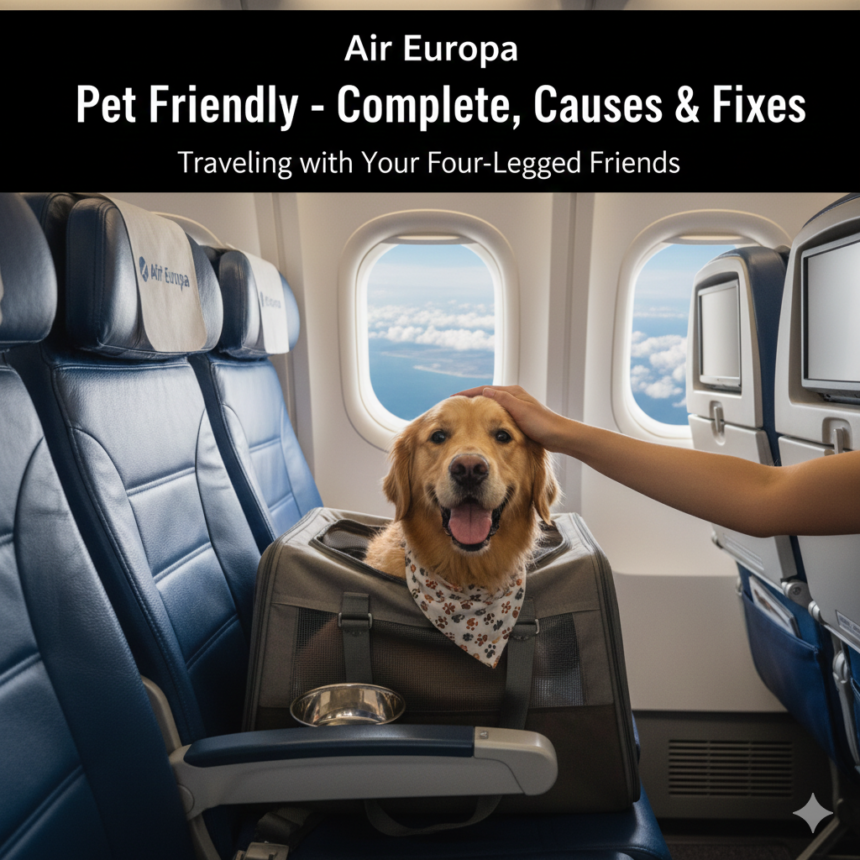
Air europa pet friendly – Complete Guide, Causes & Fixes
Introduction
If you’re a car owner who also loves road trips with a furry companion, you know that the best adventures often involve both wheels and wagging tails. When travel plans cross from road to air, you’ll want to know exactly how “air europa pet friendly” works so you can keep your pet safe, comfortable, and stress-free. This complete guide covers Air Europa’s pet policy, common issues travelers face, how to identify problems, step-by-step troubleshooting, cost estimates, preventive tips, and answers to the most frequent questions. Whether you’re planning a European hop or a longer international trip, understanding Air Europa’s pet accommodations helps you plan with confidence.
What it is / explanation
Air Europa’s pet program is designed to let owners travel with small pets in the cabin or larger animals in the cargo hold, depending on route, pet size, and the airline’s current regulations. For many European routes, Air Europa allows dogs and cats, subject to crate compliance, breed/size restrictions, health documentation, and availability. The core idea is simple: ensure your pet travels safely and comfortably while you complete your journey. For car owners and DIY-minded travelers, the practical takeaway is to treat pet travel like a technical project—read the requirements, assemble the right “tools” (crates, documents, reservations), follow the steps carefully, and test the setup before departure.
Air Europa pet policy basics
– Eligibility: Small dogs and cats are typically eligible to travel in the cabin on many routes if the combined weight of the pet and carrier stays within limits, and if cats and dogs meet airline and destination requirements. Larger pets usually require cargo transport.
– Cabin vs. cargo: In-cabin travel keeps your pet close, in a ventilated carrier under the seat. Cargo is used for larger animals or on routes where cabin space is limited.
– Kennel standards: Your pet must ride in an IATA-compliant kennel or carrier that fits under the seat (for cabin travel) and provides a secure, comfortable environment with proper ventilation.
– Documentation: Expect health certificates, vaccination records (rabies vaccination timing can be important), microchip information, and sometimes an EU pet passport for travelers within the EU or to certain destinations.
– Restrictions: Some routes or seasons restrict pet travel, and certain breeds or animals may be subject to additional checks or limitations. Always verify on Air Europa’s official policy page for your specific route.
Common causes
Here are the most frequent reasons travelers encounter trouble with “air europa pet friendly” arrangements:
– Missing or invalid documents: Health certificates outdated, rabies vaccination timing not compliant, or missing microchip data or pet passport.
– Non-compliant kennel: Crate not IATA-approved, too small, lacks secure latching, or poor ventilation.
– In-cabin vs cargo mismatch: Attempting to place a pet in-cabin when the route or weight/size requirement dictates cargo transport.
– Route restrictions: Some destinations, seasonal routes, or busy legs do not permit certain pets or require special booking.
– Insufficient space or booking error: Pet not properly registered on the booking, or the cabin seat for the pet is sold out.
– Breed or health concerns: Snub-nosed breeds or pets with certain health issues may face restrictions or extra checks.
– Late or miscommunication: Last-minute changes, missed check-in windows, or insufficient lead time for documentation or crate preparation.
Symptoms / how to identify the problem
– Denial at check-in: Airline staff can’t locate the pet’s booking or documents, or the crate doesn’t meet requirements.
– Missing or invalid documents: Health certificate, vaccination record, or microchip data is not verifiable.
– Crate issues: Crate too small, damaged, or non-IATA compliant.
– Route or seat issues: Unable to assign a cabin seat with the pet or told the route isn’t eligible for in-cabin pets.
– Unexpected fees: Extra pet handling fees or cargo charges assessed at check-in.
– Travel disruption: Flight delay or cancellation affects the pet’s safety, with no backup plan in place.
Step-by-step troubleshooting guide
– Step 1: Confirm eligibility for your exact route
– Check Air Europa’s official pet policy page for your itinerary.
– Verify whether your pet qualifies for cabin or cargo on that route.
– Note any seasonal restrictions or destination-specific rules.
– Step 2: Prepare the right crate and pet setup
– Use an IATA-compliant kennel or carrier suitable for cabin or cargo travel.
– Ensure your crate provides adequate ventilation, a secure door, and proper labeling.
– Attach clear identification, including your contact details and destination.
– Practice with the crate: acclimate your pet to the crate several weeks before travel.
– Step 3: Gather documents and health prerequisites
– Obtain an up-to-date vaccination record (rabies and core vaccines as required by destination).
– Secure a health certificate within the airline’s specified window (often 7–10 or 10 days before travel).
– Confirm microchip details match the pet’s records.
– If traveling within the EU, ensure the pet passport and any required vet endorsements are in order.
– Step 4: Book early and confirm the reservation
– Reserve a cabin space or cargo slot as early as possible; many airlines limit the number of animals per flight.
– Double-check that your pet is listed on the confirmation to avoid denied boarding at the airport.
– Review any pet-in-cabin fees and what’s included (carrier, handling, etc.).
– Step 5: Day-of-travel readiness
– Feed your pet a light meal a few hours before travel; avoid overeating right before flight.
– Arrive early at the airport to complete checks calmly.
– Attach allergen-friendly, water-filled leak-proof dishes inside the crate.
– Bring a familiar toy or blanket to reduce stress.
– Step 6: At the airport and boarding
– Present all documents to the airline desk; keep copies handy.
– Ensure the crate remains closed and undisturbed during security screening.
– If in-cabin, place the carrier under the seat and secure it; if cargo, follow the airline’s loading process.
– Step 7: Post-arrival care
– Check the pet immediately for signs of stress, dehydration, or injury.
– Allow the pet to acclimate in a quiet space before resuming a normal routine.
When repair is possible vs when to visit a mechanic
– Do-it-yourself fixes (can be done by a careful traveler)
– Correcting documentation: Update vaccines, health certificates, and microchip data; reprocess any missing or incorrect forms.
– Crate compliance: Replace or adjust a crate that’s too small or non-IATA-compliant; reinforce the door and ensure ventilation.
– Booking corrections: If a pet wasn’t registered or the cabin option is not properly selected, contact Air Europa promptly to correct the reservation.
– Route adjustments: If a destination restricts pet travel, consider alternative flights or routes and consult the airline for options.
– When to contact a professional (airline support)
– If there is denial at check-in due to policy misalignment or documentation issues.
– If a booking error cannot be resolved online or requires a change to cargo/cabin classification.
– If there are medical concerns for your pet that require veterinary liaison with the airline (e.g., stress management during travel, special handling needs).
– If you suspect a concern with the crate’s integrity or safety during transport.
Repair/Replacement Cost Estimates (USD)
Costs vary by route, destination, and service level. Here are typical ranges you might expect:
– Pet travel in cabin fee (per leg): $75–$250
– Large pet cargo service (per leg or per flight segment): $150–$1,000+
– IATA-compliant travel crate (new): $50–$200
– Veterinary health certificate: $20–$60
– Routine vaccines/vaccine boosters (per vaccine): $20–$60
– Microchip (if not already done): $25–$60
– Rabies titer test (where required): $40–$180
– Pet travel accessories (labels, extra bowls, absorbent pads): $10–$50
– Documentation translation or apostille (if required for particular destinations): $20–$100
– Additional handling or rescheduling fees (due to changes or cancellations): $50–$300 depending on policy
Preventive tips
– Plan well in advance: Start a month or more ahead to secure space, gather documents, and prepare the crate.
– Verify requirements for destination countries: EU pet travel rules differ from non-EU destinations; some require health certificates within a tight window or a specific pet passport.
– Choose a route with fewer connections or overnight layovers when possible: Less transit stress reduces risk for your pet.
– Invest in crate training: Pets that know their crate feel safer, reducing transport stress.
– Keep a pet-care kit: Include a collapsible bowl, leak-proof mat, extra leash, familiar toy, and a few days’ supply of food.
– Schedule a pre-travel vet visit: A quick check-up can catch issues that might cause delays or travel refusals.
– Label the crate clearly: Include your contact info, destination, and a photo of your pet for quick identification.
– Keep copies of all documents: Have digital backups and printed copies handy in your carry-on and luggage.
– Check weather and climate considerations: Extreme heat or cold can affect cabin or cargo decisions; airlines sometimes adjust policies during hot or cold spells.
– Stay informed about policy changes: Airlines occasionally update pet policies; re-check before each trip.
FAQs
1) Is Air Europa pet friendly?
– Yes, Air Europa generally allows dogs and cats to travel in cabin on many routes and also offers cargo transport for larger pets, subject to route-specific rules, pet size, and required documentation. Always verify the latest policy for your exact itinerary.
2) What documents do I need to travel with my pet on Air Europa?
– Typical documents include: an up-to-date vaccination record (rabies vaccination timing as required), a recent health certificate, microchip details, and a pet passport if traveling within the EU or to certain destinations. Some destinations may require additional paperwork, so check the airline’s policy for your route.
3) Can I bring my dog in cabin on Air Europa?
– In many cases, small dogs (and cats) can travel in cabin if they fit within the airline’s size and weight limits for the carrier, and if there is space on the flight. Larger dogs usually travel in cargo. Always confirm at booking.
4) Are there breed restrictions on Air Europa?
– Some breeds, especially certain brachycephalic (snub-nosed) breeds, may be restricted or require additional documentation or checks on specific routes. Check the current policy for your destination and aircraft type.
5) What should I do if my pet gets stressed during the journey?
– Train and acclimate your pet to the crate in advance, use calming strategies recommended by your vet, ensure proper hydration, and maintain a calm demeanor during travel. If your pet shows signs of distress, alert airline staff for guidance and support.
Conclusion + CTA
Traveling with a pet is a joyful part of many road-to-air adventures, but it requires careful planning and attention to policy details. By understanding air europa pet friendly options, preparing the right crate and documents, and following a step-by-step plan, you can minimize stress for both you and your companion and keep your trip on track across Europe and beyond. With the right preparation, you’ll be riding the wave of smooth, pet-friendly travel from curb to cabin to destination.
Have car problems? Ask in the comments and I’ll help!