bg
OnlymechanicOnlymechanic
Font ResizerAa
  • Car Reviews
  • General knowledge
  • Car audio and tech installations
  • Car Maintenance
  • Car Performance
  • Care & Accessories
  • #4436 (pas de titre)
Search
  • Car Reviews
    • luxury car
  • General knowledge
  • Car audio and tech installations
  • Car Maintenance
    • Engine and transmission troubleshooting
    • Brake system maintenance
    • Electrical and battery solutions
    • Routine servicing
  • Car Performance
    • Best aftermarket parts reviews
    • Exhaust and intake system upgrades
    • Suspension and handling improvements
    • Performance tuning and modifications
  • Care & Accessories
    • Safety and security enhancements
    • Detailing and cleaning tips
    • Interior and exterior accessories
  • #4436 (pas de titre)
Sign In Sign In
Follow US
Onlymechanic.com copyright 2026
Exhaust and intake system upgrades

Does a Cold Air Intake Void Your Warranty? What You Need to Know

Mark Reynolds
Last updated: mars 20, 2025 11:14 pm
By
Mark Reynolds
8 Min Read
Does a Cold Air Intake Void Your Warranty?
SHARE

Table of Contents

  • What Is a Cold Air Intake?
  • Does a Cold Air Intake Void Warranty?
    • Understanding the Magnuson-Moss Warranty Act
    • When Can a Cold Air Intake Void Your Warranty?
    • How to Protect Your Warranty
  • Benefits of a Cold Air Intake
  • Common Myths About Cold Air Intakes
    • Myth 1: All Aftermarket Parts Void Your Warranty
    • Myth 2: Cold Air Intakes Always Improve Performance
    • Myth 3: Cold Air Intakes Are Illegal
  • How to Choose the Right Cold Air Intake
  • Final Thoughts: Upgrade with Confidence

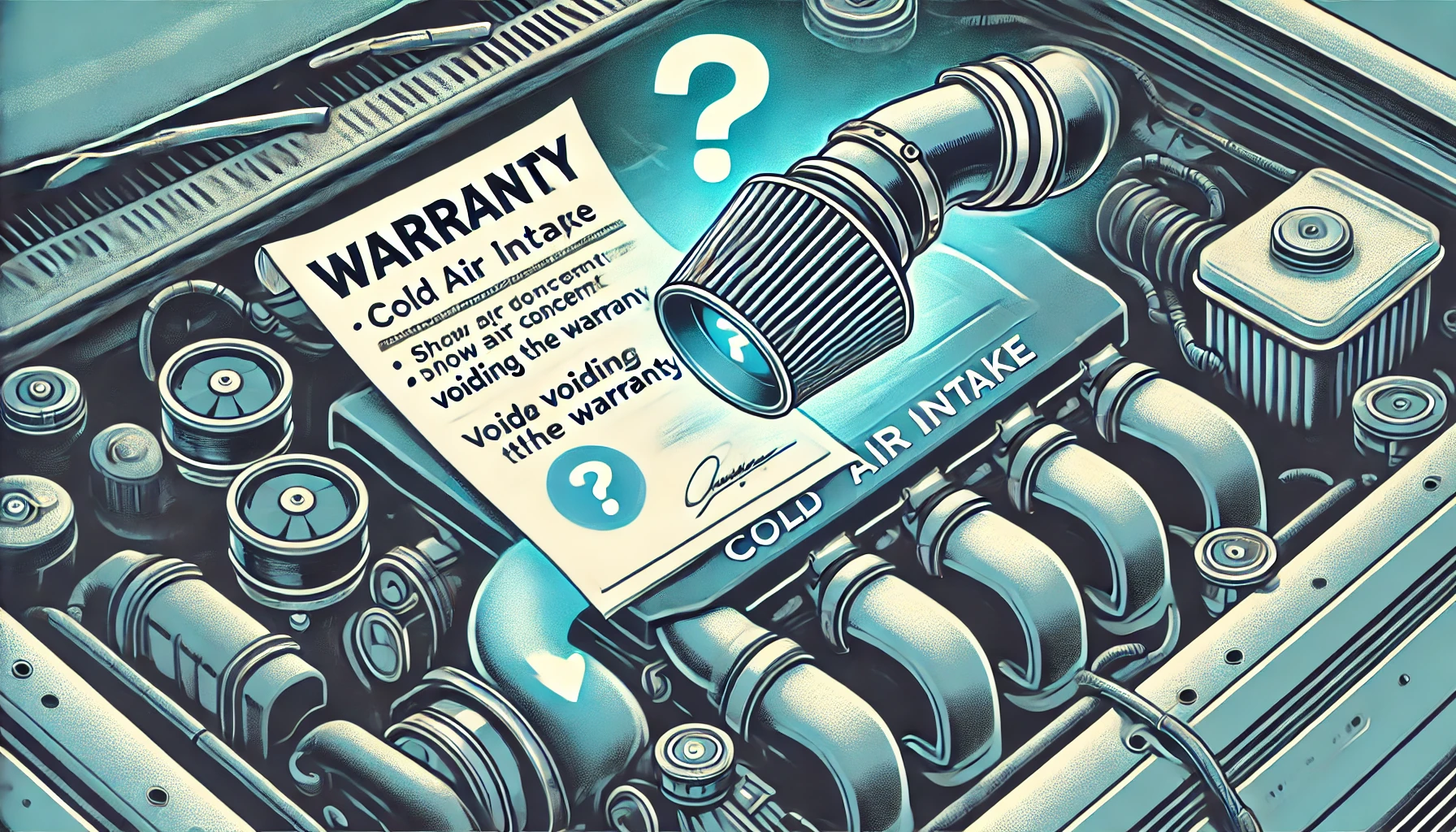
If you’re a car enthusiast, you’ve probably heard about the benefits of installing a cold air intake. From improved horsepower to better fuel efficiency, it’s a popular upgrade for car lovers. But one question often comes up: does a cold air intake void warranty? It’s a valid concern, especially if you’ve invested in a new car. In this guide, we’ll break down everything you need to know about cold air intakes, warranties, and how to make sure your upgrade doesn’t leave you unprotected. Let’s dive in!

Contents
  • Table of Contents
  • What Is a Cold Air Intake?
  • Does a Cold Air Intake Void Warranty?
    • Understanding the Magnuson-Moss Warranty Act
    • When Can a Cold Air Intake Void Your Warranty?
    • How to Protect Your Warranty
  • Benefits of a Cold Air Intake
  • Common Myths About Cold Air Intakes
    • Myth 1: All Aftermarket Parts Void Your Warranty
    • Myth 2: Cold Air Intakes Always Improve Performance
    • Myth 3: Cold Air Intakes Are Illegal
  • How to Choose the Right Cold Air Intake
  • Final Thoughts: Upgrade with Confidence

What Is a Cold Air Intake?

Before we answer the question, does a cold air intake void warranty, let’s talk about what a cold air intake actually is. A cold air intake is an aftermarket part that replaces your car’s stock air intake system. Its job is to bring cooler, denser air into your engine, which can improve performance.

Here’s how it works:

  • Cooler Air: Cooler air is denser, which means it contains more oxygen. More oxygen allows for better combustion, leading to increased horsepower and torque.
  • Improved Airflow: Cold air intakes are designed to reduce restrictions, allowing your engine to breathe more easily.
  • Enhanced Sound: Many car lovers enjoy the deeper, more aggressive sound a cold air intake adds to their engine.

Does a Cold Air Intake Void Warranty?

Now, let’s tackle the big question: does a cold air intake void warranty? The short answer is: it depends. Here’s what you need to know:

Understanding the Magnuson-Moss Warranty Act

In the United States, the Magnuson-Moss Warranty Act protects consumers from unfair warranty practices. According to this law, a manufacturer cannot void your warranty simply because you installed an aftermarket part like a cold air intake. However, they can deny warranty coverage if they can prove that the aftermarket part caused the damage.

When Can a Cold Air Intake Void Your Warranty?

While the law is on your side, there are some situations where a cold air intake might affect your warranty:

  • Direct Damage: If the cold air intake causes damage to your engine (e.g., by letting in debris or water), the manufacturer can deny warranty claims for that specific issue.
  • Improper Installation: If the cold air intake isn’t installed correctly, it could lead to problems that void your warranty.
  • Emissions Compliance: In some cases, a cold air intake might affect your car’s emissions system, which could lead to warranty issues in states with strict emissions laws.

How to Protect Your Warranty

If you’re worried about the question, does a cold air intake void warranty, here are some tips to stay protected:

  • Choose a Reputable Brand: High-quality cold air intakes are less likely to cause problems.
  • Get Professional Installation: Have your cold air intake installed by a certified mechanic to ensure it’s done correctly.
  • Keep Records: Save receipts and documentation to prove that the cold air intake was installed properly and didn’t cause any damage.

Benefits of a Cold Air Intake

Now that we’ve answered the question, does a cold air intake void warranty, let’s talk about why you might want to install one in the first place. Here are some of the top benefits:

  • Increased Horsepower: By allowing your engine to breathe better, a cold air intake can boost horsepower by 5-20 HP, depending on your car.
  • Improved Fuel Efficiency: Better airflow can lead to more efficient combustion, which can save you money at the pump.
  • Enhanced Engine Sound: Many car lovers enjoy the deeper, more aggressive sound a cold air intake adds to their engine.
  • Easy Installation: Most cold air intakes are relatively easy to install, making them a popular first upgrade for car enthusiasts.

Common Myths About Cold Air Intakes

There are a lot of misconceptions about cold air intakes and warranties. Let’s clear up some of the most common myths:

Myth 1: All Aftermarket Parts Void Your Warranty

As we’ve discussed, the Magnuson-Moss Warranty Act protects you from blanket warranty denials. Only damage caused by the aftermarket part can void your warranty.

Myth 2: Cold Air Intakes Always Improve Performance

While cold air intakes can boost performance, the gains depend on your car’s make and model. Some cars see significant improvements, while others see minimal changes.

Myth 3: Cold Air Intakes Are Illegal

Cold air intakes are legal in most places, but they must comply with local emissions laws. Always check your state’s regulations before making any modifications.


How to Choose the Right Cold Air Intake

If you’ve decided to install a cold air intake, here’s how to choose the right one for your car:

  1. Compatibility: Make sure the cold air intake is designed for your car’s make and model.
  2. Material: Look for high-quality materials like aluminum or plastic that resist heat and last longer.
  3. Brand Reputation: Choose a reputable brand with good reviews and a proven track record.
  4. Warranty: Some cold air intake manufacturers offer their own warranties, which can provide extra peace of mind.

Final Thoughts: Upgrade with Confidence

So, does a cold air intake void warranty? The answer is no—not unless it causes damage to your car. By choosing a high-quality cold air intake, having it installed professionally, and keeping records, you can enjoy the benefits of this upgrade without worrying about your warranty.

Whether you’re looking for more horsepower, better fuel efficiency, or just a cooler engine sound, a cold air intake is a great way to enhance your car’s performance.


Call-to-Action:
Ready to upgrade your car with a cold air intake? Check out our top-rated cold air intakes and find the perfect one for your ride today. Your engine will thank you!


By following this guide, you now know the answer to the question, does a cold air intake void warranty, and how to upgrade your car with confidence. Happy driving!
Join Our Newsletter
Subscribe to our newsletter to get our newest articles instantly!
TAGGED:does a cold air intake void warranty? Learn how to upgrade your car without risking your warranty
Share This Article
Facebook Email Copy Link
Aucun commentaire Aucun commentaire

Laisser un commentaire Annuler la réponse

Votre adresse e-mail ne sera pas publiée. Les champs obligatoires sont indiqués avec *

You Might Also Like

Exhaust and intake system upgrades

Cold Air Intake Filters: How They Improve Your Engine 2025

By
Mark Reynolds
mars 7, 2025

Audi S8 Review

By
Mark Reynolds
mars 23, 2025

Def diesel exhaust – Complete Guide, Causes & Fixes

By
Mark Reynolds
janvier 4, 2026
Exhaust and intake system upgrades

Cost to fix exhaust leak – Complete Guide, Causes & Fixes

By
Mark Reynolds
janvier 7, 2026

Exhaust leak repair cost – Complete Guide, Causes & Fixes

By
Mark Reynolds
janvier 4, 2026
Introduction: Why the Diesel Particulate Filter Matters Modern diesel engines are cleaner, quieter, and more efficient than ever before—but they rely heavily on one critical component: the Diesel Particulate Filter (DPF). If you own a diesel vehicle and have seen warning lights like “DPF Full,” “Check Engine,” or “Reduced Engine Power,” chances are the DPF is clogged. Ignoring it can lead to expensive repairs, engine damage, and even limp mode. This complete guide explains how to clean a diesel particulate filter, why it gets clogged, the different cleaning methods, costs, warning signs, and how to prevent future DPF problems. Whether you drive a passenger car, pickup, or commercial truck, this guide will give you clear, practical, expert-level answers. What Is a Diesel Particulate Filter (DPF)? The Diesel Particulate Filter is part of the exhaust system in diesel vehicles, designed to: Capture and store soot and particulate matter Reduce harmful emissions Comply with Euro 5, Euro 6, and EPA regulations How the DPF Works Exhaust gases pass through the DPF Soot particles are trapped in the filter The filter periodically burns off soot through a process called regeneration Over time, if regeneration fails or is incomplete, the DPF becomes blocked. Common Causes of a Clogged DPF Understanding the causes is the first step to fixing the problem. 1. Short Driving Cycles 🚗 Diesel engines need high exhaust temperatures to regenerate the DPF. Short city trips don’t allow this. Common scenario: Frequent stop-and-go driving Engine never fully warms up 2. Failed or Incomplete Regeneration There are three types of regeneration: Passive regeneration (highway driving) Active regeneration (ECU-controlled) Forced regeneration (diagnostic tool) If these fail, soot accumulates rapidly. 3. Faulty Sensors Exhaust temperature sensor Differential pressure sensor Oxygen sensor Bad data = no regeneration. 4. Poor Fuel Quality Low-quality diesel produces excess soot, overwhelming the DPF. 5. Engine Problems Issues like: Faulty injectors Turbo problems EGR valve failure Excessive oil consumption All increase soot production. Symptoms of a Clogged Diesel Particulate Filter A blocked DPF usually gives clear warning signs: Warning Lights DPF warning light Check Engine Light Glow plug light flashing (on some vehicles) Performance Issues Loss of power Poor acceleration Increased fuel consumption Engine goes into limp mode Other Signs Strong exhaust smell Cooling fan running constantly Frequent regeneration attempts ⚠️ Ignoring these signs can destroy the DPF and turbocharger. Can a Diesel Particulate Filter Be Cleaned? Yes—in most cases, a DPF can be cleaned instead of replaced, saving thousands of dollars. However, cleaning is only effective if: The DPF is not cracked or melted Ash loading is within limits The core structure is intact If the DPF is physically damaged, replacement is the only option. How to Clean a Diesel Particulate Filter (All Methods Explained) Method 1: Passive Regeneration (Highway Driving) ✅ Best for early-stage clogging How It Works Driving at sustained high speed raises exhaust temperature to burn soot. How to Do It Properly Drive at 90–110 km/h (55–70 mph) Maintain 2,000–2,500 RPM Drive for 20–30 minutes Avoid stopping during the process Pros Free No tools required Safe for the engine Cons Won’t work for heavily clogged DPFs Not effective for city drivers Method 2: Active or Forced Regeneration (Diagnostic Tool) ✅ Effective for moderate clogging What Is Forced Regeneration? A technician uses a diagnostic scanner to command the ECU to regenerate the DPF. Requirements Engine at operating temperature No major fault codes Enough fuel in the tank Pros Fast and effective No disassembly Restores DPF function Cons Requires professional equipment Can be risky if engine faults exist ⚠️ Never attempt forced regeneration without diagnostics—it can cause fire or engine damage. Method 3: DPF Cleaning Additives (Fuel Additives) ✅ Preventive & light cleaning How They Work Additives lower the temperature needed to burn soot. How to Use Add the cleaner to the fuel tank Drive at highway speed for 20–30 minutes Allow regeneration to complete Pros Affordable Easy to use Good preventive maintenance Cons Not effective for severe blockage Temporary solution Method 4: Off-Car DPF Chemical Cleaning (Professional) ✅ Best balance of cost and effectiveness Process DPF is removed from the vehicle Specialized chemicals dissolve soot and ash DPF is flushed and dried Flow rate is tested Pros Restores up to 90–98% efficiency Much cheaper than replacement Safe when done correctly Cons Vehicle downtime Requires a specialist Method 5: Thermal / Ultrasonic DPF Cleaning (Industrial Grade) ✅ Most effective professional solution How It Works High-temperature ovens burn soot Ultrasonic waves remove ash deposits Airflow testing ensures factory-level performance Pros Deep cleaning Long-lasting results Ideal for trucks and fleet vehicles Cons Higher cost Not available everywhere How Much Does DPF Cleaning Cost? Method Average Cost Highway regeneration Free Fuel additive $20 – $50 Forced regeneration $80 – $200 Chemical off-car cleaning $200 – $400 Thermal/ultrasonic cleaning $300 – $600 New DPF replacement $1,500 – $4,000+ 💡 Cleaning is almost always cheaper than replacement. What Happens If You Don’t Clean a Clogged DPF? Ignoring DPF issues leads to: Permanent DPF damage Turbocharger failure EGR valve clogging Engine overheating ECU-forced limp mode Failed emissions test In extreme cases, it can cause engine fire risk during regeneration. How to Prevent DPF Problems in the Future 1. Drive It Like a Diesel At least once a week: 20–30 minutes of highway driving Keep RPM above 2,000 2. Use High-Quality Diesel Fuel Cleaner fuel = less soot. 3. Maintain the Engine Properly Regular oil changes (low-ash oil) Fix injector and turbo issues early Keep the EGR system clean 4. Don’t Ignore Warning Lights Early action saves thousands. 5. Use Preventive DPF Additives (Occasionally) Especially if you mostly drive in the city. Can You Remove or Delete the DPF? ❌ Not recommended and often illegal DPF removal: Violates emissions laws Causes inspection failure Leads to fines May void insurance and warranty Modern ECUs detect DPF deletion easily. Frequently Asked Questions (FAQ) How long does a DPF last? Typically 120,000–200,000 km with proper maintenance. Can I clean a DPF without removing it? Yes—through highway driving, additives, or forced regeneration. Is DPF cleaning safe? Yes, when done properly and professionally. Does DPF cleaning improve fuel economy? Absolutely. A clean DPF reduces back pressure and improves efficiency. Final Thoughts: Clean Early, Save Money A clogged Diesel Particulate Filter is not the end of your engine—but ignoring it can be. By understanding: Why DPFs clog How to clean them correctly When professional cleaning is needed How to prevent future problems You can extend engine life, reduce fuel costs, and avoid expensive repairs. If your diesel vehicle shows early DPF symptoms, act immediately—cleaning early is always cheaper than replacing later. If you want next:
Exhaust and intake system upgrades

How to clean diesel particulate filter – Complete Guide, Causes & Fixes

By
Mark Reynolds
janvier 21, 2026
Welcome Back!

Sign in to your account

Username or Email Address
Password

Lost your password?