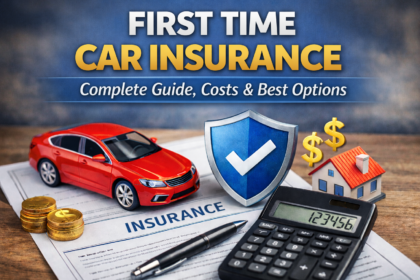


# 🚗 Do You Need Car Insurance?
### Complete Guide, Costs & Best Options (2025)
Car insurance isn’t just another bill—it’s your financial seatbelt. Whether you’re a new driver, buying your first car, or simply wondering if you’re overpaying, understanding car insurance is essential.
This complete guide covers:
– ✅ **Why you need car insurance (legally & financially)**
– ✅ **Different types of car insurance coverage**
– ✅ **How much car insurance really costs**
– ✅ **What affects your premium**
– ✅ **How to choose the best policy for you**
– ✅ **Money‑saving tips and common mistakes to avoid**
—
## 1. Do You Really Need Car Insurance?
### 1.1. Is Car Insurance Required by Law?
In most countries and states, **yes, car insurance is mandatory** if you drive on public roads.
– In many places, you must carry at least **liability insurance**.
– Driving without insurance can lead to:
– ❌ Heavy fines
– ❌ License suspension
– ❌ Vehicle impound
– ❌ Even jail time in severe cases
> **Key point:** Even if you’re a safe driver, the law usually requires at least minimum coverage.
—
### 1.2. Why You Need Car Insurance (Even If It’s Not Required)
Even if you live in a place where insurance is not legally required, **you still need it for financial protection**.
#### Imagine this scenario:
– You cause an accident that injures another driver.
– Their medical bills: **$60,000+**
– Vehicle damage: **$15,000+**
– Possible lawsuit for lost wages and suffering.
Without insurance, **you pay this from your own pocket**. One serious accident can destroy your savings, credit, and future plans.
Car insurance protects you from:
– 💸 **High medical and repair costs**
– ⚖️ **Legal fees and lawsuits**
– 💼 **Loss of income claims**
– 💰 **Unexpected financial hardship**
—
### 1.3. Do You Need Insurance If You Don’t Own a Car?
You might still need it. Consider:
– You **rent cars often**
– You **borrow a friend’s car**
– You **use car‑sharing services**
In those cases, **non-owner car insurance** can provide liability coverage when you’re driving a vehicle you don’t own.
—
## 2. Types of Car Insurance Coverage (Explained Simply)
Understanding coverage types helps you avoid paying for what you don’t need—or missing what you do.
### 2.1. Liability Insurance (The Basic Legal Requirement)
**What it covers:**
– ✅ Damage you cause to **other people’s property**
– ✅ Injuries you cause to **other people**
**What it does NOT cover:**
– ❌ Damage to **your own car**
– ❌ Your own medical expenses (in many regions)
Liability is usually split into:
– **Bodily Injury Liability** – pays for injuries to others
– **Property Damage Liability** – pays for damage to vehicles, buildings, fences, etc.
> **Tip:** Always choose liability limits higher than the legal minimum if possible. Minimums are often too low to cover serious accidents.
—
### 2.2. Collision Coverage
**What it covers:**
– ✅ Damage to **your car** when you:
– Hit another vehicle
– Hit an object (wall, tree, pole)
– Your car flips or rolls over
**Example:**
You rear-end another car. Your collision coverage can help repair or replace your vehicle, **after your deductible**.
—
### 2.3. Comprehensive Coverage
Often called “other than collision” coverage.
**What it covers:**
– ✅ Theft
– ✅ Vandalism
– ✅ Fire
– ✅ Falling objects (like a tree branch)
– ✅ Natural disasters (storm, flood, hail, sometimes)
– ✅ Animal collisions (e.g., hitting a deer)
– ✅ Broken glass / windshield damage (in many policies)
Think of it as protection against **non-accident-related damage**.
—
### 2.4. Personal Injury Protection (PIP) / Medical Payments
Depending on where you live, you may see:
– **PIP (Personal Injury Protection)**
– **MedPay (Medical Payments)**
These can help cover:
– ✅ Medical bills for you and your passengers
– ✅ Lost wages (PIP)
– ✅ Rehabilitation and related costs (PIP)
– ✅ Funeral expenses in severe accidents (PIP)
In **no-fault states or countries**, PIP is often required. Your own insurance helps pay your medical costs **regardless of who caused the accident**.
—
### 2.5. Uninsured & Underinsured Motorist Coverage (UM / UIM)
**Why it matters:**
Not everyone follows the law. Some drive with **no insurance** or with **very low coverage**.
UM / UIM can help pay for:
– ✅ Your injuries caused by an uninsured driver
– ✅ Your passengers’ injuries
– ✅ Sometimes damage to your vehicle (depending on the policy)
> **Important:** This coverage is especially valuable in regions with a high rate of uninsured drivers.
—
### 2.6. Optional Add‑Ons You Should Know About
Modern policies often offer extra protection:
– 🧰 **Roadside Assistance**
– Towing, jump‑start, lock‑out help, flat tire changes.
– 🚗 **Rental Car Reimbursement**
– Helps pay for a rental car while yours is in the shop after a covered claim.
– 💼 **Gap Insurance**
– If your car is financed or leased and is totaled, gap insurance covers the difference between:
– What you still owe on the loan
– And what the car is actually worth (actual cash value)
– 👨👩👧 **Accident Forgiveness**
– Some insurers won’t raise your rates after your **first** at‑fault accident, if this add-on is included.
—
## 3. How Much Does Car Insurance Cost?
Car insurance costs vary widely depending on location, driving history, age, and the vehicle.
### 3.1. Average Cost (General Ranges)
To give you a rough idea (these are **typical annual ranges**, not exact quotes):
– 🚘 **Minimum liability only:**
– Often: **$400 – $900** per year
– 🚘 **Full coverage (liability + collision + comprehensive):**
– Often: **$1,200 – $2,500+** per year
Young drivers, luxury cars, or high‑risk drivers can pay significantly more.
—
### 3.2. Key Factors That Affect Your Premium
#### 1. Your Driving Record
– Clean record (no accidents, no tickets) = **lower price**
– Accidents, DUIs, speeding tickets = **higher price**
Insurers view your driving history as a direct indicator of risk.
—
#### 2. Your Age & Experience
– **New / young drivers** (typically under 25) usually pay the most.
– Drivers with **more years of experience** and a **clean record** tend to pay less.
—
#### 3. Your Location
Where you live impacts:
– 📈 Accident rates
– 📈 Theft and vandalism risk
– 📈 Weather and road conditions
Urban areas with heavy traffic usually cost more than small towns.
—
#### 4. Your Vehicle Type
– **Sports cars & luxury vehicles** usually cost more to insure.
– **Older or lower‑value cars** often cost less.
– The car’s **safety rating** and **repair costs** also matter.
—
#### 5. How Much You Drive
The more miles you drive each year:
– → Higher chance of an accident
– → Higher risk= higher cost
If you drive very little, some insurers offer **low‑mileage** or **usage-based discounts**.
—
#### 6. Coverage Limits & Deductibles
– **Higher coverage limits** = better protection but **higher premium**.
– **Higher deductible** (amount you pay out-of-pocket when you claim) = **lower premium**, but more cost at claim time.
Example:
– $500 deductible → higher premium, less out-of-pocket in a claim
– $1,000 deductible → lower premium, more out-of-pocket in a claim
—
#### 7. Credit or Insurance Score (in Some Regions)
In some countries and states, insurers use your **credit-based insurance score** to predict risk:
– Better score = typically lower premium
– Poor credit / many late payments = often higher cost
(Note: This is not allowed in all jurisdictions.)
—
## 4. How Much Coverage Do You Actually Need?
Getting the **right** coverage is about balancing **legal requirements, risk, and budget**.
### 4.1. Start with Legal Minimums (Then Go Higher)
Every region has a legally required minimum. It might look like:
– **$25,000 / $50,000 / $25,000** (for example)
– $25,000 per person for bodily injury
– $50,000 per accident total
– $25,000 for property damage
However, **minimums are often not enough** in a serious accident.
> Aim to choose limits that realistically protect your income, assets, and future earnings.
—
### 4.2. Consider Your Car’s Value
– If your car is **new or financed**:
– Collision + Comprehensive are usually worth it.
– Lenders often **require full coverage** plus gap insurance.
– If your car is **old and low-value**:
– The cost of collision/comprehensive may be higher than the potential payout.
– In that case, **liability-only** can make more sense.
—
### 4.3. Evaluate Your Risk Profile
Ask yourself:
– Do you commute daily in heavy traffic?
– Do you live in a high‑crime or high‑theft area?
– Do you park on the street or in a garage?
– Are extreme weather events (hail, floods, storms) common?
The higher your risk, the more **comprehensive protection** you should consider.
—
## 5. Best Car Insurance Options: How to Choose the Right Company
There’s no single “best” insurance company for everyone—but there *is* a best option for **you**.
### 5.1. What to Look for in an Insurance Company
When comparing insurers, focus on:
1. **Financial Strength**
– Can they actually pay claims?
– Check independent ratings (like A.M. Best, Standard & Poor’s in some markets).
2. **Claims Service & Customer Reviews**
– Are customers happy with how claims are handled?
– Look for:
– Fast processing
– Fair settlements
– Helpful customer support
3. **Coverage Options & Flexibility**
– Can you customize your policy?
– Do they offer the add-ons you need (roadside, gap, rental, etc.)?
4. **Pricing & Discounts**
– Are their rates competitive for your profile?
– Do they offer:
– Safe driver discounts
– Multi-car discounts
– Bundling (home + auto) discounts
– Good student discounts
– Low-mileage or telematics discounts
5. **Digital Tools**
– Mobile app for ID cards, claims, payments
– Online quotes and policy management
—
### 5.2. How to Compare Car Insurance Quotes (Step-by-Step)
Use this simple process:
**Step 1 – Decide Your Coverage:**
– Liability limits (e.g., 100 / 300 / 100)
– Collision? Comprehensive?
– Add-ons like roadside, rental, gap insurance?
**Step 2 – Get at Least 3–5 Quotes:**
– Use online comparison sites
– Or request quotes directly from insurers or brokers
**Step 3 – Compare Apples to Apples:**
– Make sure each quote uses:
– The same coverage limits
– Same deductibles
– Similar add-ons
**Step 4 – Evaluate More Than Just Price:**
– Read reviews
– Ask about claims satisfaction
– Check how easy it is to reach support
**Step 5 – Ask For Discounts:**
– Mention:
– Clean driving record
– Security devices (alarm, tracking system)
– Defensive driving course
– Good grades (for students)
– Multiple policies with the same insurer
—
## 6. How to Save Money on Car Insurance (Without Losing Protection)
Here are practical strategies to keep premiums lower:
### 6.1. Increase Your Deductible (If You Can Afford It)
– Moving from a $500 to $1,000 deductible can significantly reduce your premium.
– Only do this if you **have savings** to cover that deductible in case of a claim.
—
### 6.2. Bundle Policies
– Insure your **home, renters, or life insurance** with the same company.
– Many insurers give **10–25% discounts** for bundling.
—
### 6.3. Maintain a Clean Driving Record
– Avoid speeding tickets, DUIs, and at-fault accidents.
– Over time, a clean record can dramatically reduce your cost.
—
### 6.4. Drive Less, Save More
– Ask about low‑mileage discounts.
– Some companies offer **usage-based** programs using an app or device:
– They track your driving habits (mileage, braking, speed).
– Safe drivers often earn sizable discounts.
—
### 6.5. Improve Vehicle Safety & Security
– Install:
– Car alarms
– GPS tracking devices
– Dash cams (sometimes recognized)
– Choose cars with good:
– Crash test ratings
– Safety features (ABS, airbags, lane assist, etc.)
—
### 6.6. Review Your Policy Every Year
– Remove coverage you no longer need (e.g., collision on an older car).
– Check for new discounts or promotions.
– Shop around—your current insurer may no longer be the cheapest.
—
## 7. Common Mistakes to Avoid with Car Insurance
Avoid these costly errors:
### 7.1. Only Buying the Legal Minimum
Minimum coverage might save money up front, but:
– One serious accident can cost **far more** than the minimum limits.
– You may end up paying thousands out-of-pocket.
—
### 7.2. Not Listing All Drivers in Your Household
Insurers need to know **who regularly uses the car**.
– Excluding a regular driver (like a teen) can lead to:
– Claim denial
– Policy cancellation
—
### 7.3. Forgetting to Update Your Policy
You should notify your insurer if you:
– Move to a new address
– Change jobs or your commute length
– Add safety features or a garage
– Add/remove drivers or vehicles
These changes can affect your rate and coverage.
—
### 7.4. Choosing a Deductible You Can’t Afford
A high deductible lowers your premium, but:
– If you can’t pay it in case of an accident, your coverage becomes almost useless.
Always set a deductible that fits your **emergency fund**.
—
### 7.5. Not Reading the Fine Print
Before you buy, check:
– What exactly is covered and excluded
– Claim limits for various coverage types
– Whether original parts are used in repairs
– Rules for rental car reimbursement
When in doubt, **ask questions**.
—
## 8. Step‑by‑Step: Getting Your Car Insured
Here’s a simple roadmap from no coverage to fully insured:
### Step 1: Gather Your Information
Have these ready:
– Driver’s license details
– Vehicle identification number (VIN)
– Vehicle make, model, and year
– Your current mileage and estimated annual mileage
– Previous insurance details (if any)
—
### Step 2: Decide on Coverage
– Legal minimum vs. recommended higher limits
– Whether you need:
– Collision
– Comprehensive
– UM/UIM
– PIP or MedPay
– Add-ons (roadside, rental, gap, etc.)
—
### Step 3: Request Multiple Quotes
– Use comparison tools and/or contact insurers directly.
– Make sure each quote is based on **identical** coverage terms.
—
### Step 4: Compare & Evaluate
Look at:
– Total annual and monthly cost
– Deductibles
– Coverage limits
– Extra fees
– Company reputation and customer reviews
—
### Step 5: Finalize & Purchase
Once you choose:
– Review documents carefully before signing.
– Set up payment (monthly, quarterly, or annually).
– Download or print your **insurance ID card**.
—
### Step 6: Keep Proof of Insurance Handy
– Store a physical copy in your car.
– Keep a digital copy on your phone if your insurer offers it.
You may need it for:
– Traffic stops
– Accidents
– Vehicle registration renewals
—
## 9. FAQ: Quick Answers About Car Insurance
### Q1: Can I drive someone else’s car with my own insurance?
In many places, **insurance follows the car**, not the driver. However:
– The car owner’s insurance is usually primary.
– Your insurance *might* be secondary or step in for extra coverage.
Always check local laws and policy terms.
—
### Q2: Is car insurance cheaper if I pay annually?
Often **yes**. Many insurers give discounts or waive service fees for full annual payments.
—
### Q3: Does car color affect insurance rates?
No, the color of your car (red, black, white, etc.) generally **does not** impact the premium. What matters:
– Make, model, year, engine size
– Safety & theft statistics
—
### Q4: Will my rates go up after every claim?
Not always. It depends on:
– Fault (at-fault vs. not at-fault)
– Claim type & cost
– Your insurer’s rules
– Whether you have accident forgiveness
—
## 10. Final Thoughts: Do You Need Car Insurance?
If you:
– Own or finance a car
– Drive regularly
– Want to protect your savings and future
…then **yes, you need car insurance**—and more than just the bare legal minimum if you can afford it.
A well-chosen policy:
– ✅ Keeps you **legal**
– ✅ Shields you from **major financial loss**
– ✅ Gives you **peace of mind** every time you get behind the wheel
Take a little time to:
1. Understand your coverage options
2. Compare multiple insurers
3. Balance cost with the protection you truly need
With the right information and a careful approach, you can get **strong coverage at a fair price**—and drive knowing you’re protected.