bg
Onlymechanic
Sign In
Notification
General knowledge

Great Car Insurance For Young Drivers – Complete Guide, Costs & Best Options

General knowledge

Good To Go Car Insurance – Complete Guide, Costs & Best Options

General knowledge

Goauto Car Insurance – Complete Guide, Costs & Best Options

Go Auto Car Insurance – Complete Guide, Costs & Best Options

OnlymechanicOnlymechanic
Font ResizerAa
Search
  • Accueil
  • Car Maintenance
    • Routine servicing
    • Brake system maintenance
    • Electrical and battery solutions
    • Engine and transmission troubleshooting
  • Car Performance
    • Exhaust and intake system upgrades
    • Suspension and handling improvements
    • Best aftermarket parts reviews
    • Performance tuning and modifications
  • Care & Accessories
    • Detailing and cleaning tips
    • Interior and exterior accessories
    • Safety and security enhancements
    • Car audio and tech installations
  • General knowledge
  • Car Reviews
  • Contact Us
Sign In Sign In
Follow US
Onlymechanic.com copyright 2026
General knowledge

Ebt Car Insurance – Complete Guide, Costs & Best Options

Mark Reynolds
Last updated: janvier 16, 2026 12:53 am
By
Mark Reynolds
16 Min Read
SHARE

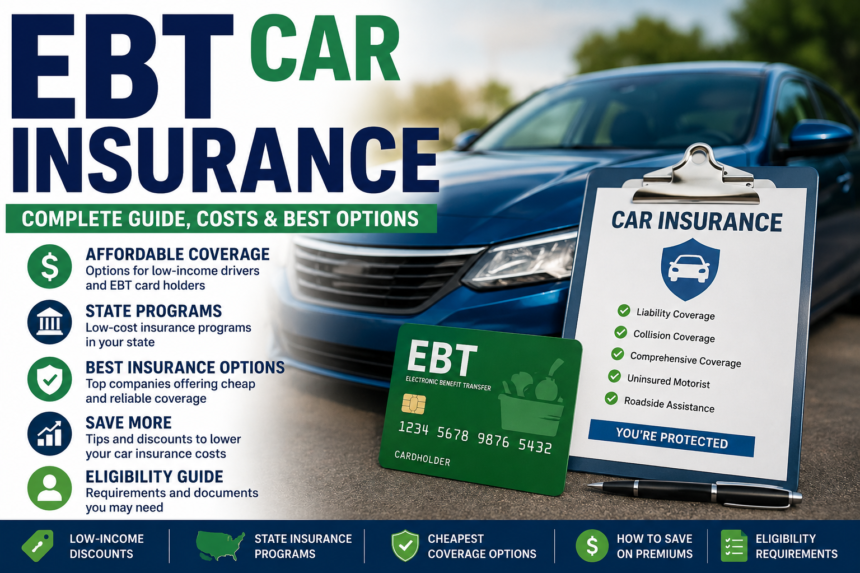
# EBT Car Insurance – Complete Guide, Costs & Best Options 🚗💳

If you rely on EBT (Electronic Benefit Transfer) and SNAP benefits, owning and maintaining a car can feel stressful—especially when it comes to **car insurance**. You may be wondering:

– Can I pay car insurance with EBT?
– Are there special **EBT car insurance** programs?
– How can I find **cheap car insurance** if I’m on SNAP or other benefits?

This complete guide will walk you through everything you need to know about **EBT, low-income car insurance, costs, discounts, and the best options** available so you can stay legal on the road without breaking your budget.

—

## 🔍 What Is EBT Car Insurance?

Let’s clear up one big misconception:

> **There is no official “EBT car insurance” product.**
> EBT and SNAP cannot be used to pay for auto insurance.

However, the phrase “EBT car insurance” has become a popular way of asking:

– *“What car insurance can I realistically afford while on EBT/SNAP?”*
– *“Are there special low-income or government-supported car insurance options?”*

So when people say **EBT car insurance**, they usually mean:

– Low-cost or **state-sponsored insurance programs**
– **Discounted coverage** for low-income drivers
– Strategies to **lower your premium** if you’re on public assistance

This guide focuses on **exactly that**—how to get **legally required coverage** at the lowest possible cost if you depend on EBT or SNAP.

—

## 💳 Can You Pay Car Insurance with EBT?

Short answer: **No.**

EBT cards are designed for **eligible food purchases only**, not for general bills or services.

### ❌ You CANNOT use EBT for:

– Car insurance premiums
– Gasoline
– Car repairs
– Registration fees
– Car payments

### ✅ You CAN use EBT/SNAP for:

– Groceries (fruits, vegetables, meat, dairy, staples)
– Some approved beverages and food items

If you’re on EBT, your strategy is not to pay insurance with your EBT card, but to **reduce your cash expenses** by:

– Using **discounts and low-income programs**
– Minimizing coverage to what you legally need
– Choosing carriers known for **budget-friendly policies**

—

## 🧾 Why You Still Need Car Insurance (Even On a Tight Budget)

If money is tight, you may be tempted to **skip car insurance** altogether. That’s a costly mistake.

Driving without insurance can lead to:

– 📌 **Tickets & fines** (often hundreds of dollars)
– 📌 **License suspension**
– 📌 **Vehicle impoundment**
– 📌 **Lawsuits** if you cause an accident
– 📌 **SR-22 requirement**, making future insurance more expensive

In almost every state, **liability insurance is required by law**. The key is to find the **cheapest legal option that still protects you from financial disaster**.

—

## 🏛️ State Minimum Coverage vs. Full Coverage

Before looking at discounts or programs, you need to understand the **basic types of car insurance**.

### 1. Liability Insurance (Usually Required by Law)

This pays for **other people’s**:

– Medical bills
– Car repairs
– Property damage

It does **not** pay to fix your own car.
Every state sets a **minimum liability limit**, such as:

> **25/50/25**
> – $25,000 bodily injury per person
> – $50,000 total bodily injury per accident
> – $25,000 property damage

To keep costs down when on EBT, many drivers choose **only state-minimum liability** (if their car is older or fully paid off).

—

### 2. Full Coverage (Liability + Collision + Comprehensive)

This usually includes:

– ✅ **Liability** – required by law
– ✅ **Collision** – repairs your car after an accident you cause
– ✅ **Comprehensive** – covers theft, vandalism, fire, weather, animals

Full coverage is **more expensive**, but it can make sense if:

– Your car is newer or financed
– You can’t afford to replace your vehicle if it’s totaled

—

### 3. Additional Coverages (Optional but Useful)

– **Uninsured/Underinsured Motorist** – protects you if the other driver has no or low insurance
– **Medical Payments (MedPay) / PIP** – helps pay medical costs for you and your passengers
– **Roadside Assistance** – towing, battery boost, flat tire changes

For low-income drivers, these are **nice to have**, but liability is the **bare minimum you must carry**.

—

## 💰 How Much Does Car Insurance Cost If You’re on EBT?

Car insurance rates vary based on:

– State & ZIP code
– Driving record
– Age & gender
– Type of car
– Credit (in many states)

However, here are rough ranges in many parts of the U.S.:

### 🧾 Typical Monthly Costs (Approximate)

– **State-minimum liability only**:
➜ $40–$120/month (sometimes lower with discounts)

– **Full coverage** (liability + comp + collision):
➜ $90–$250+/month

If you receive EBT/SNAP, your priority is usually to:

1. Stay **legal** with **state-minimum liability**, and
2. Use **every discount possible** to drive your costs down.

—

## 🏛️ Special Low-Income or Government-Backed Car Insurance Programs

Some states offer **special low-cost car insurance for low-income drivers**. These are sometimes confused with “EBT car insurance” because they’re targeted at people with limited income.

### 1. California – Low-Cost Auto Insurance Program (CLCA) 🇺🇸

California has one of the best-known programs.

**Who it’s for:**

– Low-income drivers
– Have a valid driver’s license
– Own a car with a value under a certain limit (often around $25,000, but this can change)

**What it offers:**

– **Liability-only policies** at **reduced rates**
– Special pricing based on income level and location

**How to check eligibility:**

– Visit the official California Department of Insurance website and search for **“California Low Cost Auto Insurance Program (CLCA)”**

—

### 2. New Jersey – Special Automobile Insurance Policy (SAIP)

Also called the **Dollar-a-Day** policy (though prices may vary).

**Who it’s for:**

– Low-income residents who are **eligible for Federal Medicaid with hospitalization**

**What it offers:**

– Very limited but **extremely low-cost** medical coverage for car accidents

**Note:** It does **not** replace full liability coverage in all situations; it is highly restricted. Always read details carefully.

—

### 3. Hawaii – Possible Assistance via State Programs

Hawaii does not have a formal low-income auto program like California’s, but sometimes **state-supported legal aid** or community organizations can help you:

– Understand minimum requirements
– Find affordable coverage
– Navigate fines or license problems

—

### 4. Other States

Most states **do not** have a special “low-income car insurance” program, but:

– They may offer payment plans
– Some non-profits provide **transportation or insurance assistance** for people needing a car for work, medical care, or childcare
– Local agencies or social workers may guide you to resources

👉 **Action Tip:**
Contact your **state’s Department of Insurance** or visit their website and search for:

– “Low-income auto insurance assistance”
– “Financial assistance for car insurance”

—

## 🧠 Smart Strategies to Lower Car Insurance Costs on EBT

Even without a special program, you can **significantly reduce your premium** using proven strategies.

### ✅ 1. Choose State-Minimum Liability (If Your Car Is Older)

If your car is:

– Worth less than $3,000–$5,000
– Fully paid off

It may be reasonable to drop:

– ❌ Collision
– ❌ Comprehensive

and carry **liability-only**. This can reduce your bill by **30–60%** in some cases.

—

### ✅ 2. Increase Your Deductible

If you keep collision/comprehensive:

– Ask your insurer to raise your deductible to **$500, $1,000, or even higher**.
– Higher deductible = lower monthly payment.

This only makes sense if you could realistically cover that deductible in an emergency.

—

### ✅ 3. Ask for Low-Mileage Discounts

If you’re on EBT, you might not drive as often (no long commute, fewer trips). Many insurers offer:

– **Low-mileage discounts** if you drive under a certain amount per year (e.g., <7,500–10,000 miles) Some companies even provide **usage-based insurance** via an app that tracks how much and how safely you drive. --- ### ✅ 4. Take a Defensive Driving Course In many states, completing an approved **defensive driving course** can save you: - Around **5–10%** off your premium Courses can often be taken: - Online - In a single day or weekend Ask your insurer which courses they accept **before** you enroll. --- ### ✅ 5. Ask About All Available Discounts When you call or apply online, be sure to ask about: - ✅ **Low-income or hardship programs** - ✅ **Safe driver discounts** - ✅ **Multi-car discounts** (if you insure more than one vehicle) - ✅ **Telematics / usage-based discounts** (phone app tracking) - ✅ **Paperless billing or autopay discounts** Even small percentages add up—especially when you stack them. --- ### ✅ 6. Shop Around (Don’t Take the First Offer) Different companies price risk differently. That means: - The same driver can get quotes that **vary by $50–$150 per month** (or more) depending on the company. Always compare at least: - 3–5 insurance carriers - Quotes with the **same coverage levels and limits** --- ## 🏆 Best Types of Car Insurance Options If You’re on EBT There’s no single company that’s “the EBT car insurer,” but certain **categories of insurers and policies** tend to be better for low-income drivers. ### 1. Non-Standard / High-Risk Insurers These companies specialize in: - Drivers with accidents or tickets - Lapses in coverage - Lower credit scores They often: - Allow **smaller down payments** - Offer **flexible monthly payment plans** Look for: - Regional or local insurers specializing in **“non-standard auto”** --- ### 2. Major Budget-Friendly National Insurers Some large national companies are known for: - Competitive rates for minimum coverage - Strong online systems for easy quotes When you shop online, compare: - **State-minimum liability** - Same deductibles and coverage types - Payment plan options --- ### 3. Local Agents & Independent Brokers Independent insurance agents can: - Compare multiple insurers for you - Help you find **the lowest available rate** for your situation - Sometimes know about **state or community programs** Ask them honestly: > “I’m on EBT and working with a very limited budget. What is the cheapest legal coverage I can get?”

—

## 🧮 Example Cost Scenarios (For Illustration Only)

These are **hypothetical examples** to show how coverage choices affect cost.

### Scenario A – Older Car, EBT Recipient, Clean Record

– 2007 sedan, paid off
– Drives 5,000 miles/year
– No accidents or tickets in 3+ years
– Chooses **state-minimum liability only**

Estimated monthly cost in many states:
➡️ Around **$45–$90/month**

—

### Scenario B – Newer Car, EBT Recipient, Needs Full Coverage

– 2018 compact car, financed
– Lender requires full coverage
– One minor speeding ticket
– Chooses full coverage, $1,000 deductible

Estimated monthly cost in many states:
➡️ Around **$120–$220/month**

—

### Scenario C – Poor Record, Lapse in Coverage

– Older car
– Prior accident and license suspension
– Dropped insurance for 6 months
– Needs SR-22 filing

Estimated monthly cost in many states:
➡️ Around **$150–$300+/month**

In this situation, working with **non-standard insurers** and exploring **payment plans** is critical.

—

## 📂 Documents You’ll Usually Need to Get Low-Cost Insurance

To apply for a policy, you’ll typically be asked for:

– 🪪 Valid driver’s license
– 🚗 Vehicle information: VIN, year, make, model
– 📝 Current address
– 👤 Names & ages of all drivers in the household
– 📜 Prior insurance information (if any)

If you’re applying for a **state low-income program** (like California’s CLCA), you may also need:

– Proof of **income**
– Proof of **residency**
– Sometimes a **summary of benefits** or eligibility for certain government programs

—

## 🧭 Step-by-Step: How to Find the Best EBT-Friendly Car Insurance Option

Use this simple roadmap:

### Step 1 – Decide What You Truly Need

– Is your car **old and paid off?**
→ Consider **liability-only**, state minimum

– Is your car **new or financed?**
→ You may need **full coverage** (check with your lender)

—

### Step 2 – Check for State Programs

– Search online for:
– “[Your State] low-income car insurance”
– “Department of Insurance [Your State] consumer auto help”

If you’re in **California** or **New Jersey**, review CLCA or SAIP details.

—

### Step 3 – Compare Quotes from Multiple Insurers

– Use online quote tools
– Contact independent agents
– Ask directly for:

> “Your cheapest legal coverage with available discounts for a low-income driver.”

Have your:

– License
– Vehicle info
– Driving history

ready before calling or applying.

—

### Step 4 – Ask About Every Discount

Be sure to ask if you can get:

– Safe driver discount
– Low-mileage discount
– Auto-pay or paperless discount
– Usage-based or telematics discount

—

### Step 5 – Adjust Your Coverage to Fit Your Budget

If the quote is too high:

– Reduce to **state-minimum liability** (if safe to do so)
– Increase your **deductible**
– Remove extras like roadside assistance (you can add these later when finances improve)

—

### Step 6 – Set Up a Payment Plan That Works

Many low-income drivers benefit from:

– Monthly payment plans
– Aligning payment due dates with **paydays** or benefit deposit dates

Missing payments can cause a **lapse in coverage**, which makes future insurance more expensive—so always choose a payment you can realistically make every month.

—

## ⚖️ Legal & Safety Considerations

While saving money is essential, keep these points in mind:

– You **must meet or exceed your state’s minimum liability limits**
– Driving uninsured is illegal in almost all states
– One serious at-fault accident can cause **tens of thousands of dollars** in damage—liability coverage protects you from being personally responsible for most or all of that

Even on EBT, it’s better to carry **basic, legal coverage** than to risk driving without any.

—

## 📌 Key Takeaways

– **EBT cannot be used directly to pay for car insurance.**
– There is no official “EBT car insurance,” but there **are**:
– Low-income insurance programs in some states
– Discounts and strategies to reduce your premium

– To save money:
– Consider **state-minimum liability** for older cars
– Increase deductibles where reasonable
– Use **low-mileage**, safe driver, and telematics discounts
– Shop multiple insurers and ask specifically about **low-income options**

– Some states, like **California (CLCA)** and **New Jersey (SAIP)**, offer special programs for qualifying drivers.

—

## 🧾 Final Thoughts

Living on EBT or SNAP doesn’t mean you have to give up safe, legal transportation. By understanding your options, using available discounts, and exploring low-income or state-supported programs, you can often secure **affordable, legally compliant car insurance** that fits your budget.

If you’re unsure where to start, your next steps should be:

1. Look up your state’s minimum car insurance requirements.
2. Check if your state offers a **low-income insurance program**.
3. Get **3–5 quotes** from insurers and independent agents focusing on **state-minimum liability** and **low-income discounts**.

With the right approach, you can protect yourself, your license, and your car—without overwhelming your limited cash resources.

Join Our Newsletter
Subscribe to our newsletter to get our newest articles instantly!
Share This Article
Facebook Email Copy Link
Aucun commentaire Aucun commentaire

Laisser un commentaire Annuler la réponse

Votre adresse e-mail ne sera pas publiée. Les champs obligatoires sont indiqués avec *

You Might Also Like

Cheapest Car Insurance Washington – Complete Guide, Costs & Best Options

By
Mark Reynolds
janvier 16, 2026
General knowledge

The Ultimate Mechanic Tool Set: Everything You Really Need

By
Mark Reynolds
décembre 31, 2025

Does Costco Offer Car Insurance – Complete Guide, Costs & Best Options

By
Mark Reynolds
janvier 16, 2026

Go Auto Car Insurance – Complete Guide, Costs & Best Options

By
Mark Reynolds
janvier 16, 2026

Dairyland Car Insurance – Complete Guide, Costs & Best Options

By
Mark Reynolds
janvier 16, 2026
Car Battery cost
Electrical and battery solutionsGeneral knowledge

How Much Does a Car Battery Cost ? : A Complete Guide

By
Mark Reynolds
février 13, 2025

Foxiz Car

  • About Us
  • Support
  • Accessories
  • Performance and Tuning
  • Repairs & Maintenance
  • General Car Discussion
  • Member Programs
  • Customer
  • For Media
  • Contact Us
  • Reviews
Made by ThemeRuby using the Foxiz theme. Powered by WordPress
Don't not sell my personal information
Welcome Back!

Sign in to your account

Username or Email Address
Password

Lost your password?