

Introduction: Why Exhaust Wrap Is So Popular (And Why It’s Often Misunderstood)
If you’ve spent any time around performance builds, off-road rigs, turbo setups, or even simple daily driver upgrades, you’ve probably seen Exhaust wrap mentioned everywhere. It’s one of the most common “cheap mods” people install to manage heat, protect nearby components, and sometimes even improve performance.
- Introduction: Why Exhaust Wrap Is So Popular (And Why It’s Often Misunderstood)
- What Is Exhaust Wrap?
- Why Use Exhaust Wrap? (Real Benefits)
- ✅ 1) Lower Engine Bay Temperatures
- ✅ 2) Protect Components From Heat Damage
- ✅ 3) Improve Turbo Efficiency (In Certain Builds)
- ✅ 4) Reduce Cabin Heat (Sometimes)
- ✅ 5) Better Safety for Off-Road or Track Use
- When Exhaust Wrap Makes the Most Sense
- Exhaust Wrap Materials: What Are They Made Of?
- Comparative Table: Exhaust Wrap Material Types
- Exhaust Wrap Pros and Cons (Honest Breakdown)
- Does Exhaust Wrap Increase Horsepower?
- Common Exhaust Wrap Problems: Causes & Fixes
- What Causes It?
- How to Fix It
- Causes
- Fixes
- Causes
- Fix
- Why It Happens
- Fixes
- Best Long-Term Solution
- Causes
- Fix
- Causes
- Fix
- Can Exhaust Wrap Crack Headers?
- Causes
- Fixes
- Comparative Table: Exhaust Wrap vs Ceramic Coating vs Heat Shields
- How to Install Exhaust Wrap (Step-by-Step Guide)
- Tools & Supplies You’ll Need
- Step 1: Remove the Exhaust Part (Recommended)
- Step 2: Clean the Exhaust Surface
- Step 3: Optional — Paint Before Wrapping
- Step 4: Start Wrapping From the Engine Side
- Step 5: Use Proper Overlap
- Step 6: Keep Strong Tension
- Step 7: Secure With Stainless Steel Ties
- Step 8: Seal the Wrap (Recommended)
- Step 9: Heat Cycle Properly
- How Much Exhaust Wrap Do You Need? (Quick Guide)
- Exhaust Wrap Maintenance Tips (To Make It Last Longer)
- Can You Wrap a Catalytic Converter?
- Can You Wrap a Downpipe? (Turbo Builds)
- Exhaust Wrap for Motorcycles: Worth It?
- Exhaust Wrap vs Header Blanket vs Turbo Blanket
- Best Practices (Expert Recommendations)
- 🔥 Rule #1: Don’t Wrap Cheap Mild Steel Headers
- 🔥 Rule #2: Wrap Only What Needs Wrapping
- 🔥 Rule #3: Always Clean Before Wrapping
- 🔥 Rule #4: Use Stainless Ties, Not Hose Clamps
- 🔥 Rule #5: Use Sealant Spray for Street Cars
- Troubleshooting Guide: Exhaust Wrap Issues & Fixes
- Is Exhaust Wrap Legal?
- Frequently Asked Questions (FAQ)
- 1) Does Exhaust wrap really reduce heat?
- 2) How long does Exhaust wrap last?
- 3) Can Exhaust wrap catch fire?
- 4) Is titanium Exhaust wrap actually titanium?
- 5) Should I wrap headers or ceramic coat them?
- Conclusion: Is Exhaust Wrap Worth It?
But here’s the truth: Exhaust wrap can be amazing… or a total headache depending on how it’s used, what material you choose, and what kind of exhaust system you’re wrapping.
This complete guide is designed to answer everything you need to know about Exhaust wrap, including:
✅ What it is and what it actually does
✅ Why people use it (and when it’s worth it)
✅ Common causes of problems like rust, cracking, smoke, and smell
✅ The best fixes and solutions if things go wrong
✅ Step-by-step installation guidance
✅ Comparative tables to help you choose the right wrap for your setup
Whether you’re wrapping headers, downpipes, turbo manifolds, or motorcycle exhausts—this guide will help you do it properly and avoid expensive mistakes.
What Is Exhaust Wrap?
Exhaust wrap (also called header wrap or exhaust heat wrap) is a heat-resistant fabric tape designed to wrap around exhaust components such as:
- Exhaust headers
- Turbo manifolds
- Downpipes
- Midpipes
- Exhaust sections near sensitive parts
Its main job is to reduce heat radiation by keeping exhaust heat inside the pipes.
How Exhaust Wrap Works (Simple Explanation)
When exhaust gases flow through your pipes, they’re extremely hot. Without insulation, that heat radiates outward into your engine bay or underbody. Exhaust wrap works like a thermal blanket:
- Keeps heat inside the exhaust
- Reduces surface temperature
- Protects nearby hoses/wires
- Helps maintain exhaust gas velocity (in some cases)

Why Use Exhaust Wrap? (Real Benefits)
People install Exhaust wrap for a mix of performance, safety, and durability reasons.
✅ 1) Lower Engine Bay Temperatures
This is the #1 reason.
If your exhaust runs close to:
- intake piping
- wiring harnesses
- coolant hoses
- brake lines
- steering boots
- A/C lines
- firewall insulation
…then heat can cause damage over time. Exhaust wrap reduces radiant heat significantly.
✅ 2) Protect Components From Heat Damage
High exhaust temperatures can cause:
- melted plastic connectors
- brittle vacuum lines
- cracked rubber boots
- heat-soaked sensors
- warped nearby plastic panels
Exhaust wrap can act as a barrier to prevent this.
✅ 3) Improve Turbo Efficiency (In Certain Builds)
For turbocharged cars, keeping heat inside the exhaust system can help maintain energy to the turbo turbine.
This may improve:
- spool response
- boost consistency
- under-hood heat control
Important: This benefit depends on the design and quality of your setup.
✅ 4) Reduce Cabin Heat (Sometimes)
On vehicles with:
- thin floor insulation
- tight exhaust routing
- small transmission tunnels
…exhaust heat can radiate into the cabin. Wrapping sections near the floor may help.
✅ 5) Better Safety for Off-Road or Track Use
In some cases, exhaust wrap reduces the chance of:
- burning yourself during maintenance
- heating fuel lines too much
- heating brake components on track
When Exhaust Wrap Makes the Most Sense
Exhaust wrap is most effective in these scenarios:
Best Use Cases
- Turbo downpipes close to wiring or firewall
- Headers near intake piping
- Exhaust near fuel lines (especially older vehicles)
- Off-road rigs with tight packaging
- Motorcycle exhausts near rider legs
- Track cars with heat management issues
Not Always Recommended For
- Cheap mild steel headers (rust risk)
- Exhaust systems already ceramic-coated
- Vehicles driven in heavy rain/snow (moisture retention)
- Show builds where aesthetics matter more than function
Exhaust Wrap Materials: What Are They Made Of?
Different types of Exhaust wrap behave differently under heat and moisture.
Common Exhaust Wrap Types
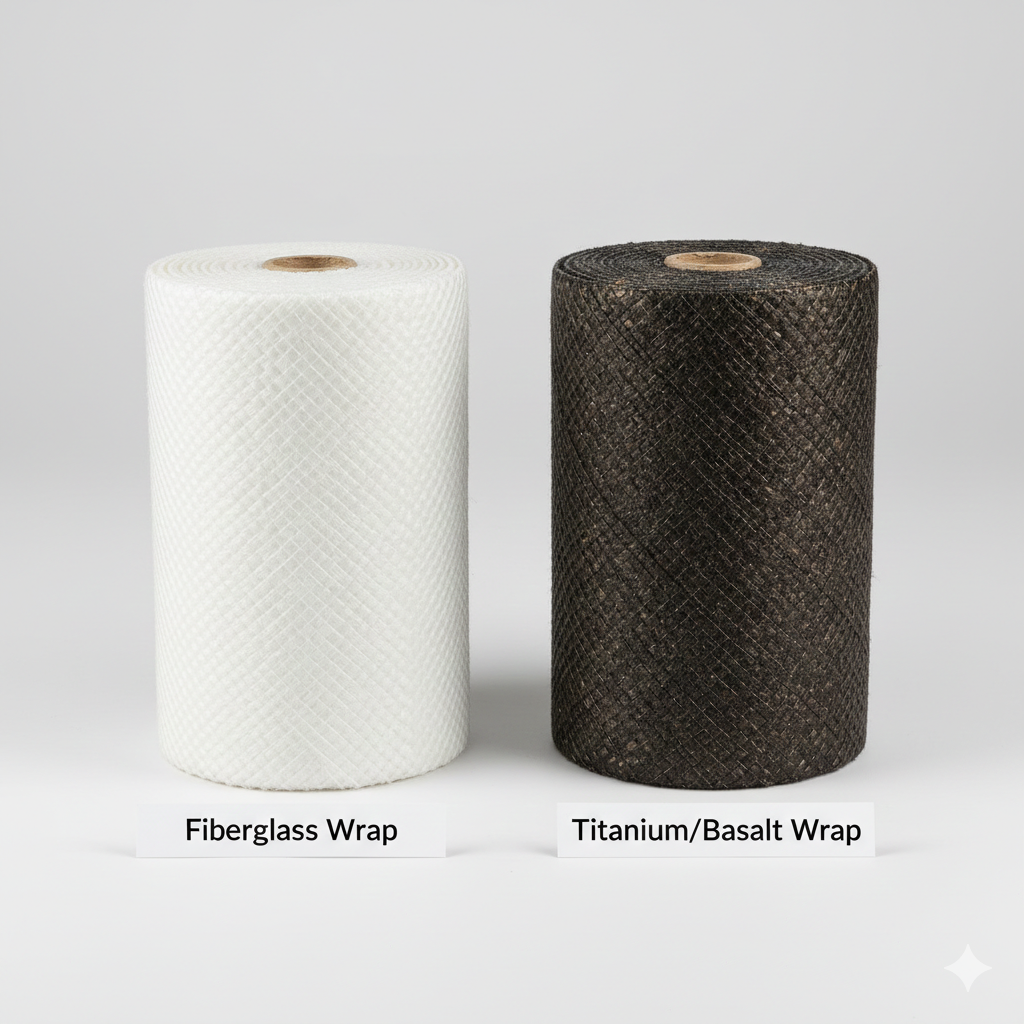
- Fiberglass wrap
- Basalt/titanium wrap (often marketed as “titanium”)
- Ceramic-infused wrap
- Silica wrap (high-end extreme heat)
Comparative Table: Exhaust Wrap Material Types
Here’s a practical comparison to help you choose the right wrap.
| Exhaust Wrap Type | Heat Resistance | Durability | Moisture Resistance | Cost | Best For |
|---|---|---|---|---|---|
| Fiberglass | High | Medium | Low–Medium | $ | Budget builds, basic headers |
| Basalt “Titanium” | Very High | High | Medium–High | $$ | Turbo downpipes, long-term use |
| Ceramic-infused | Very High | High | High | $$$ | Performance builds, heat-critical areas |
| Silica | Extreme | Very High | High | $$$$ | Racing, extreme EGT setups |
SEO Tip: If your blog targets buyers, this table helps drive affiliate conversions.
Exhaust Wrap Pros and Cons (Honest Breakdown)
✅ Pros of Exhaust Wrap
- Reduces engine bay heat
- Protects surrounding parts
- Can improve turbo performance
- Low cost compared to ceramic coating
- Easy DIY installation
❌ Cons of Exhaust Wrap
- Can trap moisture and cause rust
- May shorten exhaust lifespan on cheap steel
- Can cause smoke/burning smell after install
- Fiberglass can irritate skin/lungs during handling
- Poor installation can look messy and unravel
Does Exhaust Wrap Increase Horsepower?
This is one of the most searched questions.
The truth:
In most naturally aspirated street cars, Exhaust wrap won’t create big horsepower gains.
However, it can help in specific situations:
- Turbocharged setups: faster spool (possible)
- Heat soak reduction: improves intake temps (indirect benefit)
- Consistent exhaust flow: minor efficiency improvement
If you want real performance gains, pair exhaust wrap with:
- proper tuning
- upgraded exhaust diameter
- better intercooling (for turbo cars)
- ceramic coating (best combo)
Common Exhaust Wrap Problems: Causes & Fixes
Now let’s cover what most people experience after installing Exhaust wrap.
✅ Problem 1: Smoke After Installing Exhaust Wrap
What Causes It?
Smoke is extremely common right after wrapping because:
- oils from manufacturing burn off
- trapped dirt/grease burns
- wrap cures under heat
- spray sealants cure and smoke
How to Fix It
✔ Start the engine and let it idle for 10–15 minutes
✔ Expect light smoke for the first heat cycle
✔ Take a short drive and let it cool down
✔ Repeat 2–3 heat cycles
Important: Heavy smoke for hours = something else (oil leak, wrap touching plastic, etc.)
✅ Problem 2: Burning Smell From Exhaust Wrap
Causes
- wrap curing (normal)
- wrap too close to wiring or undercoating
- oil leak soaking into wrap
- sealant overspray burning
Fixes
- Inspect for leaks around valve cover or turbo oil lines
- Make sure wrap isn’t touching hoses or wiring
- If oil soaked: replace the wrap, don’t “clean it”
✅ Problem 3: Exhaust Wrap Itching / Skin Irritation
Causes
Most fiberglass wraps release tiny fibers.
Fix
Use:
- nitrile gloves + mechanic gloves
- long sleeves
- dust mask or respirator
- safety glasses
Pro Tip: Basalt/titanium wrap is much easier to work with than cheap fiberglass.
✅ Problem 4: Exhaust Wrap Rusting Your Headers
This is the biggest controversy around Exhaust wrap.
Why It Happens
Exhaust wrap can trap:
- moisture
- road salt
- condensation
Especially on:
- mild steel headers
- cheap welded pipes
- winter-driven cars
Fixes
✔ Use stainless steel headers if possible
✔ Apply high-temp exhaust paint before wrapping
✔ Use silicone spray sealant after wrapping
✔ Avoid wrapping sections exposed to water/snow
Best Long-Term Solution
If rust is a serious concern, choose:
- ceramic coating
- heat shields
- wrap only critical sections (not full headers)
✅ Problem 5: Exhaust Wrap Falling Apart / Unraveling
Causes
- not enough overlap
- loose tension during wrapping
- poor-quality stainless ties
- wrap shrinking after heat cycling
- no locking method at ends
Fix
- Wrap with 1/4 to 1/2 overlap consistently
- Pull tight during wrapping
- Use stainless locking ties at both ends
- Add extra ties at curves and bends
- Consider using a sealant spray
✅ Problem 6: Exhaust Wrap Turns White / Fades / Looks Dirty
Causes
- normal heat cycling
- oil or coolant contamination
- road grime
- cheap wrap discoloration
Fix
- Cosmetic only—doesn’t always mean failure
- If oil-soaked, replace it
- Sealant spray can help reduce staining
✅ Problem 7: Exhaust Wrap Causes Cracking (Myth or Real?)
Can Exhaust Wrap Crack Headers?
Yes—but usually only in certain cases.
Causes
- trapping heat increases thermal stress
- thin-wall cheap headers can warp/crack
- poor welding + high EGT = failure faster
- turbo manifold heat is extreme
Fixes
✔ Use high-quality thick-wall headers
✔ Don’t wrap cheap eBay headers
✔ Use ceramic coating instead for extreme heat
✔ Wrap only the downpipe rather than the manifold
Comparative Table: Exhaust Wrap vs Ceramic Coating vs Heat Shields
| Feature | Exhaust Wrap | Ceramic Coating | Heat Shields |
|---|---|---|---|
| Cost | Low | High | Medium |
| DIY Friendly | Yes | No (usually) | Yes |
| Heat Reduction | High | High | Medium–High |
| Rust Risk | Medium–High | Low | Low |
| Looks | “Racer” style | Clean/professional | OEM style |
| Durability | Medium | Very High | High |
| Best For | Budget heat control | Long-term performance | Reliable protection |
How to Install Exhaust Wrap (Step-by-Step Guide)
If you want the best results, installation matters more than people realize.
Tools & Supplies You’ll Need
- Exhaust wrap roll (2” width is most common)
- Stainless steel ties or clamps
- Scissors or heavy-duty shears
- Gloves + long sleeves
- Spray bottle with water (optional)
- High-temp silicone spray (recommended)
- Safety glasses
Step 1: Remove the Exhaust Part (Recommended)
You can wrap on the car, but it’s harder.
Best practice:
- remove headers/downpipe
- clean properly
- wrap evenly
Step 2: Clean the Exhaust Surface
Remove:
- oil
- grease
- mud
- rust flakes
Use:
- brake cleaner
- degreaser
- wire brush (if needed)
If you wrap over oil, you’ll get:
- bad smell
- smoke
- fire risk (rare but possible)
Step 3: Optional — Paint Before Wrapping
If your headers are mild steel, consider:
- high-temp exhaust paint (1200°F+ rated)
Let it fully dry/cure before wrapping.
Step 4: Start Wrapping From the Engine Side
Most people start from the cylinder head side and move outward.
Why?
- cleaner overlap direction
- less chance of unraveling
- better heat management near the hottest point
Step 5: Use Proper Overlap
Recommended overlap:
- 1/4 overlap = less wrap used, decent coverage
- 1/2 overlap = best heat insulation, more material used
Step 6: Keep Strong Tension
Wrap tight and consistent.
Loose wrap leads to:
- hot spots
- unraveling
- ugly finish
Step 7: Secure With Stainless Steel Ties
Use ties at:
- starting point
- end point
- bends or junctions
- every 6–10 inches for long sections
Avoid plastic zip ties (they will melt).
Step 8: Seal the Wrap (Recommended)
Use high-temp silicone spray sealant to:
- reduce moisture absorption
- reduce fraying
- improve lifespan
- slightly improve appearance
Let it dry before running the car.
Step 9: Heat Cycle Properly
First startup:
- idle 10–15 minutes
- shut off
- cool down fully
Second cycle:
- light driving
- cool down again
This helps the wrap “set” and reduces future looseness.
How Much Exhaust Wrap Do You Need? (Quick Guide)
This depends on what you’re wrapping.
Typical Wrap Length Estimates
| Part | Common Wrap Needed |
|---|---|
| 4-cylinder header | 25–50 ft |
| V6 headers | 50–100 ft |
| V8 headers | 100 ft+ |
| Turbo downpipe | 15–30 ft |
| Motorcycle exhaust | 15–30 ft |
Tip: Always buy slightly more than you think. You don’t want to run out mid-job.
Exhaust Wrap Maintenance Tips (To Make It Last Longer)
To extend the life of your Exhaust wrap:
Do This
✅ Inspect every few months for fraying
✅ Re-tighten ties if needed
✅ Check for oil leaks (especially turbo engines)
✅ Keep wrap away from direct water spray zones
✅ Use sealant spray for protection
Avoid This
❌ Pressure washing wrapped exhaust
❌ Wrapping already rusty pipes
❌ Wrapping catalytic converters (often too hot)
❌ Wrapping flex pipes (movement causes failure)
Can You Wrap a Catalytic Converter?
Technically you can, but it’s usually not recommended.
Why?
Catalytic converters operate at extremely high temperatures and need airflow for cooling. Wrapping can:
- overheat the cat
- damage internal substrate
- increase risk of failure
Better option: Use a heat shield or thermal barrier instead.
Can You Wrap a Downpipe? (Turbo Builds)
Yes—this is one of the best uses of Exhaust wrap.
Benefits of Wrapping a Downpipe
- reduces heat near firewall
- protects wiring and brake lines
- helps turbo efficiency
- lowers intake temps indirectly
For turbo cars, wrapping the downpipe is often safer than wrapping the entire manifold.
Exhaust Wrap for Motorcycles: Worth It?
Absolutely, especially for:
- rider leg heat reduction
- custom builds
- café racers / bobbers
- tighter exhaust routing
But keep in mind:
- rain exposure is higher
- corrosion risk increases
- use sealant for durability
Exhaust Wrap vs Header Blanket vs Turbo Blanket
If your goal is heat control, you may be choosing between multiple options.
Comparison Table: Wrap vs Blankets
| Product | Best Use | Heat Control | Ease of Install | Cost |
|---|---|---|---|---|
| Exhaust wrap | Pipes/headers/downpipes | High | Medium | $ |
| Turbo blanket | Turbo housing | Very High | Easy | $$ |
| Header blanket | Header area | High | Medium | $$ |
| Heat shield | Sensitive areas | Medium | Easy | $$ |
Best combo for turbo cars: Turbo blanket + downpipe wrap + heat shielding where needed.
Best Practices (Expert Recommendations)
If you want the best results with Exhaust wrap, follow these rules:
🔥 Rule #1: Don’t Wrap Cheap Mild Steel Headers
They often rust fast and crack from heat stress.
🔥 Rule #2: Wrap Only What Needs Wrapping
You don’t always need full coverage. Target critical heat zones.
🔥 Rule #3: Always Clean Before Wrapping
Oil + wrap = smoke + smell + potential fire hazard.
🔥 Rule #4: Use Stainless Ties, Not Hose Clamps
Hose clamps can work but are bulky and ugly.
🔥 Rule #5: Use Sealant Spray for Street Cars
Especially if you drive in wet climates.
Troubleshooting Guide: Exhaust Wrap Issues & Fixes

| Symptom | Likely Cause | Fix |
|---|---|---|
| Smoke on first startup | Wrap curing | Normal, heat cycle it |
| Burning smell | Oil leak or curing | Inspect leaks, replace if soaked |
| Wrap loosens | Not tight enough | Rewrap tighter + add ties |
| Rust under wrap | Moisture trapped | Paint/coat first, use sealant |
| Wrap frays | Cheap wrap or no seal | Seal it or upgrade material |
| Header cracks | Thermal stress + weak metal | Upgrade headers or ceramic coat |
Is Exhaust Wrap Legal?
In most places, Exhaust wrap is legal, but there are exceptions:
- If it interferes with emissions equipment
- If it damages catalytic converters
- If it creates unsafe conditions near fuel lines
- Some inspections may fail if wrap hides cracks/leaks
If you live in a strict emissions area, avoid wrapping:
- catalytic converters
- O2 sensor areas
- emissions-related components
Frequently Asked Questions (FAQ)
1) Does Exhaust wrap really reduce heat?
Yes. It significantly reduces radiant heat, especially around headers and downpipes.
2) How long does Exhaust wrap last?
Typically:
- 1–3 years on daily drivers
- longer with sealant + good material
- shorter in wet/snow climates
3) Can Exhaust wrap catch fire?
It’s rare, but possible if:
- oil or fuel soaks into it
- wrap touches plastic or wiring
- severe leaks exist
4) Is titanium Exhaust wrap actually titanium?
Most “titanium wrap” is basalt fiber (not pure titanium metal). It’s still excellent quality.
5) Should I wrap headers or ceramic coat them?
If you want long-term durability and less rust risk: ceramic coating wins.
If you want cheaper heat control: Exhaust wrap wins.
Conclusion: Is Exhaust Wrap Worth It?
Exhaust wrap is one of the best bang-for-buck upgrades for managing heat in your engine bay and underbody. It can protect components, reduce heat soak, and even help turbo setups run more efficiently.
However, it’s not perfect.
If you install it incorrectly—or wrap low-quality mild steel headers—you may end up dealing with rust, cracking, smoke, or wrap failure. The good news is that most of these problems are preventable with the right material choice, correct installation, and simple sealing techniques.
Quick Recommendation
✅ For turbo builds: wrap the downpipe + use a turbo blanket
✅ For NA street cars: wrap only hot spots or use heat shields
✅ For long-term reliability: ceramic coating is often the best solution