
Introduction: The Rise of the Hydrogen Car Revolution
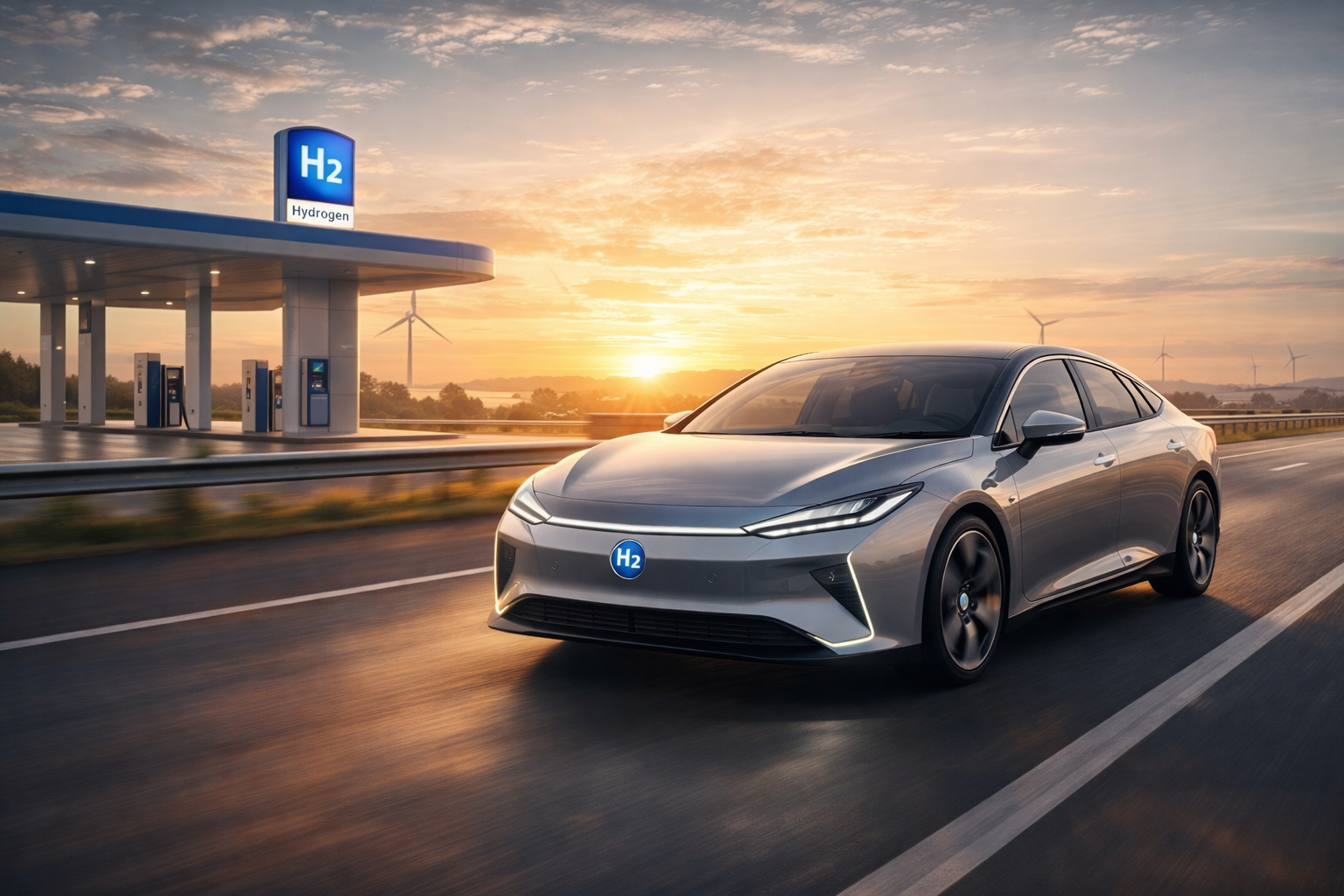
Hydrogen Fuel Cell Cars exist ! while climate change accelerating and governments worldwide pushing for zero-emission mobility, alternative fuel technologies have never been more critical. Among the frontrunners in this transition is the hydrogen car — a vehicle powered by a hydrogen fuel cell that emits only water vapor. Unlike traditional gasoline vehicles, and even battery–electric vehicles (BEVs), hydrogen fuel cell vehicles (FCVs) offer fast refueling, long range, and eco-friendly performance.
- Introduction: The Rise of the Hydrogen Car Revolution
- Chapter 1: What Is a Hydrogen Car?
- Chapter 2: How Hydrogen Fuel Cells Work
- Chapter 3: Hydrogen Fuel Cell vs. Battery Electric Vehicles
- Chapter 4: Pros and Cons of Hydrogen Cars
- 4.1 Advantages
- ⚡ Zero Tailpipe Emissions
- ⛽ Fast Refueling
- 🚗 Long Driving Range
- 🏭 Potential for Clean Production
- 📦 Lightweight Energy Storage
- 4.2 Limitations
- Chapter 5: Hydrogen Production Methods
- Chapter 6: Infrastructure — Hydrogen Fuel Stations
- Chapter 7: Safety of Hydrogen Cars
- Chapter 8: Hydrogen Cars on the Road Today
- Chapter 9: Hydrogen Cars vs Conventional Cars
- Chapter 10: Comparative Table — Hydrogen vs Electric vs Hybrid
- Chapter 11: Economics of Hydrogen Cars
- Chapter 12: Environmental Impact
- Chapter 13: Challenges Facing Hydrogen Cars
- Chapter 14: The Future of Hydrogen Cars (2026 and Beyond)
- Conclusion
- FAQs
In this comprehensive guide, we’ll explore:
- What a hydrogen car is
- How hydrogen fuel cells work
- Advantages and limitations of hydrogen cars
- A comparison with electric and conventional vehicles
- The current market and future outlook
Whether you’re an automotive enthusiast, an eco-conscious driver, or an industry professional, this article is your ultimate resource on hydrogen fuel cell cars.
Chapter 1: What Is a Hydrogen Car?
A hydrogen car is a type of zero-emission vehicle that uses hydrogen gas to power an electric motor. Instead of storing electricity in a large battery like a BEV (Battery Electric Vehicle), it generates electricity onboard through a chemical reaction inside a hydrogen fuel cell.
Unlike internal combustion engines that burn fuel, fuel cells convert hydrogen and oxygen into electricity through an electrochemical process. The only byproduct? Water vapor — making hydrogen cars one of the cleanest forms of personal transport.
Chapter 2: How Hydrogen Fuel Cells Work
2.1 The Basic Concept
At the heart of a hydrogen car is the fuel cell stack — a system of individual fuel cells that work together to create electrical power.
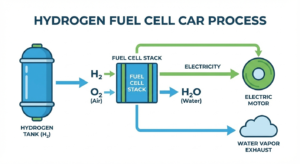
Here’s a simplified breakdown:
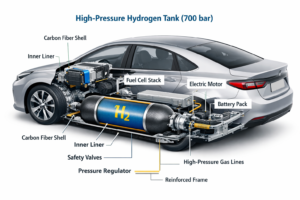
- Hydrogen Tank: The car stores compressed hydrogen gas at high pressure (usually ~700 bar).
- Fuel Cell Stack: Hydrogen enters the fuel cell where it meets oxygen from the air.
- Electrochemical Reaction: Hydrogen molecules split into protons and electrons at the anode.
- Electricity Generation: Electrons travel through an external circuit — creating electricity that powers the electric motor.
- Exhaust: Protons and electrons reunite with oxygen at the cathode, producing water vapor.
2.2 Key Components of a Hydrogen Car
| Component | Function |
|---|---|
| Hydrogen Tank | Stores compressed hydrogen safely |
| Fuel Cell Stack | Converts hydrogen into electrical energy |
| Electric Motor | Drives the wheels using electricity |
| Battery or Supercapacitor | Stores energy recovered from braking |
| Power Control Unit | Manages electricity flow between fuel cell, battery, motor |
| Cooling System | Maintains optimal operating temperature |
Chapter 3: Hydrogen Fuel Cell vs. Battery Electric Vehicles
One of the most common debates today is hydrogen vs electric. Both technologies aim to decarbonize transportation, but they approach it differently.
3.1 Key Differences
| Feature | Hydrogen Car | Battery Electric Vehicle (BEV) |
|---|---|---|
| Refueling Time | ~5 minutes | 30 minutes to several hours |
| Driving Range | 300–400+ miles | 150–350+ miles |
| Emissions | Zero at tailpipe | Zero at tailpipe |
| Infrastructure Need | Hydrogen stations | Electric charging stations |
| Energy Efficiency | Lower (production & storage losses) | Higher (direct grid to battery) |
| Weight | Lighter fuel system | Heavy battery packs |
3.2 Real-World Context
Hydrogen cars excel where quick refueling and long range are priorities — especially for commercial fleets and long-distance travel. BEVs, on the other hand, dominate urban commuting due to widespread charging access and high energy efficiency.
Chapter 4: Pros and Cons of Hydrogen Cars
4.1 Advantages
⚡ Zero Tailpipe Emissions
Hydrogen cars emit only water, making them ideal for reducing urban air pollution.
⛽ Fast Refueling
A hydrogen car can refuel in as little as 5 minutes — similar to gasoline.
🚗 Long Driving Range
Many current hydrogen cars achieve 300–400+ miles per tank.
🏭 Potential for Clean Production
When hydrogen is produced via renewable energy (green hydrogen), lifecycle emissions are minimal.
📦 Lightweight Energy Storage
Hydrogen fuel cell systems are generally lighter than large battery packs needed for equivalent range in BEVs.
4.2 Limitations
❗ Limited Infrastructure
Hydrogen refueling stations are sparse globally, limiting usability.
💰 High Production Cost
Fuel cells and hydrogen storage systems remain expensive.
🌍 Hydrogen Production Challenges
Most hydrogen today comes from natural gas (gray hydrogen), which emits CO₂.
🔋 Lower Efficiency
Energy losses occur when producing, compressing, transporting, and converting hydrogen versus direct grid charging.
Chapter 5: Hydrogen Production Methods
Hydrogen isn’t an energy source — it’s an energy carrier. The environmental footprint of a hydrogen car depends on how the hydrogen is produced.
5.1 Types of Hydrogen
| Type | Production Method | Emissions |
|---|---|---|
| Gray Hydrogen | Steam methane reforming (SMR) | High CO₂ emissions |
| Blue Hydrogen | SMR + carbon capture | Reduced CO₂ emissions |
| Green Hydrogen | Electrolysis using renewable energy | Near-zero emissions |
Chapter 6: Infrastructure — Hydrogen Fuel Stations
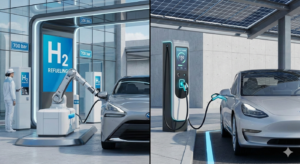
Hydrogen cars need hydrogen refueling stations, which are significantly less common than electric charging points.
Global Infrastructure Snapshot (2026)
- Japan, South Korea, Germany, and California are leaders in hydrogen station deployment.
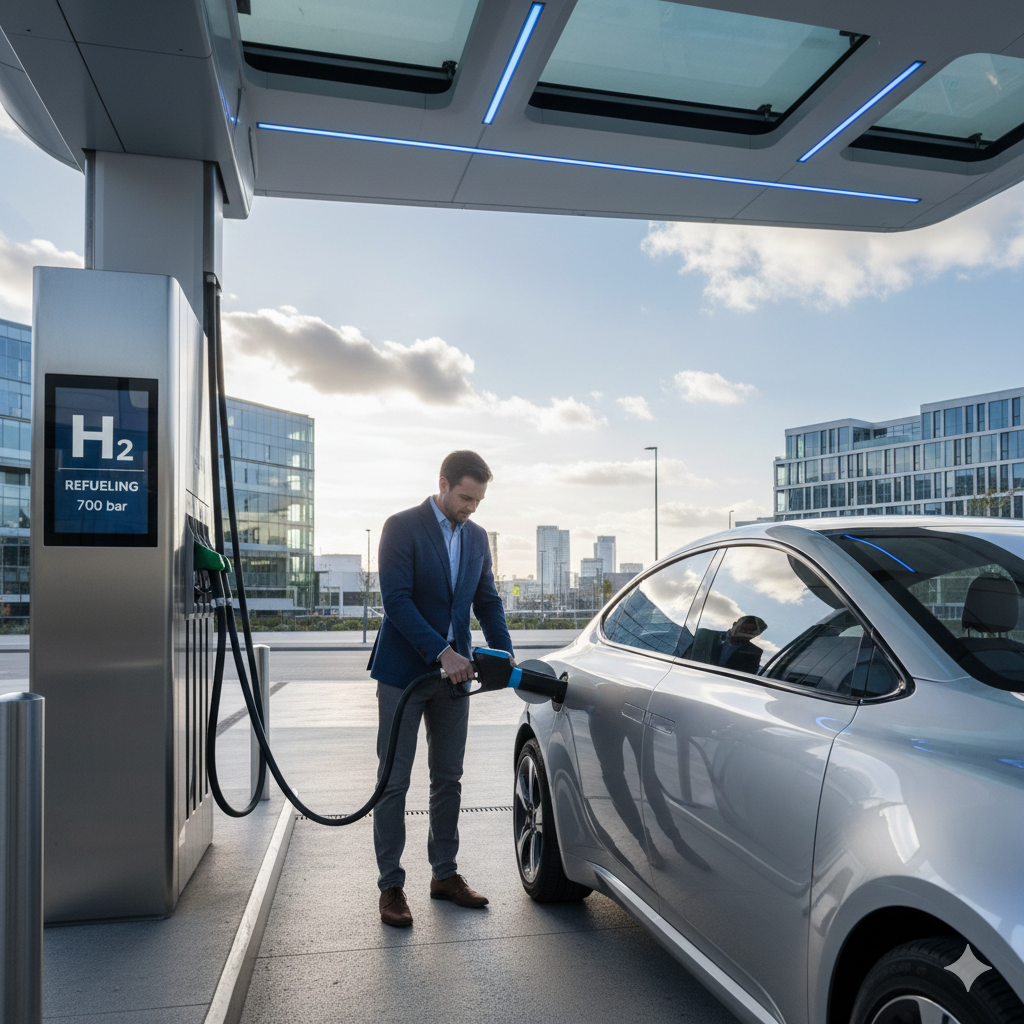
- Hydrogen stations typically fill vehicles with compressed hydrogen at 350–700 bar.
Refueling Process
- Authenticate at station kiosk.
- Connect nozzle to vehicle’s hydrogen port.
- Refill tank (~3–5 minutes).
- Depart with minimal fuss, similar to gasoline refueling.
Chapter 7: Safety of Hydrogen Cars
Hydrogen has a reputation for being “dangerous,” but modern design and engineering make hydrogen cars as safe — if not safer — than conventional cars.
Key Safety Features
- Robust tanks: Multiple layers of carbon fiber and metal to prevent leaks.
- Multiple sensors: Continuous monitoring for hydrogen leaks.
- Automatic shutoff valves: Stop flow in emergencies.
- Safe refueling protocols: Designed to prevent over-pressure.
Today’s hydrogen cars meet the same rigorous safety standards as other vehicles.
Chapter 8: Hydrogen Cars on the Road Today
Notable Hydrogen Fuel Cell Vehicles
| Model | Manufacturer | Range (approx.) | Year |
|---|---|---|---|
| Toyota Mirai | Toyota | 400+ miles | 2025/2026 |
| Hyundai NEXO | Hyundai | 380+ miles | 2025/2026 |
| Honda Clarity Fuel Cell | Honda | ~360 miles | Final years of production |
These models represent the current generation of hydrogen cars and have been used in fleets, public transit, and personal vehicles in supportive markets.
Chapter 9: Hydrogen Cars vs Conventional Cars
| Aspect | Gasoline/Diesel | Hydrogen Car |
|---|---|---|
| Emissions | High CO₂ & pollutants | Zero |
| Fueling Time | 5–7 minutes | 5 minutes |
| Fuel Cost (per mile) | Varies | Higher (today) |
| Maintenance | Frequent (engine, oil) | Lower (fewer moving parts) |
| Environmental Impact | High lifecycle emissions | Low (if green hydrogen used) |
Chapter 10: Comparative Table — Hydrogen vs Electric vs Hybrid
| Feature | Hydrogen Car | BEV | Hybrid |
|---|---|---|---|
| Tailpipe Emissions | Zero | Zero | Moderate |
| Refueling Time | ~5 min | 30 min–hours | ~5 min |
| Range | High | Moderate–High | Moderate |
| Fuel/Energy Cost | Higher | Lower | Moderate |
| Infrastructure | Sparse | Widespread | Gas stations everywhere |
| Best Use Case | Long trips, fleet vehicles | Daily commuting | Transitional users |
Chapter 11: Economics of Hydrogen Cars
Purchase Price
Hydrogen cars tend to be more expensive upfront due to fuel cell technology costs. However, incentives in some regions (like tax credits or rebates) help offset this.
Fuel Costs
Hydrogen is often more expensive per mile than electricity or gasoline — but prices may fall as production and distribution scale.
Maintenance Savings
Fuel cells have fewer moving parts than combustion engines. Owners often see lower maintenance costs over time.
Chapter 12: Environmental Impact
When fueled with green hydrogen, hydrogen cars can be one of the cleanest forms of transportation.
Emission Lifecycle Comparison
| Vehicle Type | Tank-to-Wheel | Well-to-Wheel |
|---|---|---|
| Gasoline Car | High | High |
| BEV (grid mix) | Zero | Depends on grid |
| Hydrogen FCV | Zero | Best with green hydrogen |
Green hydrogen production is key to maximizing environmental benefit.
Chapter 13: Challenges Facing Hydrogen Cars
- Scaling infrastructure
- Reducing production costs
- Achieving green hydrogen at scale
- Consumer awareness and confidence
- Competition with electric vehicles
Addressing these challenges will determine how rapidly hydrogen cars become mainstream.
Chapter 14: The Future of Hydrogen Cars (2026 and Beyond)
Experts believe hydrogen cars will grow in importance, particularly in heavy transport, buses, and long-haul trucking. Progress in renewable energy and hydrogen production technologies will further improve viability.
What to Expect
✔ Increased green hydrogen
✔ Expanded station networks
✔ Lower production costs
✔ New hydrogen models entering market
Conclusion
The hydrogen car represents a compelling and sustainable alternative to traditional vehicles. With zero emissions, fast refueling, and growing industry support, hydrogen fuel cell cars are poised to become a key element in the future of transportation.
As the world transitions toward cleaner technology, understanding how hydrogen cars work — and their role in the broader ecosystem — will be essential for consumers, policymakers, and businesses alike.
FAQs
Q1: Are hydrogen cars better than electric cars?
A1: They offer faster refueling and longer range but currently lag in infrastructure and energy efficiency.
Q2: How far can a hydrogen car go?
A2: Many modern hydrogen cars exceed 300 miles per tank.
Q3: Is hydrogen safe?
A3: Yes — modern engineering makes hydrogen storage and refueling very safe.
Q4: Where can I refuel a hydrogen car?
A4: In select regions like California, Japan, Germany, and South Korea, hydrogen fuel stations are growing.
Q5: there are some famous brands that have hydrogen car models ?
A5: Yes, Honda ,toyota, BMW and more brands.