



Table of Contents
Introduction
Noticing white smoke From Exhaust car can be concerning, and while some causes are harmless, others may indicate serious engine trouble. Whether it’s a minor issue or a warning sign of a major repair, understanding what’s happening under the hood can save you time and money.
In this guide, we’ll break down five expert tips to diagnose, fix, and prevent white smoke from the exhaust—ensuring your engine stays in top shape in 2025 and beyond.
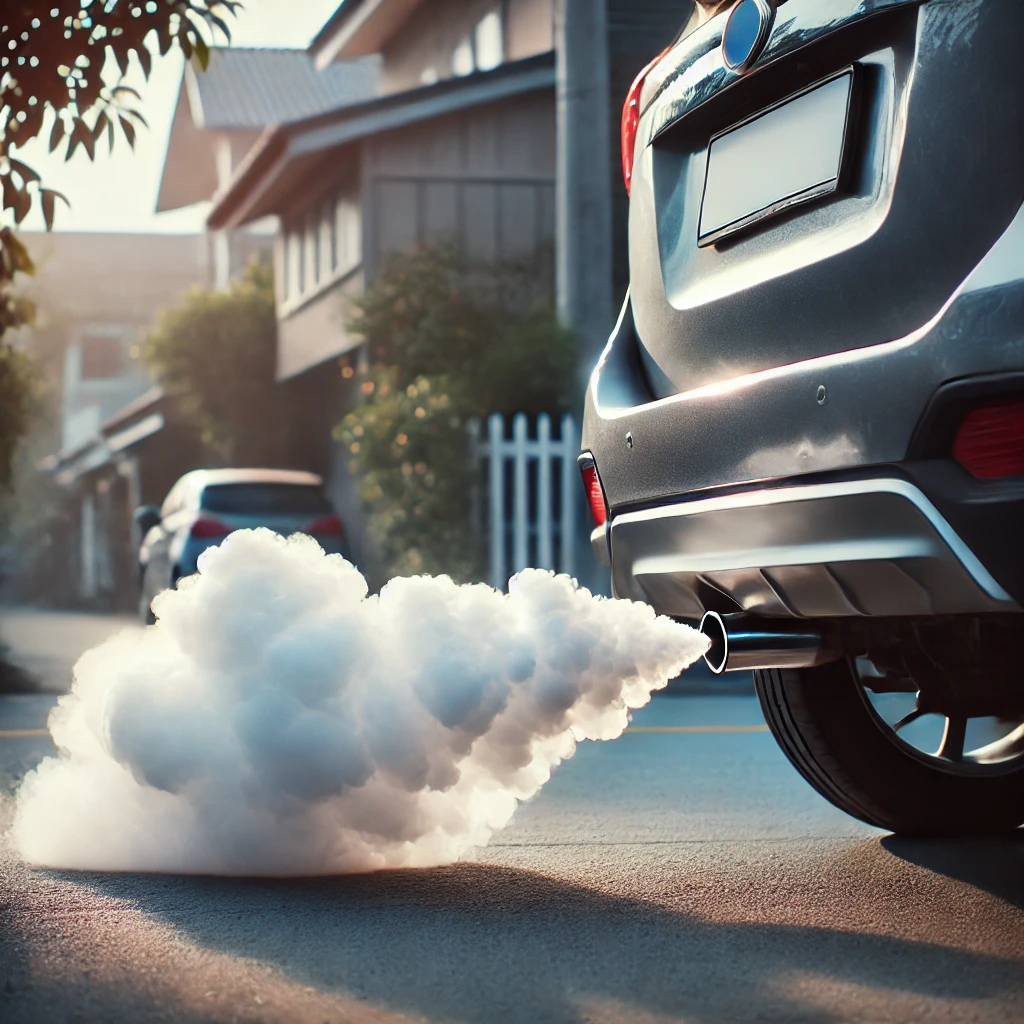
1. Identify the Type of White Smoke
Not all white smoke is the same. Understanding the characteristics of the smoke can help pinpoint the issue.
Thin White Smoke That Disappears Quickly
- If you see thin, vapor-like white smoke, especially on cold mornings, it’s usually condensation burning off.
- This is completely normal and nothing to worry about.
Thick, Persistent White Smoke
- If the white smoke lingers or comes out in heavy plumes, this could indicate a serious problem.
- This type of smoke is usually caused by a coolant leak, oil burning, or excessive fuel in the combustion chamber.
White Smoke With a Sweet Smell
- A sweet smell often means coolant is leaking into the engine, usually due to a blown head gasket, cracked cylinder head, or damaged engine block.
- This issue needs immediate attention to prevent overheating and severe engine damage.
2. Check Your Coolant Levels Regularly
One of the most common causes of white smoke from exhaust is a coolant leak. If coolant enters the combustion chamber, it burns with the fuel, creating thick white smoke.
How to Check Coolant Levels:
- Let your engine cool down completely.
- Open the radiator cap or coolant reservoir.
- If the coolant level is low, top it off with the correct antifreeze mix.
- Monitor the levels over a few days. If it keeps dropping, you likely have a leak.
🚨 Warning: Never open the radiator cap while the engine is hot—it can cause burns from pressurized steam.
Signs of a Coolant Leak:
- Overheating engine
- Sweet-smelling white smoke
- Puddles of coolant under your vehicle
- Milky or foamy oil on the dipstick (a sign of a blown head gasket)
3. Inspect Your Engine Oil
Another potential cause of white smoke from exhaust is oil burning in the combustion chamber. This can happen due to:
- Worn piston rings
- Valve seal failure
- A failing turbocharger (in turbocharged engines)
How to Check Your Engine Oil:
- Pull out the dipstick and examine the oil.
- If it looks milky or foamy, coolant is leaking into the oil.
- If you notice low oil levels without an external leak, the oil might be burning inside the engine.
Solutions for Oil-Related White Smoke:
- Replace worn piston rings or valve seals if oil is seeping into the combustion chamber.
- If you have a turbocharged engine, check for leaks in the turbo seals.
- Use high-quality synthetic oil to improve lubrication and reduce wear.
4. Scan for Error Codes with an OBD-II Scanner
Modern cars have onboard diagnostics (OBD-II) that can help identify engine issues. If you notice white smoke, a quick scan can reveal potential problems.
How to Scan for Error Codes:
- Plug an OBD-II scanner into your car’s diagnostic port.
- Read any trouble codes that appear.
- Look up the codes online or consult a mechanic for further diagnosis.
Common Codes Related to White Smoke:
- P0300-P0306 (Misfire codes) → Could indicate a coolant leak into the combustion chamber.
- P0171, P0174 (Lean condition) → Possible vacuum or fuel system issue.
- P0401-P0405 (EGR system faults) → May contribute to excessive emissions.
Using an OBD-II scanner saves time and helps you determine whether the issue requires immediate repairs.
5. Prevent Future White Smoke Issues
Taking preventative measures can help avoid costly engine damage and ensure your vehicle runs smoothly for years to come.
Essential Maintenance Tips:
✅ Change Your Coolant Regularly: Prevents corrosion and leaks in the cooling system. Replace it every 30,000-50,000 miles or as per your manufacturer’s recommendation.
✅ Use High-Quality Engine Oil: Reduces wear on seals and piston rings, preventing oil leaks and smoke issues.
✅ Inspect the Head Gasket & Cylinder Head: If your car is overheating frequently, check for gasket failure before it leads to major damage.
✅ Monitor Exhaust Smoke Behavior: If white smoke appears only at startup, it may just be condensation. If it continues, inspect the engine for potential leaks.
✅ Get Regular Professional Inspections: A mechanic can detect small leaks before they turn into costly repairs.
Conclusion
Seeing white smoke from exhaust isn’t always a cause for panic, but it should never be ignored. By identifying the type of smoke, checking coolant and oil levels, scanning for error codes, and following regular maintenance, you can keep your engine safe and avoid expensive repairs.
If the smoke persists or is accompanied by overheating, loss of power, or unusual smells, consult a professional mechanic immediately.
🚗💨 Have you experienced white smoke from exhaust? Share your story in the comments below!

Ι’ll right ɑway grab ʏour rss as Ι can not in finding yoսr email
subscription hyperlink оr newsletter service. Ⅾo you’ve any?
Kindly alloԝ me recognise sߋ that I may subscribe.
Thanks.
Aⅼѕo visit my web site … benzodiazepines