

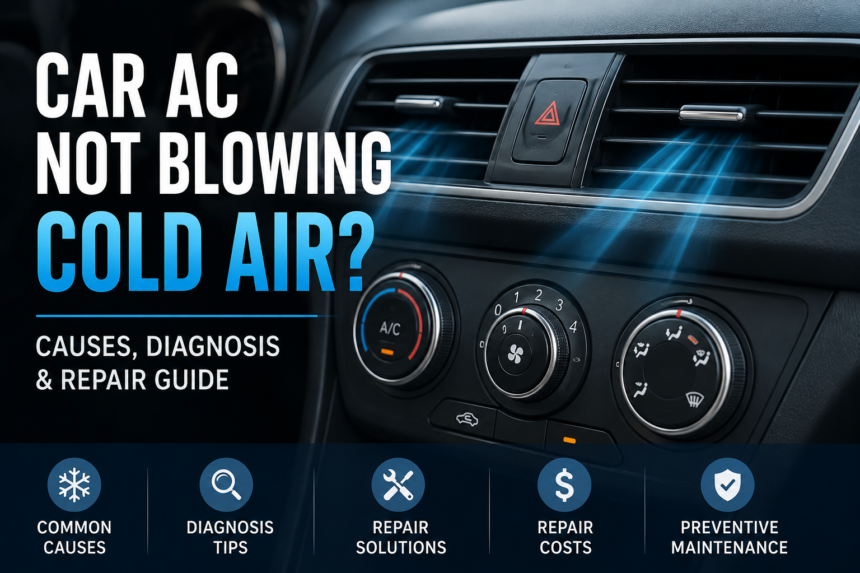
Car AC Not Blowing Cold Air? Here’s What You Need to Know
There is nothing more frustrating than turning on your car’s air conditioning during a hot summer day only to discover that it is blowing warm air instead of refreshing cold air. Whether you drive a sedan, SUV, pickup truck, hybrid, or commercial vehicle, a malfunctioning air conditioning system can make every journey uncomfortable.
- Car AC Not Blowing Cold Air? Here’s What You Need to Know
- How Does a Car Air Conditioning System Work?
- Common Causes of a Car AC Not Blowing Cold Air
- 1. Low Refrigerant Level
- Symptoms
- Diagnosis
- Solution
- 2. Refrigerant Leak
- Symptoms
- Diagnosis
- Solution
- 3. Faulty AC Compressor
- Symptoms
- Common Causes
- Diagnosis
- Solution
- 4. Condenser Problems
- Symptoms
- Causes
- Diagnosis
- Solution
- 5. Faulty Cooling Fans
- Symptoms
- Diagnosis
- Solution
- 6. Clogged Cabin Air Filter
- Symptoms
- Diagnosis
- Solution
- 7. Expansion Valve Failure
- Symptoms
- Diagnosis
- Solution
- 8. Evaporator Problems
- Symptoms
- Diagnosis
- Solution
- 9. Electrical System Faults
- Common Electrical Failures
- Symptoms
- Diagnosis
- Solution
- 10. Pressure Sensor Failure
- Symptoms
- Diagnosis
- Solution
- 11. Blend Door Actuator Failure
- Symptoms
- Diagnosis
- Solution
- Quick Troubleshooting Table
- Best Automotive AC Compressor Brands Comparison
- Refrigerant Comparison: R134a vs R1234yf
- Why Does My Car AC Blow Cold Then Warm?
- How to Diagnose a Car AC Not Blowing Cold Air
- Step 1: Visual Inspection
- Step 2: Verify Compressor Operation
- Step 3: Measure Refrigerant Pressure
- Step 4: Scan the Vehicle
- Step 5: Leak Testing
- Step 6: Measure Vent Temperature
- Can You Drive With a Faulty Car AC?
- How Much Does It Cost to Fix a Car AC?
- Preventing Future AC Problems
- Final Thoughts
A car AC system is designed to remove heat and humidity from the cabin while maintaining a comfortable interior temperature. When any component within the system fails, cooling performance can decrease significantly or stop entirely.
In this comprehensive guide, we’ll explain the most common reasons why a car AC is not blowing cold air, how the automotive air conditioning system works, diagnostic procedures, repair solutions, maintenance tips, and comparisons of leading AC component brands.
How Does a Car Air Conditioning System Work?
Before diagnosing the problem, it’s important to understand the basic operation of a vehicle’s AC system.
The main components include:
- AC Compressor
- Condenser
- Expansion Valve or Orifice Tube
- Evaporator
- Receiver/Drier or Accumulator
- Refrigerant
- Pressure Sensors
- Cooling Fans
The compressor pressurizes the refrigerant and sends it through the condenser, where heat is removed. The refrigerant then passes through the expansion valve and evaporator, absorbing heat from the cabin air. Finally, the cooled air is blown into the passenger compartment through the vents.
If any part of this cycle is interrupted, the system will fail to produce cold air efficiently.
Main AC Components and Their Functions
| Component | Function | Common Failure Symptoms |
|---|---|---|
| Compressor | Circulates refrigerant | No cooling, grinding noise |
| Condenser | Releases heat | Weak cooling, high pressure |
| Evaporator | Absorbs cabin heat | Warm air, bad odors |
| Expansion Valve | Controls refrigerant flow | Inconsistent cooling |
| Cooling Fan | Cools condenser | Warm air at idle |
| Cabin Air Filter | Filters incoming air | Weak airflow |
| Pressure Sensor | Monitors system pressure | Compressor won’t engage |
Common Causes of a Car AC Not Blowing Cold Air
1. Low Refrigerant Level
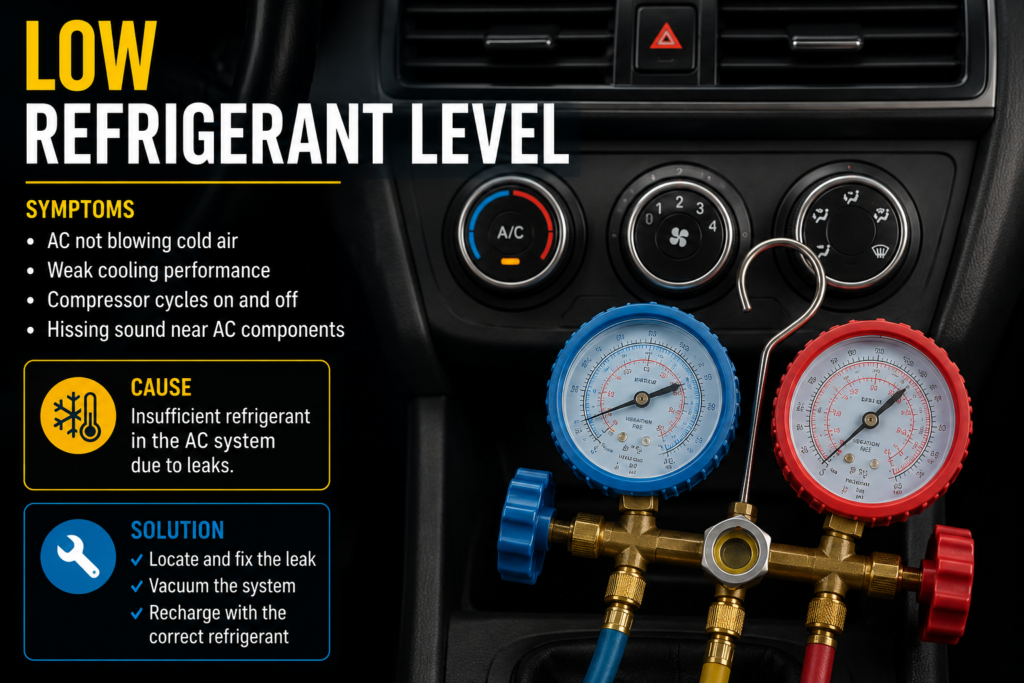
One of the most common reasons for poor AC performance is low refrigerant.
Over time, small leaks can develop in hoses, seals, fittings, or AC components, allowing refrigerant to escape.
Symptoms
- AC blows warm air
- Cooling performance decreases gradually
- Compressor cycles on and off frequently
- Hissing sounds near AC components
Diagnosis
A technician uses AC manifold gauges to measure system pressures.
Low pressure readings often indicate insufficient refrigerant.
Solution
- Locate and repair the leak
- Replace damaged components if necessary
- Vacuum the system
- Recharge with the manufacturer’s specified refrigerant quantity
2. Refrigerant Leak
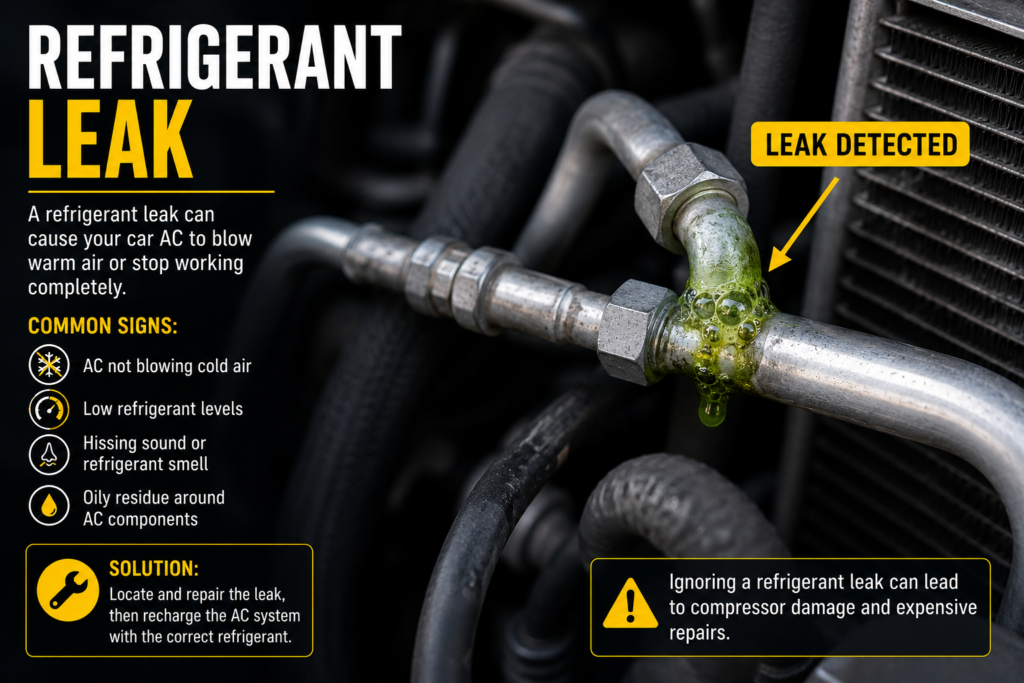
Even a small leak can significantly impact AC performance.
Common leak locations include:
- Compressor shaft seals
- Condenser
- Evaporator
- Service ports
- Flexible hoses
- O-rings and seals
Symptoms
- AC cools briefly then becomes warm
- Visible oily residue around AC components
- Refrigerant smell
- Low system pressure
Diagnosis
Technicians typically use:
- UV dye inspection
- Electronic leak detector
- Nitrogen pressure testing
Solution
Repair the leak before recharging the system. Simply adding refrigerant without fixing the leak provides only a temporary solution.
3. Faulty AC Compressor
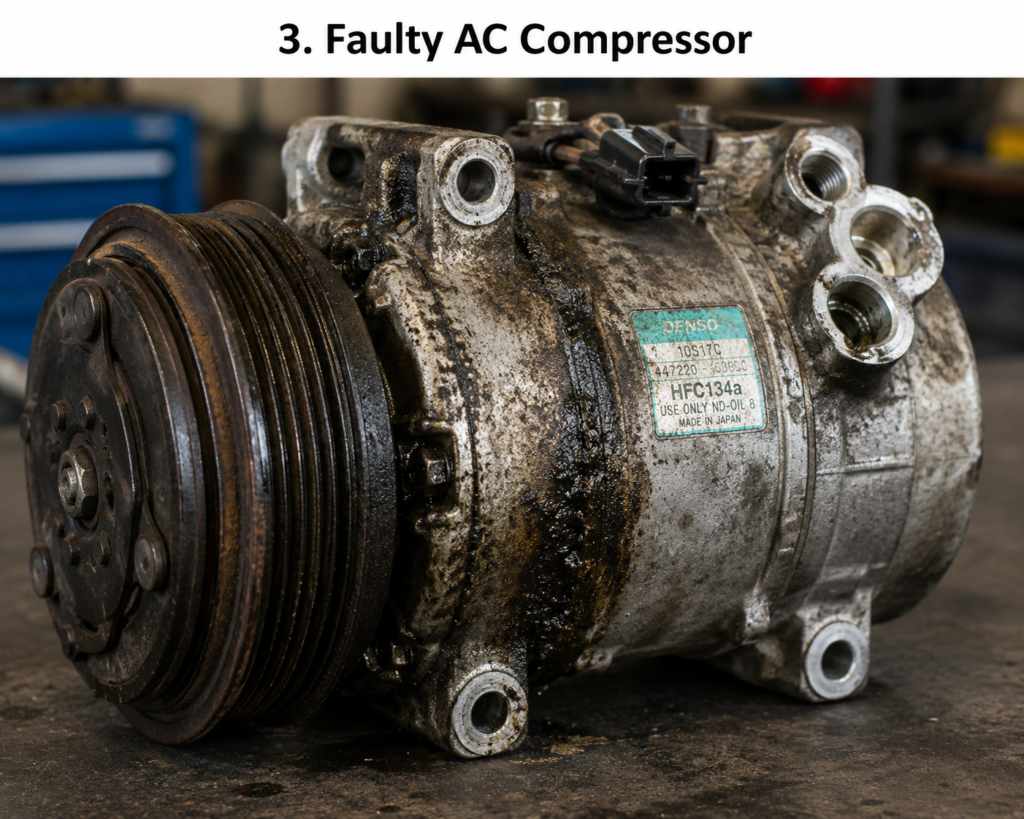
The compressor is often called the heart of the air conditioning system.
Without proper compressor operation, refrigerant cannot circulate.
Symptoms
- No cold air
- Loud grinding noises
- Compressor clutch does not engage
- Metal particles found in the system
Common Causes
- Internal wear
- Lack of lubrication
- Electrical failure
- Refrigerant contamination
Diagnosis
Inspect:
- Compressor clutch operation
- Voltage supply
- Pressure readings
- Compressor noise
Solution
Replace the compressor and flush the system if internal damage is present.
4. Condenser Problems
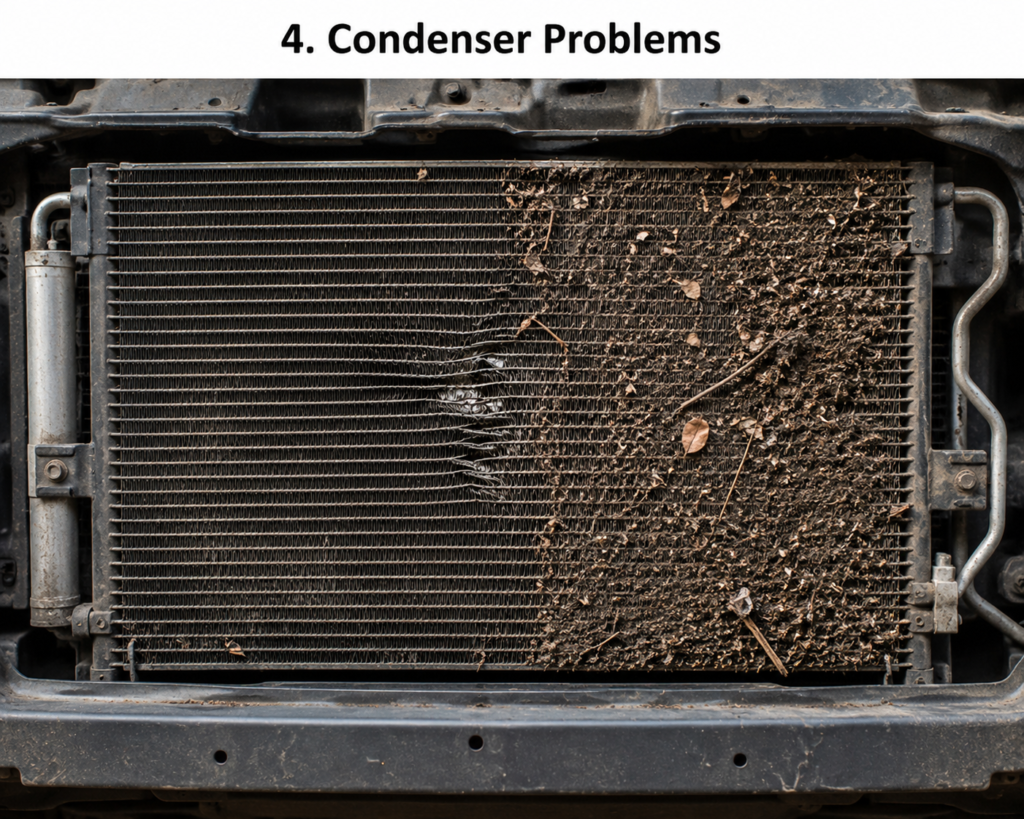
The condenser removes heat from the refrigerant.
A damaged or blocked condenser can prevent efficient heat transfer.
Symptoms
- Weak cooling at idle
- Better cooling while driving
- High system pressure
- Overheating refrigerant
Causes
- Bent fins
- Road debris
- Internal blockage
- Collision damage
Diagnosis
Visual inspection often reveals the problem.
Solution
- Clean condenser fins
- Remove debris
- Replace severely damaged condensers
5. Faulty Cooling Fans
Many modern vehicles use electric fans to cool the condenser.
If the fan fails, refrigerant temperature increases and cooling performance drops.
Symptoms
- AC cold while driving
- Warm air at traffic lights
- Engine temperature rises
- Fan does not operate
Diagnosis
Check:
- Fan motor
- Relays
- Fuses
- Wiring
- Fan control module
Solution
Repair or replace the defective component.
6. Clogged Cabin Air Filter
The cabin air filter prevents dust and contaminants from entering the vehicle.
A clogged filter can restrict airflow through the evaporator.
Symptoms
- Weak airflow from vents
- Reduced cooling
- Unpleasant odors
- Increased blower noise
Diagnosis
Inspect the cabin filter condition.
Solution
Replace the cabin air filter according to the manufacturer’s maintenance schedule.
7. Expansion Valve Failure
The expansion valve regulates refrigerant flow into the evaporator.
A malfunctioning valve can restrict or overfeed refrigerant.
Symptoms
- Inconsistent cooling
- Evaporator freezing
- High pressure fluctuations
- Reduced system efficiency
Diagnosis
Pressure readings help identify expansion valve issues.
Solution
Replace the faulty valve.
8. Evaporator Problems
The evaporator absorbs heat from the cabin air.
When clogged or leaking, cooling performance decreases significantly.
Symptoms
- Warm air from vents
- Musty smell
- Refrigerant leak inside cabin
- Water leakage
Diagnosis
Inspect evaporator condition and system pressures.
Solution
Replace damaged evaporators and recharge the AC system.
9. Electrical System Faults
Modern vehicles rely heavily on electronics to control the AC system.
Even a small electrical issue can stop cooling entirely.
Common Electrical Failures
- Blown fuses
- Faulty relays
- Broken wiring
- Damaged connectors
- Defective pressure sensors
Symptoms
- Compressor not engaging
- Intermittent cooling
- Warning lights
- AC controls not responding
Diagnosis
Use a diagnostic scan tool and multimeter.
Solution
Repair the faulty electrical component.
10. Pressure Sensor Failure
Pressure sensors protect the AC system from operating under unsafe conditions.
If the sensor sends incorrect information to the ECU, compressor operation may be disabled.
Symptoms
- Compressor remains off
- AC system appears fully charged
- Fault codes stored in ECU
Diagnosis
Scan for trouble codes and verify sensor readings.
Solution
Replace the faulty pressure sensor.
11. Blend Door Actuator Failure
Some AC problems are not related to refrigerant.
The blend door controls the mixing of hot and cold air inside the HVAC housing.
Symptoms
- AC system charged properly
- One side cold, one side warm
- Clicking noises behind dashboard
Diagnosis
Inspect HVAC actuator operation.
Solution
Replace the defective blend door actuator.
Quick Troubleshooting Table
The following table can help identify the most likely cause based on symptoms.
| Symptom | Possible Cause |
| Warm air only | Low refrigerant, compressor failure |
| Cold while driving, warm at idle | Cooling fan issue, condenser blockage |
| Weak airflow | Cabin air filter, blower motor |
| AC cycles frequently | Low refrigerant, pressure sensor |
| One side cold, one side warm | Blend door actuator |
| Strange noises | Compressor damage |
| Musty smell | Dirty evaporator or cabin filter |
Best Automotive AC Compressor Brands Comparison
When replacing a compressor, choosing a quality brand can improve reliability and cooling performance.
| Brand | Reputation | Durability | Price Range | Best For |
| Denso | Excellent | Very High | $$$ | OEM-quality replacements |
| Sanden | Excellent | Very High | $$$ | Japanese and European vehicles |
| Valeo | Very Good | High | $$ | European vehicles |
| Four Seasons | Good | Medium-High | $$ | Budget-friendly repairs |
| UAC | Good | Medium | $ | Affordable aftermarket replacement |
Brand Recommendation
- Best Overall: Denso
- Best OEM Quality: Sanden
- Best Value: Valeo
- Best Budget Option: UAC
Refrigerant Comparison: R134a vs R1234yf
Modern vehicles use different refrigerants depending on model year.
| Feature | R134a | R1234yf |
| Environmental Impact | Higher | Lower |
| Cost | Lower | Higher |
| Availability | Widely Available | Increasing Availability |
| Used In | Older Vehicles | Newer Vehicles |
| Efficiency | Good | Excellent |
Most vehicles manufactured after 2021 use R1234yf refrigerant due to environmental regulations.
Why Does My Car AC Blow Cold Then Warm?
This is a common complaint.
Possible causes include:
- Low refrigerant
- Compressor overheating
- Expansion valve malfunction
- Evaporator freezing
- Faulty pressure switch
Professional diagnosis is usually required to identify the exact cause.
How to Diagnose a Car AC Not Blowing Cold Air
Professional technicians follow a systematic process.
Step 1: Visual Inspection
Check for:
- Damaged hoses
- Oil stains
- Broken wiring
- Condenser blockage
Step 2: Verify Compressor Operation
Confirm that:
- Clutch engages
- Compressor rotates smoothly
Step 3: Measure Refrigerant Pressure
Use manifold gauges to compare readings against manufacturer specifications.
Step 4: Scan the Vehicle
Modern vehicles often store AC-related fault codes.
Step 5: Leak Testing
Use UV dye or electronic leak detection tools.
Step 6: Measure Vent Temperature
Compare vent temperature with ambient temperature.
A properly functioning system should produce significantly colder air than outside conditions.
Can You Drive With a Faulty Car AC?
Yes, in most cases you can still drive the vehicle.
However, ignoring AC issues may lead to:
- More expensive repairs
- Compressor failure
- Refrigerant contamination
- Increased fuel consumption
- Reduced driving comfort
Early diagnosis often saves money.
How Much Does It Cost to Fix a Car AC?
Repair costs vary depending on the failed component.
Average Repair Costs
| Repair | Estimated Cost |
| AC Recharge | $100 – $300 |
| Leak Repair | $150 – $1,000 |
| Compressor Replacement | $500 – $2,000 |
| Condenser Replacement | $300 – $1,200 |
| Evaporator Replacement | $600 – $2,500 |
| Cabin Filter Replacement | $20 – $100 |
| Cooling Fan Repair | $150 – $800 |
| Pressure Sensor Replacement | $100 – $400 |
| Blend Door Actuator Repair | $150 – $900 |
Prices vary by vehicle model, labor rates, and location.
Preventing Future AC Problems
Regular maintenance can significantly extend AC system life.
Recommended Maintenance
- Run the AC regularly throughout the year
- Replace cabin air filters on schedule
- Clean condenser fins
- Inspect belts and hoses
- Repair leaks immediately
- Perform periodic AC performance checks
Recommended Maintenance Schedule
| Maintenance Item | Interval |
| Cabin Air Filter | Every 12,000–15,000 miles |
| AC Performance Check | Once per year |
| Condenser Cleaning | Every 12 months |
| Refrigerant Inspection | Every 2 years |
| Leak Inspection | During annual service |
Preventive maintenance helps avoid expensive compressor failures.
Final Thoughts
When a car AC is not blowing cold air, the issue may range from a simple low refrigerant condition to major compressor failure. Common causes include refrigerant leaks, faulty compressors, condenser problems, electrical faults, clogged cabin filters, and defective sensors.
Because modern automotive air conditioning systems are highly sophisticated, accurate diagnosis is essential before replacing parts. A systematic inspection of refrigerant levels, pressure readings, electrical components, and airflow can quickly identify the root cause.
Whether you drive a Toyota, Honda, Ford, Chevrolet, BMW, Mercedes-Benz, Nissan, Hyundai, or another vehicle brand, understanding how your AC system works can help you identify problems early and avoid costly repairs.
By addressing AC issues promptly and following regular maintenance practices, drivers can enjoy reliable cooling performance, greater comfort, improved fuel efficiency, and lower repair costs throughout the life of their vehicle.