bg
By using this site, you agree to the Privacy Policy and Terms of Use.
Accept
OnlymechanicOnlymechanicOnlymechanic
Search
  • Contact
  • Contact
  • Contact
  • Contact
  • Blog
  • Blog
  • Complaint
  • Complaint
  • Complaint
  • Complaint
  • Advertise
  • Advertise
  • Advertise
© 2022 Foxiz News Network. Ruby Design Company. All Rights Reserved.
Reading: Exhaust Manifold vs. Headers: Which One Boosts Performance Better ?
Share
Sign In
Notification Show More
Font ResizerAa
OnlymechanicOnlymechanic
Font ResizerAa
Search
Have an existing account? Sign In
Follow US
  • Contact
  • Contact
  • Contact
  • Contact
  • Blog
  • Blog
  • Complaint
  • Complaint
  • Complaint
  • Complaint
  • Advertise
  • Advertise
  • Advertise
© 2022 Foxiz News Network. Ruby Design Company. All Rights Reserved.
Uncategorized

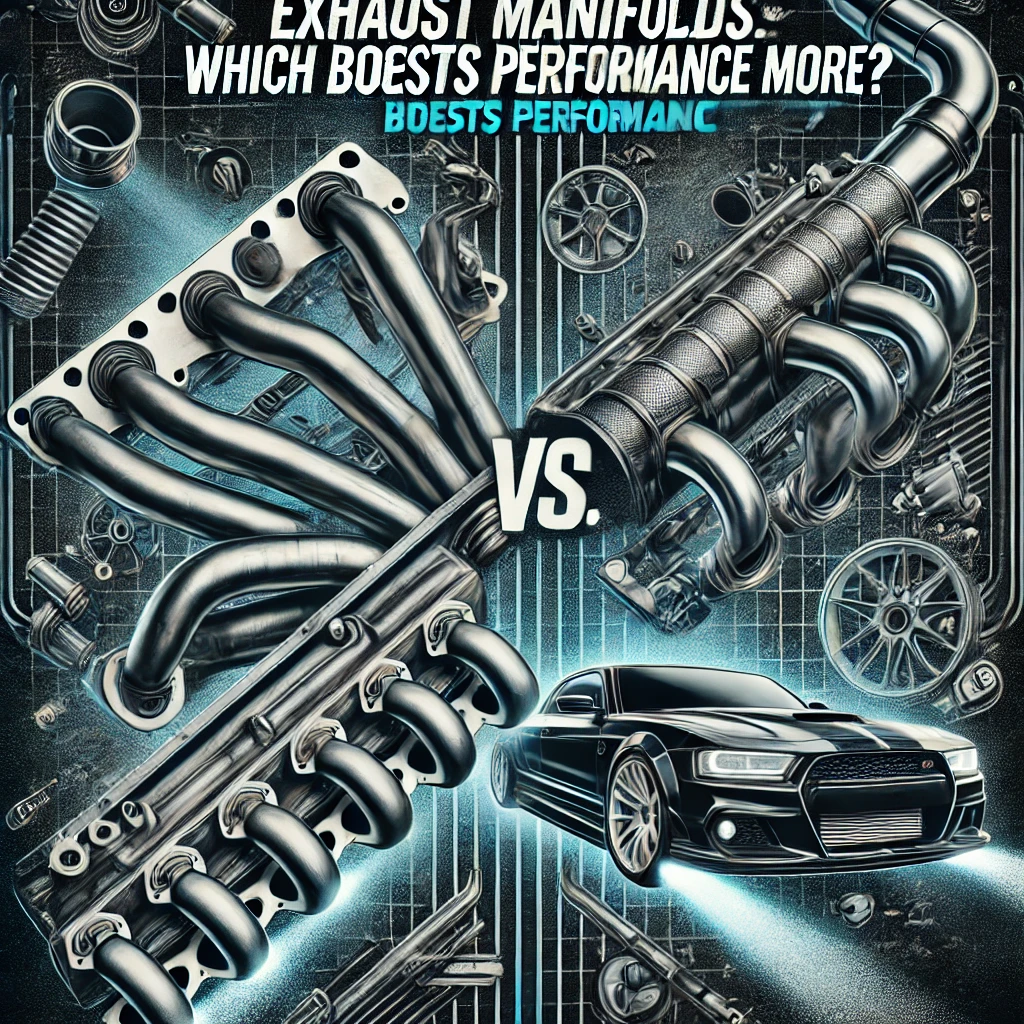
Exhaust Manifold vs. Headers: Which One Boosts Performance Better ?

Mark Reynolds
Last updated: mars 11, 2025 10:41 pm
Mark Reynolds
Share
Wondering which boosts performance more: exhaust manifold vs headers? Discover the key differences, pros, cons, and how each affects horsepower, torque, and efficiency. Find out which upgrade is best for your car! 🚗🔥 #CarPerformance #ExhaustSystem
SHARE

Table of Contents

  • Introduction
  • What Is an Exhaust Manifold?
    • Pros of an Exhaust Manifold
    • Cons of an Exhaust Manifold
  • What Are Headers?
    • Pros of Headers
    • Cons of Headers
  • Exhaust Manifold vs. Headers: Key Differences
  • How Headers Boost Performance
    • 1. Shorty Headers
    • 2. Long-Tube Headers
  • Which One Should You Choose?
    • Choose an Exhaust Manifold If:
    • Choose Headers If:
  • Final Verdict: Headers for Performance Wins

Introduction

When it comes to improving engine performance, one of the most debated topics among car enthusiasts is exhaust manifold vs headers. Both components play a crucial role in the exhaust system by directing gases away from the engine, but they do so in different ways. So, which one boosts performance more? In this article, we’ll break down the differences, advantages, and impact of each, helping you decide the best option for your vehicle.
Contents
  • Table of Contents
  • Introduction
  • What Is an Exhaust Manifold?
    • Pros of an Exhaust Manifold
    • Cons of an Exhaust Manifold
  • What Are Headers?
    • Pros of Headers
    • Cons of Headers
  • Exhaust Manifold vs. Headers: Key Differences
  • How Headers Boost Performance
    • 1. Shorty Headers
    • 2. Long-Tube Headers
  • Which One Should You Choose?
    • Choose an Exhaust Manifold If:
    • Choose Headers If:
  • Final Verdict: Headers for Performance Wins
exhaust manifold vs headers

What Is an Exhaust Manifold?

An exhaust manifold is a stock component found in most vehicles. It is typically made from cast iron or stainless steel and is designed to collect exhaust gases from multiple cylinders into one outlet before directing them into the rest of the exhaust system. Since they are designed for cost efficiency and durability rather than performance, they are often restrictive when it comes to optimizing airflow.

Pros of an Exhaust Manifold

✔ Durable and long-lasting (cast iron construction)
✔ Provides adequate exhaust flow for daily driving
✔ More affordable and comes stock on most vehicles
✔ Helps maintain proper engine temperature

Cons of an Exhaust Manifold

❌ Restricts airflow, reducing performance
❌ Can cause excessive heat buildup
❌ Less efficient at expelling exhaust gases, leading to power loss

What Are Headers?

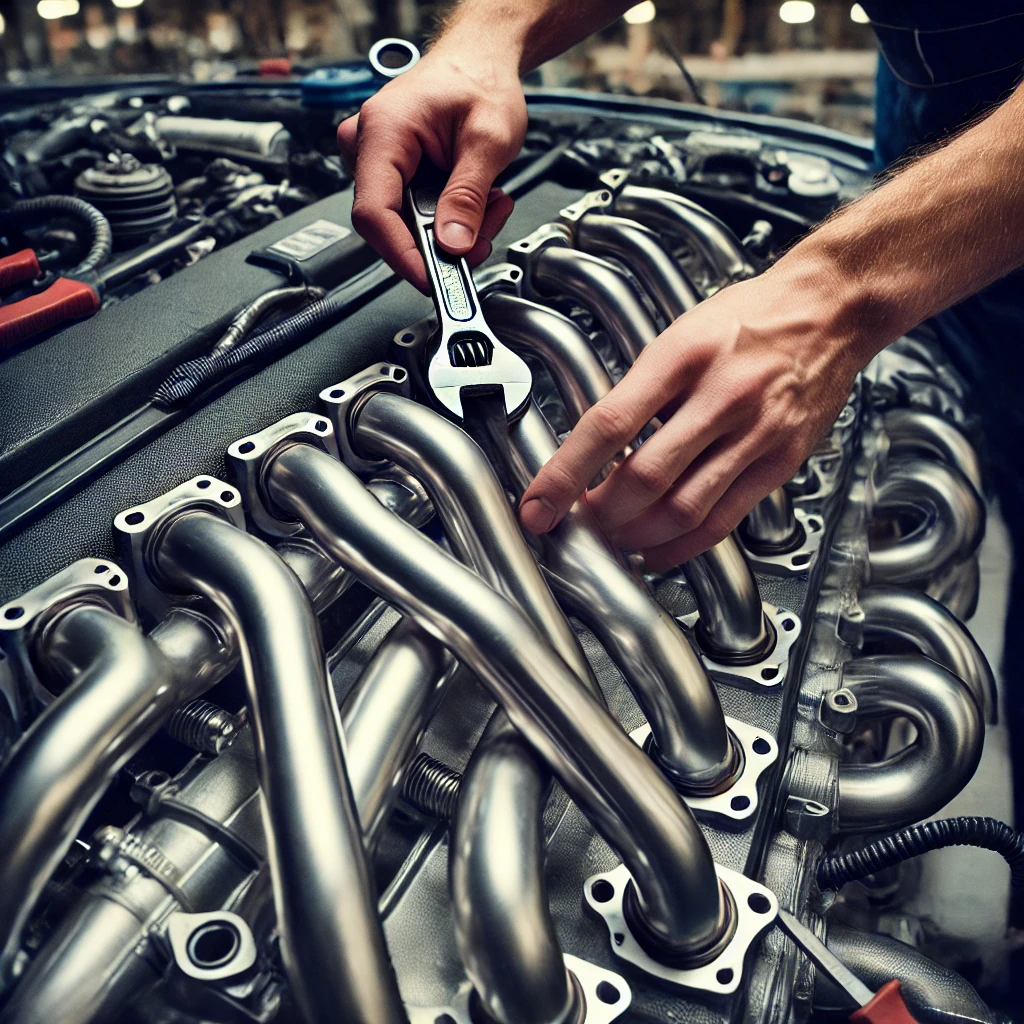
Headers are aftermarket components designed to replace the stock exhaust manifold and improve engine efficiency. They are typically made from lightweight stainless steel or ceramic-coated tubing, and they optimize exhaust flow by ensuring gases exit the engine smoothly without backpressure buildup.

Unlike a manifold, which collects all exhaust gases into a single chamber, headers feature individual pipes for each cylinder. These pipes are precisely tuned to maximize exhaust scavenging, leading to better performance and fuel efficiency.

Pros of Headers

✔ Improves horsepower and torque by reducing backpressure
✔ Optimized exhaust scavenging for better airflow
✔ Available in different styles (shorty, mid-length, and long-tube)
✔ Made from lightweight materials like stainless steel
✔ Reduces engine heat buildup and enhances efficiency

Cons of Headers

❌ More expensive than stock exhaust manifolds
❌ Requires professional installation in some cases
❌ Some designs may not be street-legal due to emissions regulations

Exhaust Manifold vs. Headers: Key Differences

FeatureExhaust ManifoldHeaders
MaterialCast ironStainless steel or ceramic-coated
PerformanceRestrictive airflow, limits powerImproves airflow, increases horsepower
InstallationComes stock, easy to replaceRequires modification in some cases
Heat ManagementRetains heat, causing higher tempsBetter heat dissipation
Best ForDaily drivers, stock vehiclesPerformance cars, racing, high-output engines

How Headers Boost Performance

The biggest advantage of headers is their ability to improve exhaust scavenging, which helps clear exhaust gases from the cylinders more efficiently. This process allows more fresh air and fuel into the combustion chamber, leading to increased power output. The type of header you choose will also affect performance:

1. Shorty Headers

  • Best for street cars and vehicles with limited space.
  • Improves exhaust flow over stock manifolds but not as much as long-tube headers.
  • Works well with factory catalytic converters.

2. Long-Tube Headers

  • Best for racing and high-performance builds.
  • Provides maximum exhaust flow and scavenging effects.
  • Requires custom exhaust routing and may not be legal in some areas.

Which One Should You Choose?

Choose an Exhaust Manifold If:

✅ You need a reliable, cost-effective solution for a daily driver.
✅ You don’t want to modify your vehicle for performance.
✅ You want a component that retains engine heat for emissions control.

Choose Headers If:

✅ You want to increase horsepower and torque.
✅ You’re upgrading other performance components (intake, tune, etc.).
✅ You want improved exhaust sound and efficiency.
✅ You’re using your vehicle for racing or performance driving.

Final Verdict: Headers for Performance Wins

When comparing exhaust manifold vs. headers, the clear winner for performance is headers. They allow for better exhaust flow, increased horsepower, and improved efficiency. However, if you’re simply looking for a reliable, budget-friendly solution for everyday driving, a stock exhaust manifold will do the job just fine.

If you’re serious about unlocking your engine’s potential, investing in a set of high-quality headers is a great way to boost power and make your car sound more aggressive.

🚗 Ready to upgrade? Consider your vehicle’s needs and performance goals before making the switch!

Samsung Galaxy S21 Colors: Every Shade Available
Adaptive Cruise Control Explained: How It Works & Benefits
Head-Up Display (HUD): Benefits & Technology Explained
EPA Diesel Exhaust Fluid Systems Fix: Common Problems and How to Solve Them
Traction Control System Explained: How It Prevents Skidding
TAGGED:exhaust manifold

Sign Up For Daily Newsletter

Be keep up! Get the latest breaking news delivered straight to your inbox.
By signing up, you agree to our Terms of Use and acknowledge the data practices in our Privacy Policy. You may unsubscribe at any time.
Share This Article
Facebook Copy Link Print
Share
Previous Article do exhaust tips change sound Do Exhaust Tips Change Sound? The Truth Behind the Hype
Next Article Straight Pipe vs. Muffler Delete Straight Pipe vs. Muffler Delete: Which One Is Right for You?
4 commentaires
  • Ping : Bugatti Bolide Review 2025
  • 토토문구점 dit :
    août 20, 2025 à 5:48 pm

    Real good visual appeal on this site, I’d value it 10.

    Here is my webpage https://www.papeleriaalba.com/

    Répondre
  • 먹튀스파이 토토사이트 dit :
    septembre 5, 2025 à 4:58 am

    You said that perfectly.

    Feel free to visit my homepage :: https://www.mtspy.com

    Répondre
  • 먹튀스파이 dit :
    septembre 15, 2025 à 11:35 pm

    You actually explained this fantastically!

    Also visit my homepage … https://www.mtspy.com

    Répondre

Laisser un commentaire Annuler la réponse

Votre adresse e-mail ne sera pas publiée. Les champs obligatoires sont indiqués avec *

Stay Connected

248.1KLike
69.1KFollow
134KPin
54.3KFollow

							banner							
							banner
Create an Amazing Newspaper
Discover thousands of options, easy to customize layouts, one-click to import demo and much more.
Learn More

Latest News

DPF Cleaner: Benefits, Uses, Symptoms of a Blocked DPF, and Complete Cleaning Guide
Exhaust and intake system upgrades Car Performance
Power Steering Pump Problems: Symptoms, Causes, Diagnosis, and Repair Guide
Uncategorized
Car AC
Car AC Not Blowing Cold Air: Causes, Diagnosis, and Repair Guide
Care & Accessories Car audio and tech installations
Types of Automotive Clutches: A Complete Guide for Beginners and Experts
Uncategorized

You Might also Like

How Often to Change a Fuel Filter
Routine servicingUncategorized

How Often to Change a Fuel Filter: A Complete Guide

Mark Reynolds
Mark Reynolds
6 Min Read
Car audio and tech installations

How Much to Repair Air Conditioner in Car : Complete Cost Guide for 2026

Mark Reynolds
Mark Reynolds
7 Min Read
White Smoke From Exhaust: Causes, Meaning, and How to Fix It White smoke coming from your car’s exhaust can be alarming, especially if you’re not sure what it means. While some exhaust smoke is normal under certain conditions, persistent white smoke from exhaust is often a warning sign of an underlying mechanical issue that should not be ignored. In this in-depth guide, we’ll explain what white smoke from exhaust means, the most common causes, how to diagnose the problem, and practical solutions to fix it. Whether you’re a car owner, mechanic, or auto enthusiast, this article will help you understand the issue clearly and take the right action. What Is White Smoke From Exhaust? White smoke from exhaust refers to visible white or milky-colored vapor emitted from a vehicle’s tailpipe. Unlike light condensation vapor that disappears quickly, problematic white smoke is thick, continuous, and often accompanied by a sweet smell. Understanding the difference between normal exhaust vapor and abnormal white smoke is the first step in diagnosing the issue. Is White Smoke From Exhaust Always a Problem? Not always. In some cases, white smoke from exhaust is completely normal. Normal White Smoke (Condensation) Appears during cold starts Disappears after the engine warms up Caused by moisture in the exhaust system No coolant loss or engine performance issues Abnormal White Smoke Thick and persistent Continues even after warm-up Often smells sweet May indicate coolant or water entering the combustion chamber If white smoke from exhaust does not go away, it usually means something is wrong. Common Causes of White Smoke From Exhaust 1. Condensation in Cold Weather (Harmless) In cold or humid climates, water vapor naturally forms inside the exhaust system. When the engine starts, this moisture evaporates, producing white smoke. Key signs: Only appears during startup Disappears within minutes No engine warning lights ✅ No repair needed 2. Coolant Leak Into the Combustion Chamber One of the most serious causes of white smoke from exhaust is coolant leaking into the engine cylinders. This happens when: A head gasket fails The cylinder head cracks The engine block is damaged Coolant burns along with fuel, producing thick white smoke. Symptoms include: Sweet-smelling exhaust Overheating engine Low coolant levels Milky oil on dipstick ⚠️ This issue requires immediate attention 3. Blown Head Gasket A blown head gasket is the most common reason for persistent white smoke from exhaust. The head gasket seals: The engine block Cylinder head Coolant and oil passages When it fails, coolant enters the combustion chamber and burns. Warning signs: Continuous white smoke Engine overheating Poor performance Coolant loss with no visible leaks 💰 Repair cost: High, but delaying repairs can destroy the engine. 4. Cracked Cylinder Head or Engine Block Extreme overheating or manufacturing defects can cause cracks in the cylinder head or block. This allows coolant to seep into cylinders, resulting in white smoke from exhaust. Symptoms: Heavy white smoke Misfiring engine Rapid coolant loss Engine knocking 🔧 Often requires engine rebuild or replacement 5. Faulty Fuel Injector (Diesel Engines) In diesel engines, white smoke from exhaust may be caused by: Unburned fuel Faulty injectors Incorrect injection timing This type of smoke may appear white or gray and smell strongly of diesel. Common in: Cold diesel starts Engines with injector problems 6. Water in Fuel System Water contamination in fuel can also produce white smoke from exhaust. Causes include: Bad fuel quality Condensation in fuel tank Poor storage conditions Fix: Drain contaminated fuel and replace fuel filter. White Smoke From Exhaust at Startup vs While Driving White Smoke at Startup Only Usually condensation Normal in cold weather Disappears quickly White Smoke While Driving Indicates coolant or fuel issue Not normal Needs inspection What Does White Smoke From Exhaust Smell Like? Smell can help diagnose the issue: Smell Likely Cause Sweet Burning coolant Fuel odor Unburned fuel No smell Condensation A sweet smell combined with white smoke is a strong sign of coolant burning. How to Diagnose White Smoke From Exhaust Step 1: Check Coolant Level Look for unexplained coolant loss Inspect reservoir and radiator Step 2: Inspect Engine Oil Milky or frothy oil indicates coolant contamination Step 3: Observe Smoke Behavior When does it appear? Does it disappear after warm-up? Step 4: Check for Overheating Monitor temperature gauge Overheating often accompanies head gasket failure Step 5: Use Diagnostic Tools Compression test Leak-down test Cooling system pressure test 🔍 Professional diagnosis is highly recommended. How to Fix White Smoke From Exhaust Fix 1: Let Engine Warm Up (If Condensation) If the white smoke disappears after a few minutes, no repair is needed. Fix 2: Replace Head Gasket If a blown head gasket is confirmed: Engine disassembly required Gasket replacement Cylinder head inspection ⏱️ Time: 1–3 days 💰 Cost: Moderate to high Fix 3: Repair or Replace Cylinder Head Cracks or warping may require: Machining Welding Replacement Fix 4: Replace Faulty Injectors (Diesel) Clean or replace injectors Adjust timing Fix 5: Flush Fuel System Drain contaminated fuel Replace fuel filter Can You Drive With White Smoke From Exhaust? 🚫 Driving is NOT recommended if: Smoke is thick and persistent Engine overheats Coolant level drops rapidly Driving under these conditions can cause catastrophic engine failure. Preventing White Smoke From Exhaust Maintenance Tips: Regular coolant checks Avoid engine overheating Change oil on time Use high-quality fuel Service injectors regularly Preventive maintenance is far cheaper than engine repairs. White Smoke vs Blue Smoke vs Black Smoke Smoke Color Meaning White Coolant or condensation Blue Burning oil Black Excess fuel Understanding smoke color helps identify engine problems quickly. Frequently Asked Questions (FAQ) Is white smoke from exhaust dangerous? Yes, if it’s continuous. It may indicate serious engine damage. Can white smoke go away on its own? Only if it’s caused by condensation. Mechanical issues will worsen over time. How much does it cost to fix white smoke from exhaust? Costs range from free (condensation) to thousands of dollars for engine repairs. Does white smoke always mean a blown head gasket? No, but it’s one of the most common causes.
Exhaust and intake system upgrades

White Smoke From Exhaust: Causes, Meaning, and How to Fix It

Mark Reynolds
Mark Reynolds
19 Min Read
//

We influence 20 million users and is the number one business and technology news network on the planet

Sign Up for Our Newsletter

Subscribe to our newsletter to get our newest articles instantly!

OnlymechanicOnlymechanic
Follow US
© 2022 Foxiz News Network. Ruby Design Company. All Rights Reserved.
Join Us!
Subscribe to our newsletter and never miss our latest news, podcasts etc..
Zero spam, Unsubscribe at any time.
Welcome Back!

Sign in to your account

Username or Email Address
Password

Lost your password?