

# Catalytic Exhaust Cleaner – Complete Guide, Causes & Fixes
A catalytic exhaust cleaner is a popular DIY topic for car owners who want to improve performance and reduce emissions. In this complete guide, we’ll explain what a catalytic exhaust cleaner is, explore common causes of catalyst problems, identify symptoms, outline a step-by-step troubleshooting plan, and share practical repair and replacement cost estimates in USD. Whether you’re in the United States, Canada, or Europe, this guide uses region-aware terminology and tips to help you diagnose and fix issues with confidence.
Introduction
If your Check Engine light is on or you notice a drop in power and fuel economy, a catalytic exhaust cleaner might be one piece of the puzzle. The main keyword here is catalytic exhaust cleaner, but you’ll also hear phrases like catalytic converter cleaner, exhaust cleaner additives, and catalytic cleaner treatment. These products are marketed to help reduce carbon buildup, restore efficiency, and keep emissions in check. The reality is a bit more nuanced: cleaners can offer benefits in some situations, but severe catalyst damage or a blocked converter usually requires targeted repairs or replacement. This guide covers both the DIY angles and when to call a professional.
What it is / Explanation
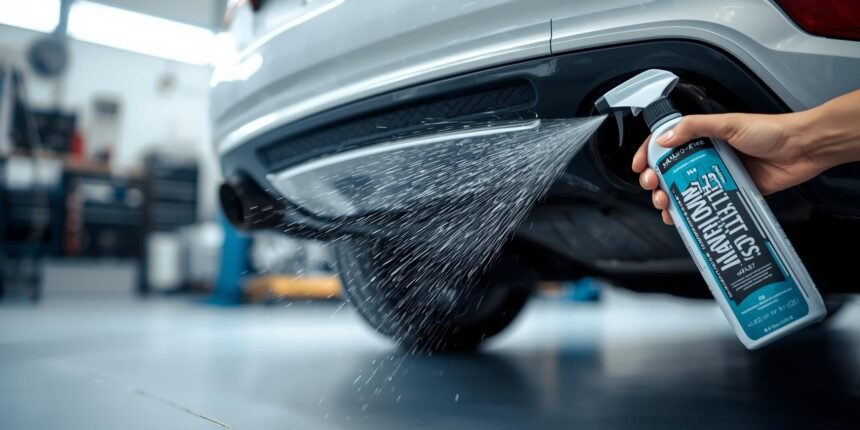
– What is a catalytic exhaust cleaner? It’s typically a fuel additive or cleaning treatment designed to help remove carbon deposits, ash, and unburned fuel from the exhaust path and, in some cases, to reduce catalyst poisoning. The goal is to restore flow, improve oxygen sensor readings, and maintain or recover some efficiency.
– How it works: Most products inject a cleaner into the intake or fuel system and rely on high exhaust temperatures and catalytic chemistry to oxidize deposits. Some cleaners advertise cleaning action on the catalytic converter itself, but the catalyst is a sealed ceramic honeycomb or metallic substrate that isn’t “rejuvenated” in the same way as a filter. In practice, cleaners can:
– Help burn off light-to-moderate carbon buildup during a long, highway-style drive.
– Make fuel injectors and intake valves cleaner when used as part of regular maintenance.
– Potentially improve O2 sensor readings by stabilizing the air-fuel ratio.
– Important caveats:
– Cleaners are not a substitute for addressing root causes like misfires, oil leaks, or a damaged catalytic converter.
– A severely clogged or physically damaged catalyst typically needs repair or replacement.
– Use products that are appropriate for your vehicle’s engine type (gasoline vs diesel) and follow the manufacturer’s instructions.
Common Causes
Understanding causes helps you decide if a catalytic cleaner is a temporary aid or a red flag requiring service.
– Carbon buildup on the catalytic converter or exhaust path
– Misfires leading to unburned fuel washing into the catalyst
– Oil or coolant leaks contaminating the combustion chamber
– Rich fuel mixture (too much fuel, not enough air) due to faulty sensors, injectors, or wiring
– Faulty oxygen sensors (pre- or post-cat) delivering incorrect feedback to the engine control unit (ECU)
– Leaks in the exhaust system before the catalytic converter (causing unmetered air or backpressure issues)
– Leaded fuel or fuel additives that poison the catalyst (more common with older engines or certain regions)
– Diesels with oxidation catalysts or diesel particulate filters (DPF) in some markets; different cleaning considerations apply
– Physical damage or overheating of the catalytic converter (thermal breakdown, melting, or breakage)
– Short trips and cold starts that don’t heat the catalyst to operating temperature
Symptoms / How to Identify the Problem
Look for a mix of warning lights, performance changes, and exhaust behavior.
– Check Engine light or service light illuminated
– Reduced power or sluggish acceleration
– Poor idle, engine misfires, or rough running
– Noticeable drop in fuel economy
– Higher exhaust emissions, including a strong sulfur or rotten-egg smell
– Rotten-egg smell or unusually dark exhaust
– Post-cat heat: the catalytic converter becomes unusually hot or, conversely, not heating up as expected
– Diagnostic trouble codes (DTCs) such as P0420 or P0430 (catalytic converter efficiency), P0300 (random/multiple misfire), P013x/P014x (O2 sensor issues)
– Physical signs: cracked heat shield, rattling from the undercarriage, or a clogged exhaust pipe
Step-by-Step Troubleshooting Guide
Follow these steps to identify whether a catalytic cleaner is a reasonable fix and to address underlying causes. Use a shop manual for your exact model and, if in doubt, consult a professional.
– Step 1: Read the codes and check data
– Use an OBD-II scanner to pull DTCs and live data. Note codes related to catalyst efficiency (P0420, P0430) and oxygen sensors (P013x, P014x).
– Record sensor readings (pre-cat and post-cat O2 sensors). A large pre/post difference that doesn’t change with load can indicate a bad catalyst.
– Step 2: Inspect basics
– Check for vacuum leaks, cracked hoses, or intake leaks that skew air-fuel mixture.
– Inspect ignition components (spark plugs, coils) and fuel injectors for proper operation.
– Look for oil or coolant leaks that could contaminate the combustion process.
– Step 3: Evaluate the exhaust path
– Listen for rattling or a metallic sound that suggests a loose heat shield or a damaged converter.
– Check for excessive backpressure and blockages using a diagnostic approach or professional tools.
– Step 4: Assess the catalytic converter
– If possible, carefully touch the cat after a test drive (with engine off and cool). A hotter post-cat side suggests normal operation; a cold post-cat may indicate a blockage or insufficient heating.
– If the converter is physically damaged, melted, or shows signs of long-term overheating, replacement is likely.
– Step 5: Consider a cleaning approach (when appropriate)
– Choose a reputable catalytic exhaust cleaner designed for your engine type. Do not mix cleaners with incompatible fuels.
– Follow the product’s instructions precisely (dosage, drive cycle, and safety precautions).
– Plan a highway-style drive after adding cleaner to maximize exhaust heating (often 15–30 minutes at sustained higher RPMs as directed).
– Step 6: Recheck after cleaning
– Re-scan for DTCs and confirm whether the catalytic efficiency codes clear or improve.
– Monitor fuel trims, sensor readings, and performance over the next few drive cycles.
– Step 7: Decide on next steps
– If codes persist (especially P0420/P0430) or if performance does not improve, move beyond cleaners to targeted repairs or replacement.
– If the cat seems blocked, or if you notice physical damage, a professional inspection is advised.
When Repair is Possible vs When to Visit a Mechanic
– DIY-friendly cases:
– Mild carbon buildup suspected in the exhaust system without engine misfires
– DTCs pointing to oxygen sensors or minor fuel trim issues that can be corrected by cleaning or basic maintenance
– Use of a catalytic cleaner as a supplementary measure in a well-tuned engine
– When to visit a mechanic:
– Persistent catalytic converter efficiency codes (P0420/P0430) after cleaning attempts
– Physical damage to the catalytic converter or suspected clogging with limited improvement from cleaning
– Recurrent misfires, contaminated oil, coolant leaks, or exhaust leaks that require component replacement
– Unclear diagnostic results, complex wiring or sensor issues, or vehicles under warranty
Repair / Replacement Cost Estimates (USD)
– Catalytic exhaust cleaner products (per bottle): $6–$40. These are optional and intended for maintenance and mild buildup. Several bottles may be needed for a thorough treatment.
– DIY cleaning supplies (specialty cleaners): $15–$60 for a bottle plus tax; some products target gasoline engines, others are for diesel or specific emissions systems.
– Diagnostic scan and basic inspection: $60–$100 for a simple shop visit; more if a professional diagnostic includes data logging and multiple tests.
– Oxygen sensors (per sensor): $60–$250 for parts; $100–$300 installed, depending on vehicle and labor.
– Catalytic converter replacement (parts only varies by vehicle): $200–$1,200 (older or common models) to $1,000–$2,500+ for many modern cars. Labor often adds $200–$600.
– Professional catalytic converter cleaning (rare): $100–$300 in some markets; more common via a dealership or specialized exhaust tech with access to cleaning equipment.
– Diesel oxidation catalysts or DPF-related fixes: Costs can be higher, especially for DPF replacement or cleaning service, often ranging from $1,000 to several thousand dollars depending on coverage and local labor rates.
Notes on regional differences:
– In the US, California CARB regulations may require specific parts or tests for emissions-related repairs.
– In Europe, Euro 6 standards and regional service networks shape pricing and recommended procedures.
– In smaller markets or rural areas, labor rates and availability of compatible parts can affect total costs.
Preventive Tips
– Maintain regular tune-ups and replace worn spark plugs, ignition coils, and fuel injectors as needed.
– Use high-quality fuel and appropriate octane for your engine; avoid leaded fuels that can poison catalysts.
– Address misfires promptly; unresolved misfires can cause catalyst overheating and damage.
– Fix oil leaks promptly to prevent contaminating the exhaust path or catalyst.
– Keep the exhaust system intact: repair leaks, replace corroded heat shields, and ensure the exhaust manifold is sealing correctly.
– Drive programs: when possible, take longer highway trips to heat the catalytic converter and maintain efficiency; avoid frequent short trips that keep the cat cold and prone to buildup.
– Regular emissions testing and periodic checks of O2 sensors and the ECU’s readiness monitors help catch issues early.
– Use cleaners only as a maintenance aid, not as a replacement for repair when the system is damaged or blocked.
FAQs (5 Useful Questions + Answers)
– Q: Is a catalytic exhaust cleaner safe for my car?
– A: Yes, when used as directed and in moderation for vehicles showing mild buildup. Avoid overuse or using products not designed for your engine type. Cleaners are not a substitute for mechanical repairs when the catalytic converter is damaged or blocked.
– Q: Will a cleaner fix a clogged catalytic converter?
– A: In most cases, severe clogs require replacement or professional cleaning. A cleaner may help with light deposits and improve heat-up times, but it won’t restore a physically blocked catalyst.
– Q: How often should I use catalytic exhaust cleaner?
– A: Follow product guidelines and don’t depend on cleaners to fix chronic issues. Regular maintenance, timely repairs, and preventive driving are more important for long-term performance.
– Q: Can using a cleaner harm oxygen sensors or the ECU?
– A: If you choose reputable products and follow instructions, risk is low. Misuse or incompatible products can create sensor contamination or ECU confusion, so choose products designed for your vehicle and avoid running multiple cleaners together.
– Q: How do I know if my catalytic converter needs replacement?
– A: Persistent P0420/P0430 codes after proper inspection and cleaning, noticeable power loss, heavy emissions, or a strong sulfur smell, along with a hot post-cat but cooler pre-cat, suggests replacement or professional evaluation.
Conclusion + CTA
A catalytic exhaust cleaner can be a helpful part of a broader strategy to maintain exhaust efficiency and reduce emissions, especially for cars that see a lot of highway driving or have mild carbon buildup. However, cleaners have limits, and serious catalyst damage or blockage requires more than a spray-in solution. Start with a solid diagnosis using OBD-II data, address root causes like misfires or sensor faults, and consider a cleaner as a supplementary step when appropriate. If the issue persists or you’re unsure about the next move, a professional inspection will save time, money, and headaches in the long run.
Have car problems? Ask in the comments and I’ll help!