

What Does DEF Fluid Do? The Complete Guide to Causes, Symptoms, and Fixes
Introduction
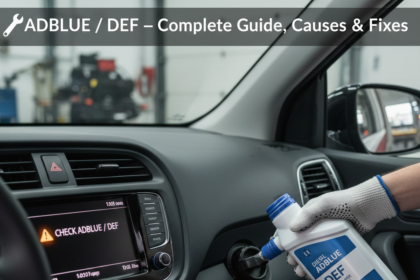
What does DEF fluid do? In short, it helps modern diesel engines meet clean-air standards by reducing nitrogen oxide (NOx) emissions. If you own a diesel-powered car, truck, or SUV in North America or Europe, you’ve probably seen the DEF (diesel exhaust fluid) fill often labeled on a blue-cap bottle in the showroom or in your owner’s manual. DEF is a simple-but-critical part of the exhaust aftertreatment system, and when it’s not working correctly, you’ll know soon enough with warning lights, reduced performance, and sometimes a forced limp mode. This complete guide explains what DEF does, the common causes of problems, how to identify symptoms, a practical troubleshooting workflow, repair cost estimates, and smart preventive tips for DIY enthusiasts and car owners alike.
What DEF Fluid Is and How It Works
DEF fluid is a non-hazardous solution of urea and demineralized water, typically about 32.5% urea. It’s used in diesel engines equipped with a selective catalytic reduction (SCR) system. The SCR system injects DEF into the exhaust stream, where the high-temperature environment converts urea into ammonia. The ammonia then reacts with nitrogen oxides (NOx) over a catalyst, turning NOx into harmless nitrogen and water vapor. The result is cleaner exhaust without sacrificing engine performance.
Key terms to know
– SCR (Selective Catalytic Reduction): The aftertreatment system that uses DEF to reduce NOx.
– NOx: A group of pollutants formed when nitrogen and oxygen react at high temperatures; regulated due to health and environmental concerns.
– ISO 22241: The international standard for DEF quality and performance.
– DEF heater, DEF pump, DEF filter: Components involved in delivering and treating DEF in the system.
– SCR catalyst: The core element where NOx reduction occurs.
Common Causes of DEF Problems (Region Focus: NA/EU)
Diesel owners in North America and Europe report a few common DEF issues more than others. Understanding the root causes helps you decide between a simple DIY fix and professional service.
– Low DEF level: The most obvious cause. If the tank runs dry, manufacturers place the vehicle into a protected mode to prevent NOx emission spikes.
– Poor DEF quality or contamination: Water, sediments, or impurities in the DEF can clog filters and injectors or foul the SCR catalyst.
– Expired or aged DEF: DEF has a shelf life; older bottles stored improperly can degrade or crystallize.
– DEF contamination from bad storage or mixing with incompatible liquids.
– Faulty DEF system components: DEF pump, DEF heater, or DEF filter failures can prevent proper dosing.
– Leaks in DEF lines or fittings: Cracks, loose connections, or corroded seals cause fluid loss and air ingress.
– Faulty sensors or control software: Temperature sensors, NOx sensors, or aftertreatment control modules can misread conditions, triggering warnings and limp mode.
– Cold weather effects: DEF can freeze around -11°C (12°F). Vehicles have DEF heaters to thaw and resume flow; persistent freezing or heater failure can disrupt dosing.
– SCR catalyst degradation or blockage: Over time, a degraded catalyst reduces NOx reduction efficiency, which can trigger fault codes.
– Improper maintenance or aftermarket modifications: Non-OEM DEF components or tampering with the aftertreatment system can cause performance issues and code warnings.
Symptoms and How to Identify the Problem
Spotting issues early helps you avoid roadside breakdowns or expensive repairs. Here are the common signs and how to interpret them.
Warning lights and messages
– DEF Level Low or DEF System Fault messages on the dash.
– Check Engine Light (MIL) with service codes related to aftertreatment (codes may reference NOx reduction or SCR).
– Engine management or limp mode: The vehicle restricts power for emissions protection, limiting performance.
Performance and efficiency changes
– Reduced power or torque when the vehicle detects DEF problems.
– Decreased fuel economy due to aftertreatment inefficiency or forced engine cooling/regulation strategies.
– Rough idle or inconsistent running if the aftertreatment system cannot compensate.
Physical symptoms
– White or blue exhaust plume under certain conditions (defects are less common but can occur with severe aftertreatment issues).
– Visible DEF leaks or crystallized deposits around the DEF tank, lines, or injector fittings.
– DEF smell or mist near the DEF fill port or under the hood due to leaks.
Step-by-Step Troubleshooting Guide (DIY-Friendly)
Caution: If you’re not comfortable with automotive systems, don’t dive into disassembly. Some aftertreatment components are sensitive, and improper handling can cause damage. Follow the steps below for straightforward checks you can perform safely.
1) Quick checks you can perform safely
– Check DEF level: Ensure it’s between the recommended minimum and max lines. If low, fill with fresh, high-quality DEF (ISO 22241 compliant).
– Inspect for obvious leaks: Look around the DEF fill cap, lines, and tank neck for white crust, dampness, or wet spots. Tighten fittings if you find minor leaks (but only if you’re sure you can do it safely).
– Check the expiry date: If the DEF is past its shelf life or stored incorrectly, replace it with fresh DEF.
– Scan for codes: If you have an OBD-II scanner or a reputable scan tool, pull trouble codes related to the aftertreatment system (often P2 or P0 codes for NOx and SCR issues). Note and record codes for reference.
– Inspect DEF filter and visible lines: A clogged DEF filter or damaged lines can restrict flow. Look for signs of wear or discoloration.
– Cold weather check: If temperatures have been near freezing and you’ve seen a DEF-related fault, the system may be trying to thaw; confirm the heater is functioning.
2) If a fault code points to a component, approach in this order
– DEF level or quality: Refill with clean, fresh DEF; ensure the filler process avoids contamination.
– DEF filter or pump: If the filter is clogged or the pump is suspected, consider replacement. Some DIY-ers can access and replace a basic DEF filter; others may require a service visit.
– DEF heater: If the heater is not heating DEF properly, the system can fail to inject DEF into the exhaust. A faulty heater often needs professional repair.
– SCR catalyst or dosing system: If the catalyst or injector is degraded or clogged, a professional diagnosis is recommended to avoid further damage.
3) Contaminated or old DEF remedy
– Drain and flush: In some vehicles, you can drain contaminated DEF from the tank and replace with fresh DEF. This procedure can require special tools and should follow the manufacturer’s service guide.
– System flush and re-trace leaks: If contamination is suspected, a service procedure may be needed to clean the dosing lines and scrub the catalyst surfaces.
4) When to DIY vs when to visit a mechanic
– DIY-friendly tasks: Checking DEF level, ensuring cap is tight, replacing expired DEF, inspecting obvious leaks, clearing minor external lines, replacing a simple DEF filter on some models.
– Professional service: Water contamination in DEF, intermittent aftertreatment failures, suspected SCR catalyst damage, persistent heater or pump failures, or if the check engine light stays on after basic checks.
When Repair Is Possible vs When to Visit a Mechanic
– Do-it-yourself fixes: Low DEF level, obvious external leaks (tighten connections, replace a faulty cap or worn seals), DEF quality issues (replace DEF with fresh ISO 22241 fluid).
– Professional service advisable: Persistent fault codes after basic checks, suspected SCR catalyst issues, failed DEF heater/pump beyond basic replacement capabilities, or if your vehicle repeatedly goes into limp mode and cannot be driven safely.
Repair and Replacement Cost Estimates (USD)
Costs vary by make, model, and region. Here are rough ranges to help you budget.
– DEF fluid: $2–$5 per gallon; typical fill is 2–5 gallons. Annual cost per vehicle often under $50 if kept topped up.
– DEF filter replacement (if applicable): $50–$150 for parts; $100–$220 including labor.
– DEF pump replacement: $350–$900 (parts and labor).
– DEF heater replacement: $300–$900 (parts and labor).
– DEF injector or dosing nozzle replacement: $250–$1,200 (parts and labor).
– DEF line repair or leak fix: $100–$500 depending on access and complexity.
– SCR catalyst replacement: $1,500–$4,500 (parts and labor). This is a major repair and can involve labor-intensive replacement and potential recalibration.
– Full aftertreatment system service or replacement (if the catalyst is severely degraded): $3,000–$8,000+, depending on vehicle and warranty status.
Preventive Tips to Avoid DEF Problems
– Always use ISO 22241-compliant DEF from a reputable brand. Don’t mix brands or use substitution fluids.
– Store DEF properly: Keep away from heat and direct sunlight; store in a cool, dry place and use within the shelf life printed on the bottle (typically around 12–18 months, depending on storage conditions).
– Keep the DEF container clean and closed: Contaminants—dust, metal shavings, or other impurities—can damage filters and injectors.
– Do not overfill: Stop at the MAX line; expansion from temperature changes can cause spills or leaks.
– Regularly inspect for leaks: A quick visual check under the vehicle and around the DEF system helps catch leaks early.
– Schedule routine checks during service intervals: If your vehicle has a service reminder for aftertreatment, follow it and have the SCR system inspected by a qualified technician if codes appear.
– Maintain and protect the cooling system: A well-maintained engine cooling system helps the exhaust aftertreatment stay within temperature windows for optimal NOx reduction.
– Don’t ignore warning lights: If the DEF, NOx, or aftertreatment warnings appear, address them promptly to avoid costly repairs or disabled drivability.
FAQs
Q1: What happens if I drive with a low or empty DEF tank?
A1: Most modern diesels will warn you and may limit engine power or shut down the engine to protect the NOx-reduction system. Some vehicles will not start once the DEF tank is empty. Refilling with fresh DEF often resolves the issue, but persistent faults can trigger more serious codes requiring service.
Q2: Can I mix DEF with coolant or other fluids?
A2: Never. DEF is a urea solution intended only for the SCR system. Mixing with coolant, washer fluid, or other liquids can cause severe damage to the aftertreatment system and engine.
Q3: Is any DEF brand acceptable as long as it’s ISO 22241 compliant?
A3: Use DEF from reputable brands and ensure it meets ISO 22241 specifications. While most brands are compatible, poor-quality DEF can still form deposits, clog lines, or cause catalyst issues over time.
Q4: How long does a DEF system last, and do I need to replace it?
A4: The DEF system is designed to last for the life of the vehicle, but individual components (pump, heater, filter, injector, catalyst) can wear out and require replacement. Regular maintenance and early detection help prevent major failures.
Q5: What should I do if DEF freezes in cold weather?
A5: DEF freezes at around -11°C (12°F). Your vehicle is equipped with a DEF heater to thaw it. If the heater fails, you may see a DEF fault or reduced performance. Have the heater or related wiring inspected by a qualified technician.
Conclusion + Call to Action
DEF plays a crucial role in keeping diesel engines compliant with emission standards while preserving performance. With a basic understanding of what DEF does, how to spot problems, and practical steps for troubleshooting, you can save time and money and keep your SCR system operating efficiently. If you encounter persistent warnings, leaks, or repairs beyond basic maintenance, don’t hesitate to consult a qualified diesel technician. Regular checks, careful storage, and quality DEF will go a long way toward reliable, clean-running diesel performance.
Have car problems? Ask in the comments and I’ll help!